
If you think a $5,000 gaming PC is expensive, wait until you see what true no-compromise systems cost in 2026. I’ve researched ultra-premium desktops that climb past $10,000 — and some that push beyond $50,000 — and the real story isn’t just about flashy RGB or brand names. It’s about extreme workstation CPUs, multi-GPU configurations, custom liquid cooling loops, and boutique craftsmanship built for people who want the absolute peak of performance.
Overview
The world’s most expensive gaming PCs often exceed $10,000 and can climb past $50,000 for ultra-custom or workstation-grade builds. These machines typically use enterprise-level processors like the AMD EPYC 7702P, multi-GPU setups with flagship graphics cards such as the NVIDIA GeForce RTX 4090 or newer RTX 5090 models, and advanced multi-loop liquid cooling systems.
Examples include the $54,950 NextComputing Edge DL, the extreme overclocked 8Pack OrionX, and luxury boutique machines like the Digital Storm Aventum X. While these systems redefine performance, there are also high-end retail alternatives in the $4,000–$6,000 range that deliver near-flagship gaming results without entering five-figure territory.
Top Ultra-Premium Gaming PCs (2025–2026)
Below are some of the most expensive gaming systems currently available or recently released.
NextComputing Edge DL
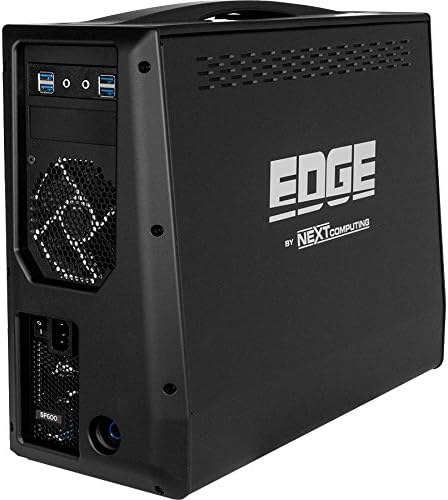
This system is less a gaming PC and more a performance monster built for professionals who also game. Powered by a 64-core AMD EPYC processor, it’s engineered for enterprise workloads, AI training, and heavy computational tasks.
Why it stands out:
- Server-grade CPU performance
- Massive RAM capacity
- Multi-GPU support
- Industrial-grade build quality
For pure gaming, it’s overkill. But for someone running simulations, rendering pipelines, and ultra-high-resolution gaming simultaneously, this type of machine makes sense.
8Pack OrionX – Dual-System Overclocked Beast
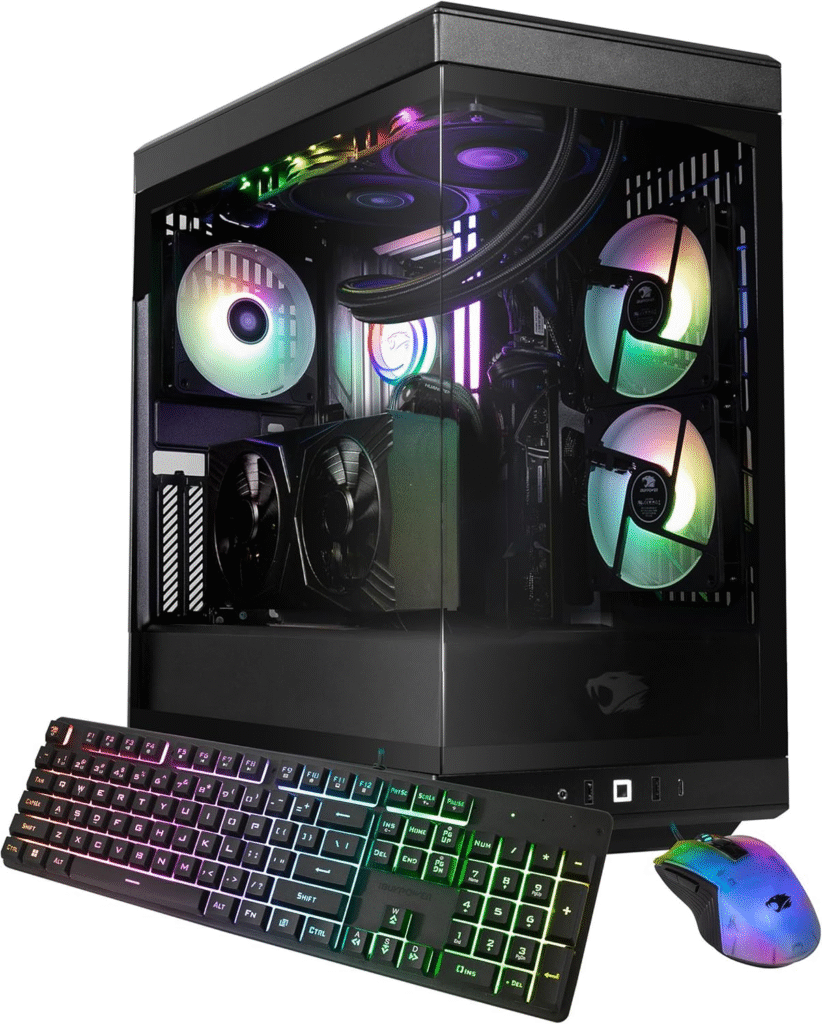
The OrionX is known for housing two independent systems in a single chassis. It combines extreme overclocking, custom cooling loops, and elite hardware.
Key highlights:
- Dual-system architecture
- Custom liquid cooling
- Hand-tuned overclocks
- Showcase-level craftsmanship
This is a collector-level PC for enthusiasts who want something rare and outrageous.
Digital Storm Aventum X – Luxury Meets Performance
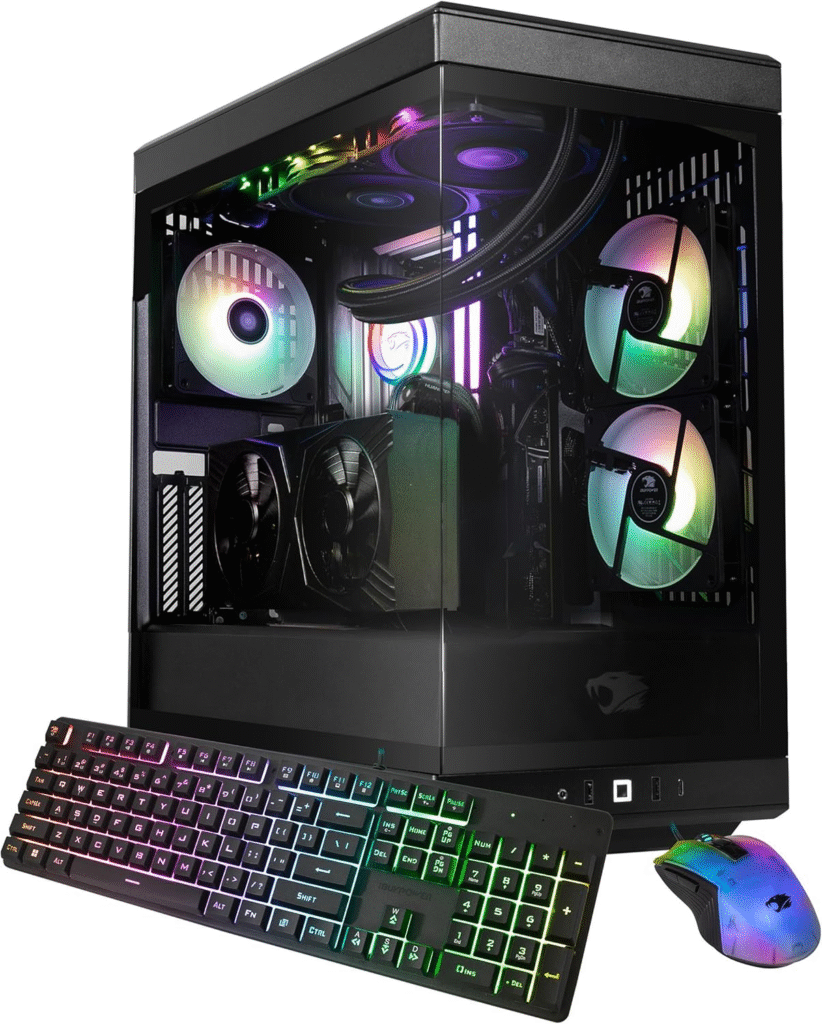
This desktop blends top-tier gaming hardware with deep customization options. Buyers can configure cutting-edge GPUs, advanced liquid cooling, and premium storage arrays.
Why I consider it a luxury benchmark:
- Fully customizable configurations
- Premium internal layout
- High-end cable management
- Advanced thermal design
It’s one of the most refined high-end gaming desktops available from a boutique builder.
CUK Mantis Gamer PC
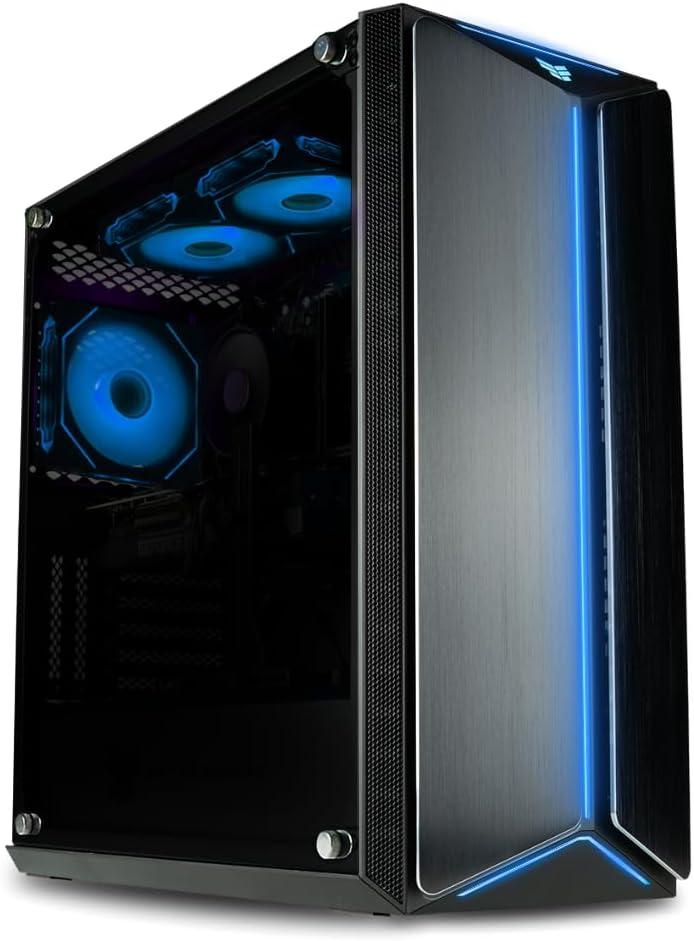
The CUK Mantis lineup focuses on high-end consumer hardware with aggressive specs. Expect powerful CPUs, flagship GPUs, and extensive storage capacity.
These systems are often built for users who want near-enterprise performance without going fully custom boutique.
Key High-End Components Driving the Price
Here’s what dramatically increases the cost of an ultra-premium gaming PC:
GPU
Flagship GPUs such as RTX 4090 or RTX 5090 dominate this category. Multi-GPU setups push costs exponentially higher.
CPU
Workstation processors like Threadripper PRO or high-core-count Intel Core i9 variants raise pricing significantly.
Memory
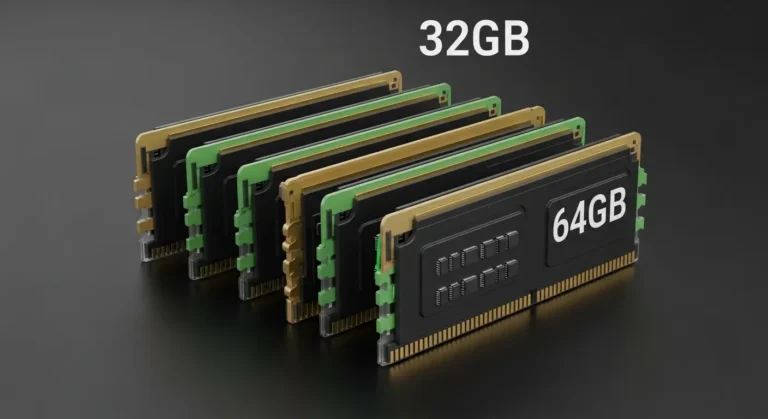
64GB DDR5 is common at the high end, but extreme systems can exceed 128GB or even 256GB.
Storage
Multiple Gen4 or Gen5 NVMe SSDs (10TB+ total capacity) add both speed and cost.
Cooling
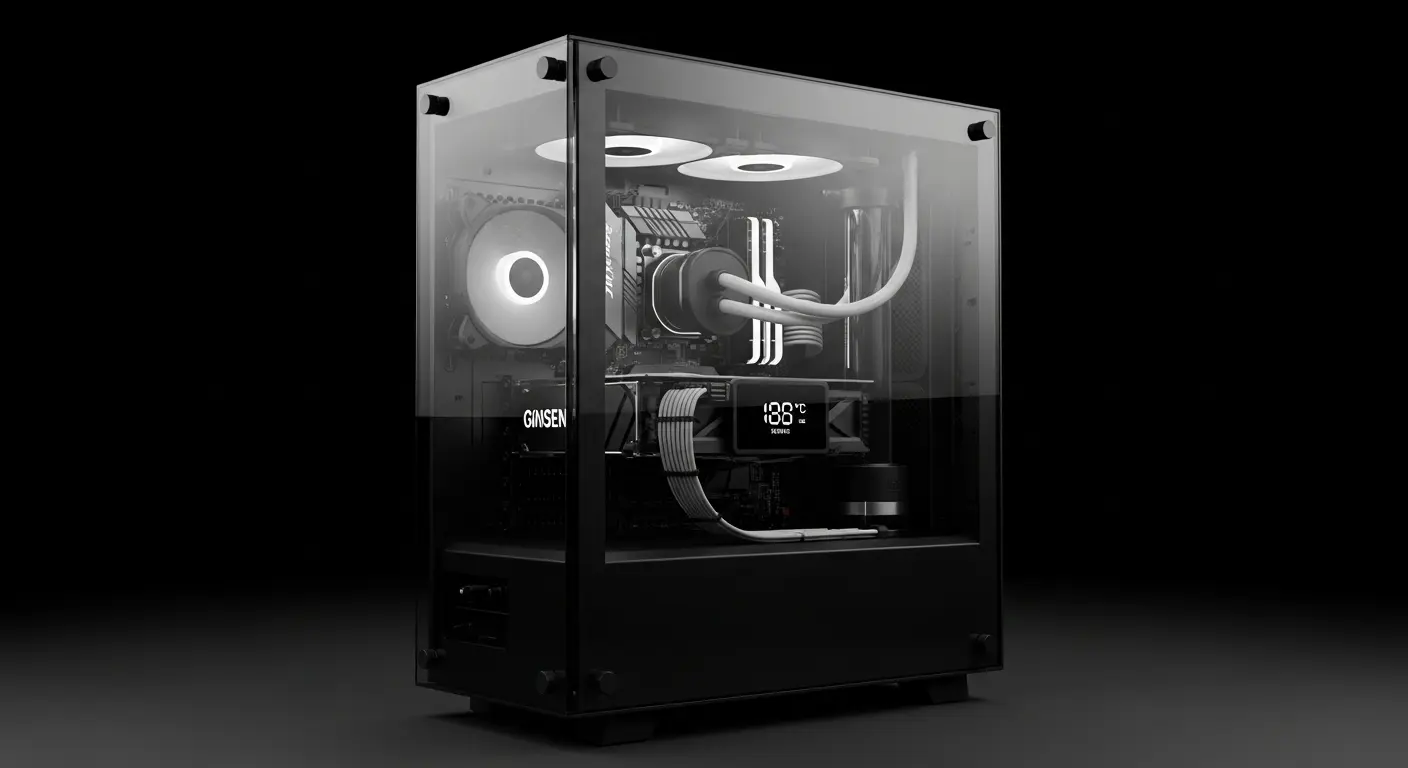
Custom liquid cooling loops with premium components and labor-intensive installation increase pricing dramatically.
High-End Retail Alternatives ($4,000–$6,000 Range)
Not everyone needs a $50,000 machine. Many high-end retail systems offer elite gaming performance at a more realistic price.
Alienware Area-51
A premium brand option offering powerful RTX 5090 configurations, strong cooling, and polished design. It’s a performance-focused alternative without entering boutique pricing territory.
Corsair Vengeance i7600
Known for using high-quality, non-proprietary components and reliable liquid cooling setups. These systems balance upgradability with premium performance.
For most gamers targeting 4K ultra settings or high-refresh 1440p gaming, these retail options deliver outstanding value compared to extreme boutique builds.
What Makes a Gaming PC “Ultra-Expensive”?
When I evaluate high-end gaming desktops, I look at four major cost drivers:
1. Enterprise-Class CPUs
Some of the most expensive systems are powered by workstation-grade processors like the AMD EPYC 7702P, a 64-core chip originally designed for servers. These CPUs are built for extreme multitasking, 3D rendering, virtualization, and AI workloads — not just gaming.
Other ultra-premium builds use processors like the AMD Threadripper PRO 9995WX, which alone can cost over $10,000. At this tier, gaming performance becomes just one part of the equation. These machines double as high-end production workstations.
2. Multi-GPU Configurations
Flagship GPUs are the heart of any extreme gaming PC. Many ultra-expensive systems feature:
- RTX 4090 or RTX 5090 GPUs
- Dual-GPU or quad-GPU configurations
- Massive VRAM pools for 4K/8K gaming and AI acceleration
The NVIDIA GeForce RTX 4090 remains one of the most common foundations in luxury builds, while newer RTX 5090 cards push ray tracing and AI-powered frame generation even further.
3. Advanced Liquid Cooling
Air cooling doesn’t cut it at this level. High-end systems use:
- Custom multi-loop liquid cooling
- Separate cooling circuits for CPU and GPU
- Massive radiators and reservoir systems
- Precision overclock tuning
The 8Pack OrionX is famous for extreme custom cooling and aggressive overclocking that extracts every ounce of performance from premium components.
4. Boutique Chassis & Customization
Luxury gaming PCs often feature:
- Hand-built frames
- CNC-machined aluminum cases
- Custom paintwork
- Premium glass panels
- Limited-edition production runs
Some boutique enclosures alone can cost several thousand dollars, especially from premium case manufacturers focused on design and exclusivity.
Who Actually Buys $50,000 Gaming PCs?
From what I’ve seen, these systems appeal to:
- Professional content creators
- AI researchers and developers
- High-frequency traders
- Luxury tech collectors
- Hardcore enthusiasts who want exclusivity
For pure gaming alone, the return on investment drops quickly beyond the $5,000–$6,000 range.
Are Ultra-Expensive Gaming PCs Worth It?
If I’m strictly gaming at 4K or 1440p, a well-configured RTX 5090 retail desktop delivers nearly identical performance to many boutique builds at a fraction of the cost.
However, if I need:
- Enterprise-level multitasking
- Massive RAM pools
- Specialized workloads
- Custom aesthetic craftsmanship
Then a five-figure system can make sense.
It comes down to workload, not bragging rights.
Frequently Asked Questions
What is the most powerful gaming PC right now?
Right now, the most powerful gaming PCs are custom or boutique systems built with an RTX 5090 (or multiple flagship GPUs), paired with high-core-count processors like AMD Threadripper PRO or Intel Core Ultra 9 chips.
If we’re talking about prebuilt luxury systems, machines like the Digital Storm Aventum X or extreme workstation builds using server-grade CPUs sit at the top.
But here’s the honest truth: for pure gaming, a single RTX 5090 with a modern high-end CPU already delivers near-maximum performance. Anything beyond that is usually for professional workloads, not just gaming.
Which is the No. 1 gaming PC?
There isn’t one universal “No. 1” gaming PC — it depends on what you care about.
For absolute performance: ultra-custom RTX 5090 systems.
For balanced high-end gaming and reliability: premium prebuilts like Alienware Area-51.
For luxury customization: boutique brands like Digital Storm Aventum X.
In my opinion, the real “No. 1” PC is the one that matches your resolution, refresh rate, and budget — not necessarily the most expensive one.
What’s the most expensive PC in the world?
Some ultra-custom workstation-class PCs have sold for over $50,000. A well-known example is the NextComputing Edge DL, which can exceed $54,000 depending on configuration.
These systems typically include:
Enterprise-grade CPUs like AMD EPYC
Massive RAM capacity (128GB–512GB+)
Multi-GPU setups
Custom liquid cooling
Professional workstation components
They’re built for AI training, scientific simulations, and enterprise workloads — gaming is almost secondary.
How many FPS can a $700 PC run?
A well-optimized $700 gaming PC in 2026 can typically deliver:
100–200 FPS in esports titles (Valorant, CS2, Fortnite) at 1080p competitive settings
60–90 FPS in modern AAA games at medium to high settings
40–60 FPS in very demanding titles at higher settings
It won’t run 4K ultra smoothly, but for 1080p gaming, a $700 system can still offer a very enjoyable experience — especially if you prioritize GPU performance.
What PC does Elon Musk use?
There’s no officially confirmed public spec list of Elon Musk’s personal gaming PC. However, he has mentioned playing games like Elden Ring and Diablo in the past.
Given his access and resources, it’s reasonable to assume he uses a high-end custom-built PC with a flagship GPU and modern multi-core processor. But there’s no verified public breakdown of his exact hardware.
What PC gives you 1000 FPS?
To reach 1000 FPS, you’d need:
A high-end CPU (to avoid bottlenecks)
A flagship GPU
Low graphics settings
1080p resolution
A lightweight esports title
Even then, 1000 FPS is only achievable in certain competitive games like CS2 or Valorant under optimized settings.
More importantly, most monitors can’t display 1000Hz. So while the system might technically output those frames, your display becomes the limiting factor.
In practical terms, once you’re consistently above 240–360 FPS on a high-refresh monitor, real-world benefits start to level off.
What is the most expensive gaming PC ever sold?
Some ultra-custom workstation builds have exceeded $50,000, especially those using server-grade CPUs and multi-GPU liquid cooling configurations.
Is a $10,000 gaming PC overkill?
For gaming alone, yes. For combined gaming, AI development, rendering, or virtualization workloads, it may be justified.
Do multi-GPU setups improve gaming performance?
In most modern games, multi-GPU scaling is limited. They’re more beneficial for rendering, AI tasks, and professional workloads.
How much RAM do I really need for high-end gaming?
32GB to 64GB DDR5 is more than enough for gaming in 2026. Higher capacities mainly benefit professional applications.
Amazon Affiliate Disclaimer
As an Amazon Associate, I earn from qualifying purchases. This means I may receive a small commission if you buy through links on this page, at no additional cost to you. I only recommend products I believe offer genuine performance and value.