
I don’t want a massive tower taking over my desk anymore, and I don’t want to sacrifice performance either. That’s exactly why mini PCs have become my go-to recommendation in 2026. They’re small, efficient, and surprisingly powerful for work, gaming, content creation, and even emulation.
Whether you need a travel-friendly desktop, a quiet office machine, or a compact gaming setup, I’ve broken down the best mini PCs you can buy right now — categorized by real-world use.
Amazon Affiliate Disclaimer: As an Amazon Associate, I earn from qualifying purchases. If you buy through links on this page, I may earn a small commission at no extra cost to you. This helps support my testing and recommendations.
Overview
If you’ve been researching mini PCs recently, you’ve probably noticed a clear pattern: Ryzen-powered systems are dominating the budget and mid-range space in early 2026.
For under $300, options like the Peladn W4 (Ryzen 5 5600H, 16GB RAM, NVMe SSD) are outperforming Intel N-series alternatives in both CPU speed and integrated graphics. That makes them ideal for general productivity, retro emulation (up to PS2/GameCube), and light 1080p gaming.
In the $300–$400 range, models such as the Geekom A5 (Ryzen 5 7430U) and Ryzen 6000-series systems offer better 4K display support, stronger integrated graphics, and more future-proof connectivity like USB4 or OCuLink.
Richard Lewis: I’m Richard, a PC builder passionate about gaming, programming, and graphic design. I love all things tech and I’m always happy to help—feel free to reach out.
The key takeaway I always share:
- Choose Ryzen 5000/6000+ over Intel N95/N100/N150 for performance.
- Aim for 16GB RAM + NVMe SSD minimum for smooth Windows 11 usage.
- Look for upgrade access and 2.5G LAN if you want longevity.
Now let’s get into the top picks across categories.
The Best Mini PCs to Buy Now
Best Mini PC Overall: Apple Mac mini M4
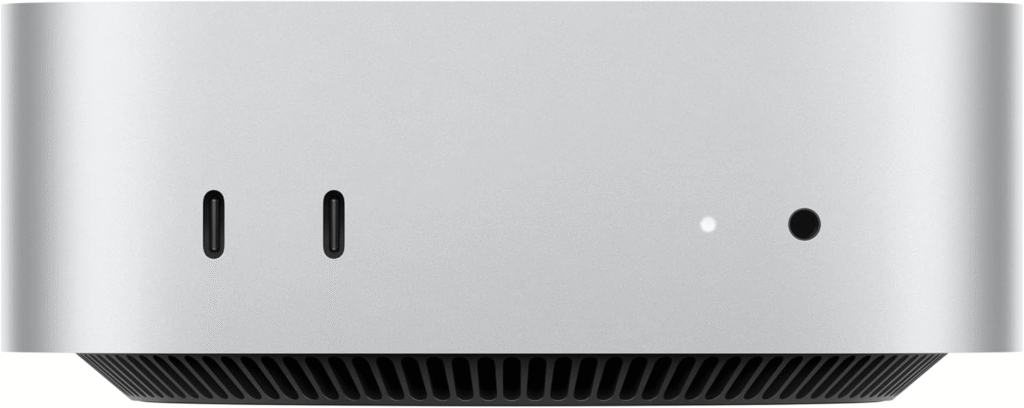
If I had to recommend just one mini PC to most people, this would be it.
The latest Mac mini redesign finally brings serious power in an ultra-compact 5 x 5-inch chassis. With the M4 chip and 16GB RAM now standard, multitasking feels effortless — from dozens of browser tabs to 4K video edits.
Why I Recommend It
- Extremely compact footprint
- Strong single-core and multi-core performance
- Supports up to three external displays
- Quiet and power-efficient
What to Consider
- Not user-upgradeable
- Limited internal customization
If you’re already in the Apple ecosystem, this is easily the cleanest, most refined mini desktop experience available.
Best Budget Mini PC: Peladn W4
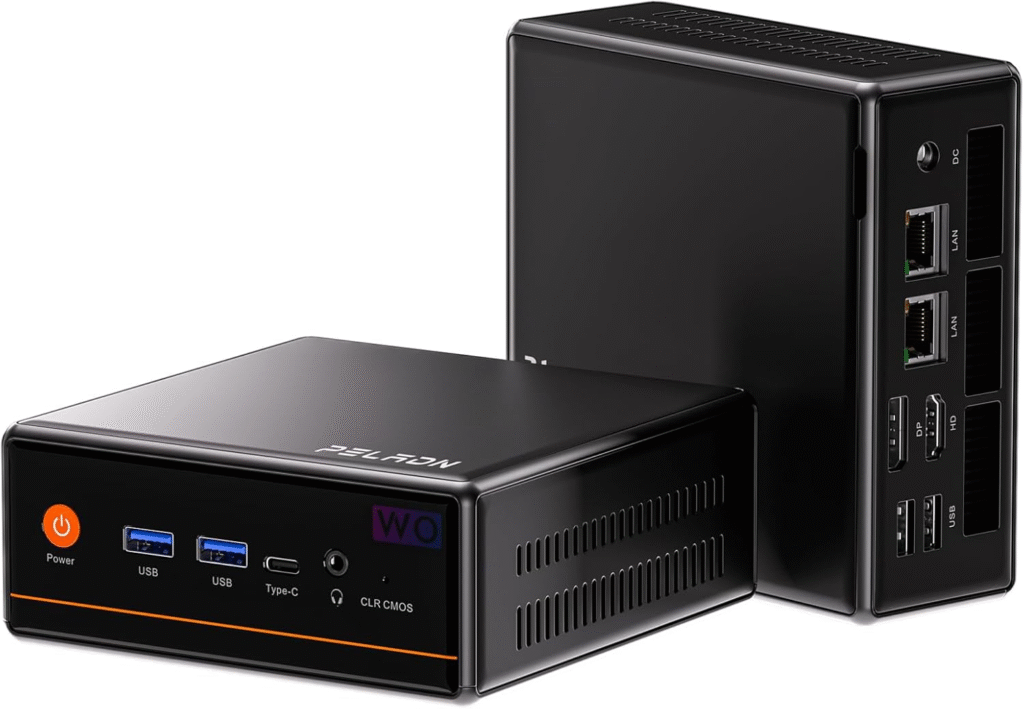
For under $300, this is where I see the strongest value in 2026.
Powered by a Ryzen 5 5600H (6 cores), paired with 16GB RAM and fast NVMe storage, it delivers smooth productivity performance and handles light gaming far better than Intel N-series competitors.
Best For:
- Office work
- Streaming
- Retro emulation
- Indie and esports gaming
Why It Wins in Budget Category
- Excellent CPU-to-price ratio
- Upgrade-friendly design
- Strong integrated Radeon graphics
- Better overall performance than N100/N150 systems
If you’re shopping under $300, this is the performance baseline I suggest.
Best Mini PC for Power Users: Geekom A9 Max
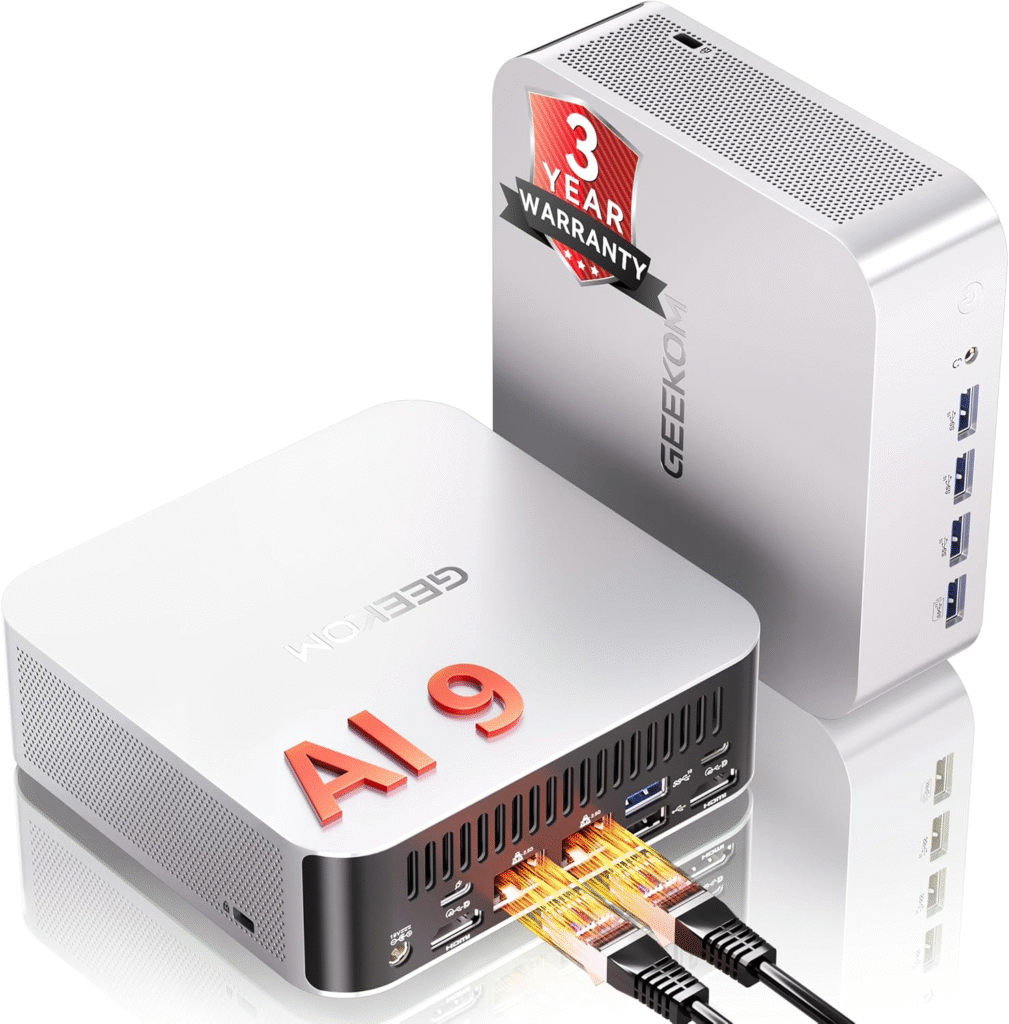
When I need desktop-class power in a small footprint, this model stands out.
The Ryzen AI 9 HX 370 processor paired with 32GB DDR5 RAM and massive storage options makes it ideal for demanding workflows — including video editing, AI workloads, virtualization, and coding.
Standout Features
- Supports up to 128GB RAM
- Dual 2.5G Ethernet
- USB4 + HDMI 2.1
- Quiet, efficient cooling
This is the mini PC I recommend if you want performance close to a traditional desktop without the bulk.
Best Mini PC for Gaming: AtomMan G7 Ti
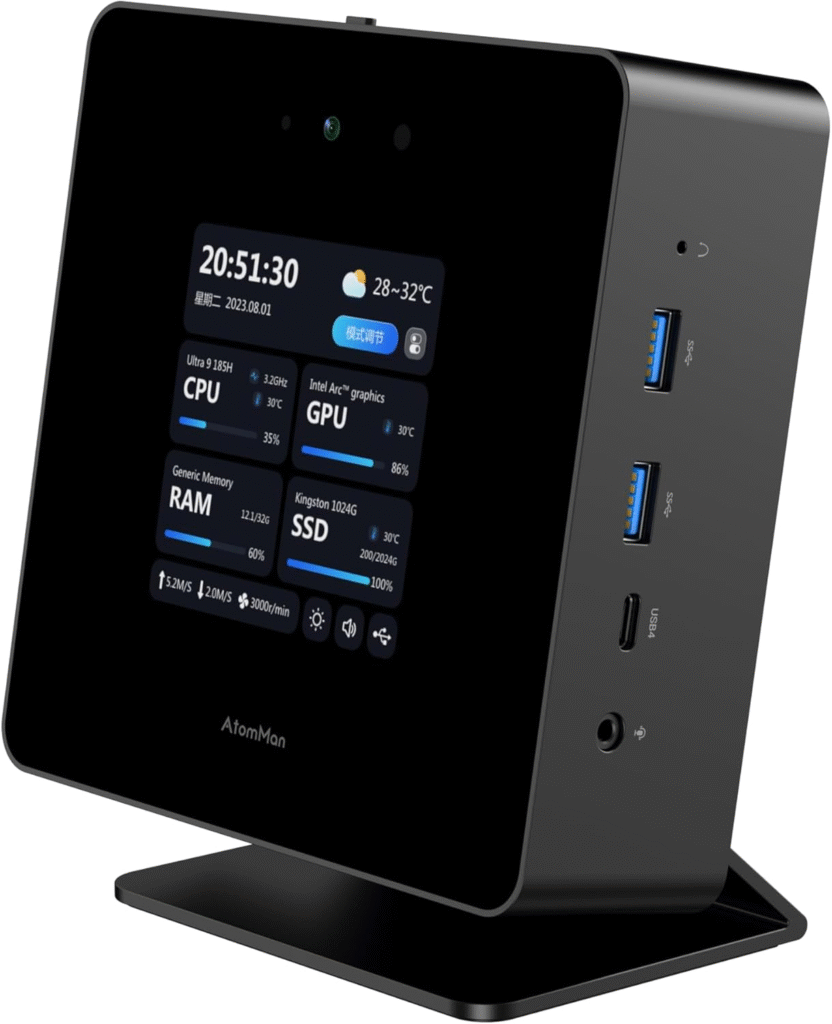
If gaming is your priority, integrated graphics won’t cut it.
The AtomMan G7 Ti includes an Nvidia RTX 4070 laptop GPU, allowing 1080p and 1440p gaming at high settings — and even playable 4K with DLSS enabled.
Why It’s Different
- Discrete GPU in slim vertical chassis
- Mode switch for power and fan control
- Strong cooling for sustained loads
It’s not a traditional cube-shaped mini PC, but performance-wise, it’s a powerhouse.
Best Mini PC for Portability: Khadas Mind
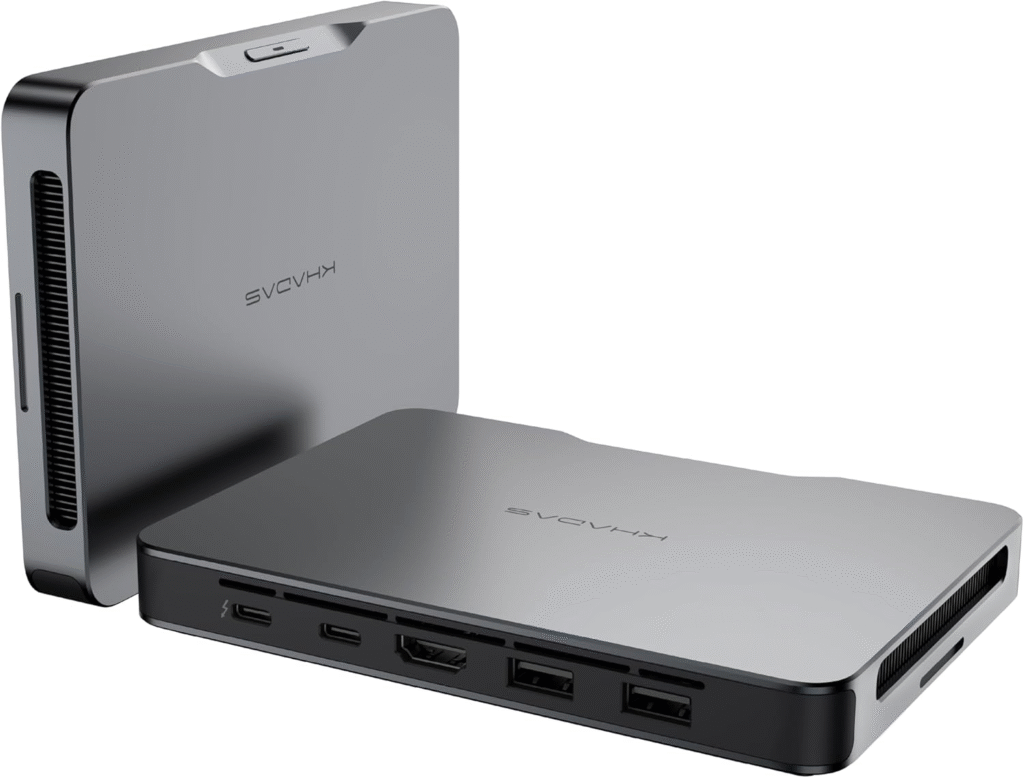
If portability matters most to you, this is the one I’d carry.
It’s pocket-sized, USB-C powered, and even includes a small built-in battery for seamless desk transitions. The modular dock ecosystem also allows GPU expansion.
Ideal For:
- Hybrid work setups
- Multi-location workstations
- Clean cable management
- Travel professionals
It’s premium-priced, but incredibly flexible.
Best Mini PC for Quiet Operation: Minix Elite EU715-AI
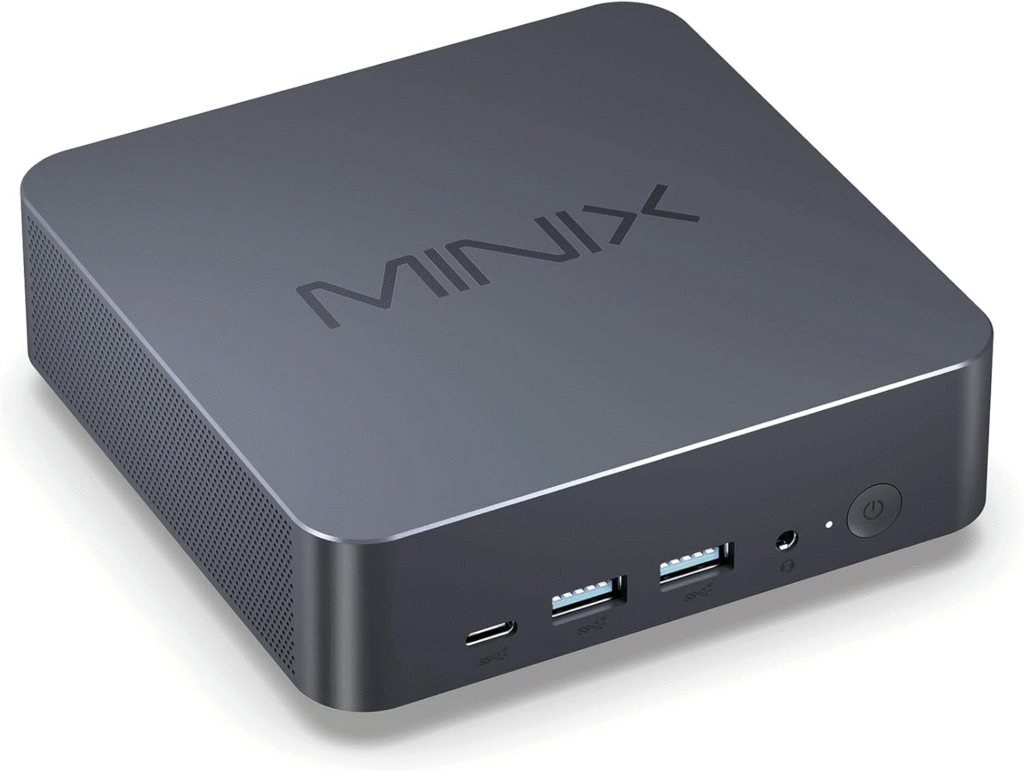
Some mini PCs get loud under load. This one doesn’t.
Powered by Intel Core Ultra 7, it stays impressively silent while maintaining strong productivity performance.
Why I Like It
- Near-silent cooling
- USB-C power support
- High upgrade ceiling (RAM + SSD)
- Premium metal build
Perfect for offices, studios, and noise-sensitive environments.
Best Mini PC for Customization: Framework Desktop
If I want control over every part of my system, this modular desktop wins.
You choose RAM, storage, front ports, and aesthetic customization. It supports powerful Ryzen AI Max chips and is designed for repairability.
Best For:
- Developers
- DIY enthusiasts
- AI experimentation
- Long-term upgraders
It’s more expensive, but you gain unmatched flexibility.
How I Test Mini PCs
I evaluate mini PCs using:
- CPU benchmarks (Geekbench-style workloads)
- Real-world multitasking
- File transfer speeds
- Gaming performance tests
- Thermal and noise monitoring
- Upgrade access evaluation
I also spend weeks using each device as a daily driver to assess stability and responsiveness under everyday workloads.
Read More….
How to Choose the Best Mini PC for You
Before buying, I always consider:
1. Performance Needs
- Office use → Ryzen 5 / Core Ultra 5
- Gaming → Discrete GPU required
- AI / Heavy editing → Ryzen AI 9 / Core Ultra 7+
2. RAM & Storage
- 16GB RAM minimum
- NVMe SSD preferred
- Ensure upgrade access if future-proofing
3. Ports & Connectivity
- USB-C / USB4 support
- HDMI 2.1 for 4K
- 2.5G LAN for faster networking
4. Cooling & Noise
Smaller doesn’t always mean quieter. Check thermal design.
Frequently Asked Questions
Are mini PCs good for gaming?
Yes, but only if they include strong integrated graphics (Ryzen 6000+) or a discrete GPU like an RTX 4060/4070. Budget Intel N-series models are not ideal for modern gaming.
Can a mini PC replace a desktop tower?
For most users, absolutely. Unless you need extreme GPU performance or multiple internal expansion slots, a high-end mini PC can handle productivity, editing, and even gaming.
Are Ryzen mini PCs better than Intel N-series?
In most cases, yes. Ryzen 5000/6000/7000-series chips significantly outperform Intel N95/N100/N150 processors in CPU and GPU tasks.
How much RAM do I need in a mini PC?
I recommend 16GB minimum in 2026. If you multitask heavily or use creative software, consider 32GB.
Final Thoughts
Mini PCs have matured dramatically. I can now run demanding workloads, connect multiple 4K monitors, and even game — all from devices smaller than a paperback book.
If I had to summarize:
- Best overall balance → Mac mini M4
- Best budget → Peladn W4
- Best gaming → AtomMan G7 Ti
- Best upgrade path → Framework Desktop
The right one depends entirely on how you plan to use it.