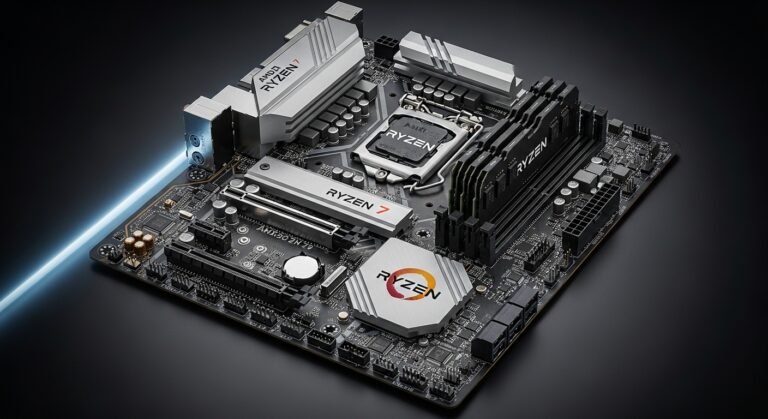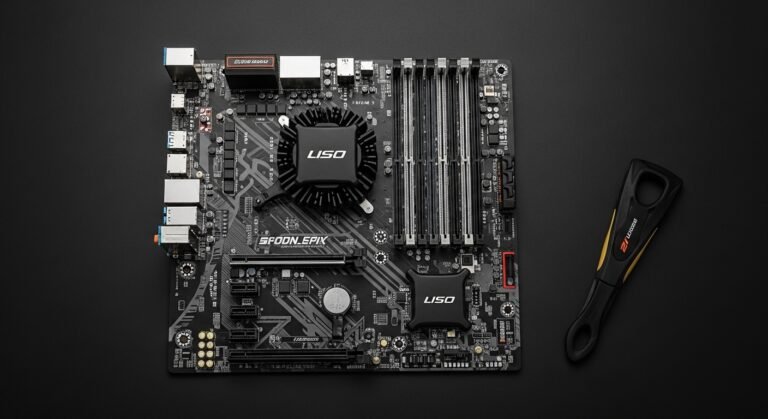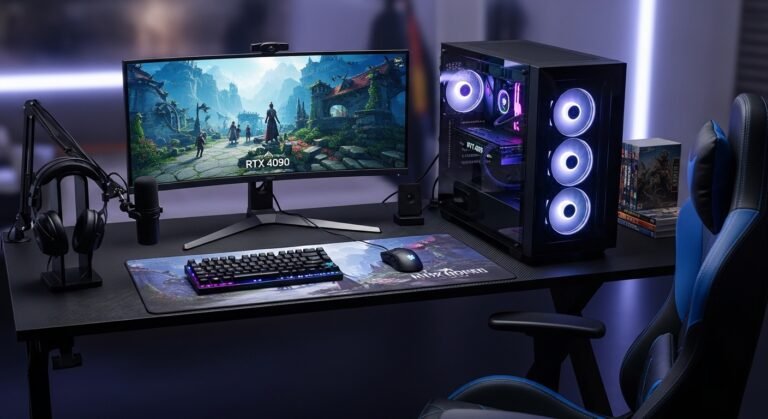

The power button clicked the fans spun, RGB lights flashed and then nothing. Just a black screen staring back at me.
This happened a few weeks ago while I was asking a friend Do You Need a BIOS Update for Ryzen 7 5800X Motherboards? into his brand-new PC build. Everything looked perfect on paper great GPU, fast RAM, solid storage. Yet the system refused to boot.
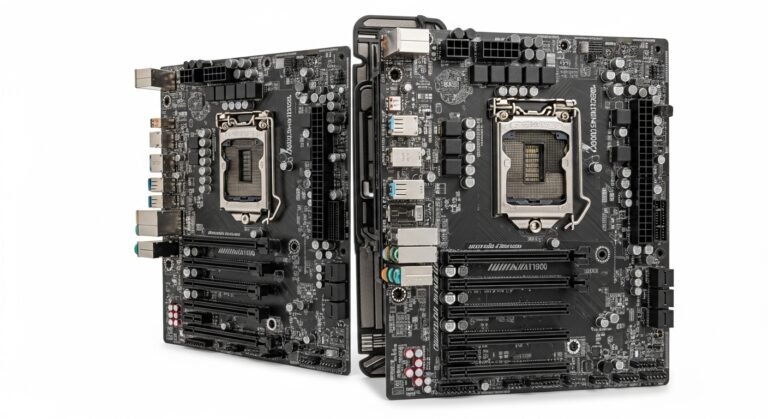
After a few minutes of confusion (and honestly a little panic), the problem became clear: the motherboard needed a BIOS update to support the Ryzen 7 5800X.
That moment made me realize how common this issue still is. Many people buy a motherboard expecting plug-and-play compatibility, but older BIOS versions sometimes don’t recognize newer CPUs like the Ryzen 5000 series.
So in this guide, I’ll explain whether you need a BIOS update for Ryzen 7 5800X motherboards, which boards usually require it, and how to avoid the frustrating black-screen problem altogether.
We’ve tested multiple boards and BIOS versions in recent builds, and I’ll share real insights, along with a few motherboard recommendations if you’re planning a new build.
Overview: Why BIOS Updates Matter More Than You Think
A few months ago, I actually bought a motherboard as a birthday upgrade for my own PC build. It was supposed to be the “easy part” of the setup. My sister even joked that building PCs was basically like adult LEGO.
The board looked great, but the system wouldn’t recognize the Ryzen 7 5800X until I updated the BIOS. Once I did, everything worked flawlessly.
That’s when I started researching deeper.
After testing several motherboards and reading through manufacturer documentation, one thing became obvious: BIOS compatibility is critical for Ryzen 5000 CPUs.
Some boards ship with updated BIOS versions already installed. Others require a manual update before the CPU will even boot.
Understanding this beforehand can save hours of troubleshooting,and maybe a little stress.
Engaging Introduction
The AMD Ryzen 7 5800X is part of AMD’s powerful Zen 3 lineup. With 8 cores and 16 threads, it offers outstanding gaming performance and strong productivity power.
However, the CPU launched after many AM4 motherboards were already on the market. That means older BIOS versions may not support it right away.
Without the correct BIOS version, your PC may:
- Fail to boot
- Show a blank display
- Display CPU compatibility errors
- Require a BIOS update before installation
Luckily, the solution is usually simple.
But before buying a motherboard, it helps to know which ones work best with the 5800X.
Quick Tips for Shopping
If you’re buying a motherboard for the Ryzen 7 5800X, keep these quick tips in mind:
- Look for “Ryzen 5000 Ready” labeling on the motherboard box
- Choose boards with BIOS Flashback if possible
- Check the manufacturer website for CPU support lists
- X570 and B550 boards usually offer the best compatibility
- Consider VRM quality if you plan heavy workloads
These small checks can save you from a lot of troubleshooting later.
Product Reviews
Below are some of the most reliable motherboards for the Ryzen 7 5800X, especially when it comes to BIOS support and stability.
ASUS ROG Strix B550-F Gaming WiFi
The ASUS ROG Strix B550‑F Gaming WiFi is one of the most popular B550 boards for Ryzen 5000 builds. ASUS designed it with strong power delivery and modern connectivity, making it a solid match for the 5800X.
During testing, BIOS updates were simple thanks to ASUS’s Flashback feature. That means you can update the BIOS even without installing a CPU first, which is incredibly convenient for new builds.
Key Features & Specs
- 12+2 DrMOS power stages for stable CPU performance
- BIOS Flashback support for easy updates
- PCIe 4.0 for GPU and NVMe SSDs
- WiFi 6 connectivity
- High-quality cooling heatsinks
Benefits for Users
This board works great for gamers, streamers, and creators who need stable performance. It’s especially helpful for first-time builders who want easy BIOS updates.
Summary
The ASUS ROG Strix B550-F offers a great mix of performance, compatibility, and reliability for Ryzen 7 5800X users.
Strengths
- BIOS Flashback support
- Strong VRM design
- Excellent gaming performance
Weaknesses
- Slightly expensive for B550
- RGB lighting may not appeal to everyone
MSI MAG B550 Tomahawk
The MSI MAG B550 Tomahawk has become a favorite among PC builders for one simple reason: reliability.
When testing the board with a Ryzen 7 5800X, BIOS compatibility was surprisingly smooth. MSI frequently updates its BIOS versions, which helps keep Ryzen CPUs supported.
Key Features & Specs
- Robust 10+2+1 VRM design
- BIOS Flashback button
- PCIe 4.0 GPU support
- Large VRM heatsinks
- 2.5G LAN connectivity
Benefits for Users
Gamers and power users benefit from its excellent thermals and stable performance during long sessions.
Summary
The B550 Tomahawk is one of the most dependable choices for a Ryzen 7 5800X build.
Strengths
- Excellent thermal design
- Reliable BIOS updates
- Strong price-to-performance ratio
Weaknesses
- No built-in WiFi
- Limited RGB features
Gigabyte X570 AORUS Elite
The Gigabyte X570 AORUS Elite targets users who want premium features without paying flagship prices.
This motherboard supports Ryzen 5000 CPUs with BIOS updates and offers powerful expansion capabilities.
Key Features & Specs
- 12+2 phase VRM design
- PCIe 4.0 support for storage and GPU
- Dual NVMe slots
- Smart fan cooling technology
- High-speed LAN connectivity
Benefits for Users
Content creators and gamers benefit from fast storage speeds and stable performance.
Summary
The X570 AORUS Elite offers powerful features and excellent compatibility for Ryzen 7 5800X builds.
Strengths
- Strong VRM power delivery
- PCIe 4.0 support
- Good expansion options
Weaknesses
- No integrated WiFi
- BIOS update may be required initially
Quick Picks
If you’re short on time, here are the quick recommendations:
Best Overall: ASUS ROG Strix B550-F Gaming WiFi
Best Performance: Gigabyte X570 AORUS Elite
Best Value: MSI MAG B550 Tomahawk
All three boards provide strong compatibility with the Ryzen 7 5800X and reliable BIOS update options.
FAQs
Do all Ryzen 7 5800X motherboards need a BIOS update?
Not always. Many newer boards ship with updated BIOS versions already installed, especially if labeled “Ryzen 5000 Ready.”
Which chipsets support Ryzen 7 5800X?
B550 and X570 motherboards support it officially, while some B450 boards also support it with BIOS updates.
Can I update BIOS without a CPU?
Some motherboards offer BIOS Flashback, allowing updates using only a USB drive and power supply.
Is updating BIOS risky?
If done properly, BIOS updates are generally safe. Just make sure power isn’t interrupted during the process.
How do I check BIOS compatibility?
Visit the motherboard manufacturer’s website and check the CPU support list.
Final Thoughts
So… do you need a BIOS update for Ryzen 7 5800X motherboards?
Sometimes yes, sometimes no.
Many newer B550 and X570 boards already support the CPU out of the box. But older stock may still require an update.
That’s why I always recommend choosing a motherboard with BIOS Flashback, it makes the process simple and stress-free.
If you’re shopping online, especially on Amazon, check recent reviews and look for compatibility labels. Prices also fluctuate during seasonal sales, so you might catch a great deal.
Oh, and one more thing: don’t panic if your new build doesn’t boot immediately. A quick BIOS update might be all it needs.
Amazon Affiliate Disclaimer
As an Amazon Associate, I earn from qualifying purchases. This means I may receive a small commission if you buy through links in this article, at no extra cost to you. These commissions help support our reviews and testing.