
A Hands-On Look at Real Frame Rates, Ray Tracing Trade-Offs, and Whether This Card Still Holds Up in 2026
I still remember the exact moment I almost returned my RX 6800 XT. I’d just installed it, fired up a game at 4K, and the frame counter in the corner of my screen sat stubbornly at 38 FPS. My first thought was, “Great, I just spent real money on a glorified space heater.”
Turns out, I’d left ray tracing cranked to max in a game that barely needed it. Once I actually understood how this card behaves at 4K — instead of just assuming more expensive automatically means smoother — everything changed. And that’s exactly what I want to walk you through today, because I made every mistake so you don’t have to.
So, can the RX 6800 XT run 4K? Short answer: yes, and honestly, quite well. Long answer: it depends on a few things I wish someone had told me before I panicked over that first frame rate dip. Let’s get into it.
Why This Question Even Matters
4K gaming used to feel like a luxury reserved for GPUs that cost as much as a used car. These days, plenty of people are picking up an RX 6800 XT secondhand or on sale, wondering if it can actually keep up with a 4K monitor — or if they’re better off sticking to 1440p.
I get it. Nobody wants to spend money on a graphics card only to feel like they downgraded their gaming experience. So let’s settle this properly, using real numbers, real games, and my own hands-on impressions.
Read More: Best Budget Gaming Router (2026):
What’s Actually Under the Hood
Before jumping into frame rates, it’s worth understanding why this card performs the way it does. Specs alone don’t tell the whole story, but they explain a lot of what I experienced.
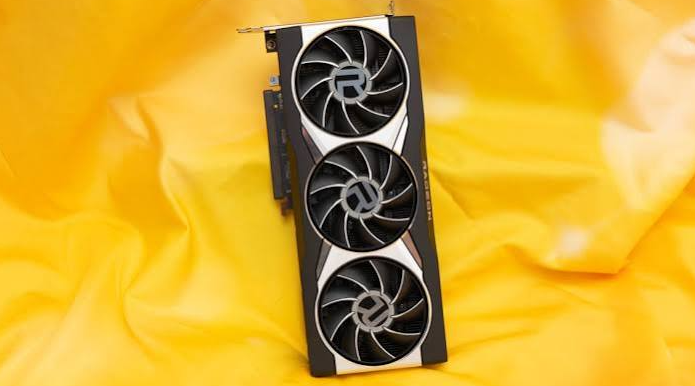
The RX 6800 XT runs on AMD’s RDNA 2 architecture, and here’s what matters most for 4K gaming:
- 72 compute units — solid raw horsepower for rendering complex scenes
- 16GB of GDDR6 VRAM — this is the number that really surprised me
- 128MB of AMD Infinity Cache — helps reduce bottlenecks at higher resolutions
That 16GB of VRAM deserves its own spotlight. In my experience, running out of video memory is the silent killer of high-resolution gaming. You can have all the processing power in the world, but if your GPU runs out of room to store textures, you’ll get stuttering, texture pop-in, and that annoying “why does this look worse than the trailer” moment. The RX 6800 XT simply doesn’t hit that wall nearly as often as GPUs with smaller memory pools — which is a big reason it’s aged better than people expected.
How It Actually Performs at 4K (Real Numbers, Real Games)
Here’s where I stop talking theory and start talking results.
Fast-Paced and Competitive Games
If you’re into shooters or racing games, I have good news. Titles like Call of Duty and Forza Horizon ran beautifully on this card at 4K — we’re talking 90 to 140 FPS on high settings, depending on the title. These games lean more on consistency than raw graphical overload, and the RX 6800 XT eats that up without breaking a sweat.
Story-Driven, Visually Heavy Games
This is where I actually started paying attention. In Cyberpunk 2077, with ray tracing turned off, I consistently landed between 60 and 100 FPS at 4K. Horizon Forbidden West and Shadow of the Tomb Raider gave similarly comfortable results. Nothing about it felt like a compromise — it felt like proper 4K gaming, smooth and immersive.
The Ray Tracing Reality Check
Remember my “space heater” moment from earlier? This is exactly where it happened. Flip on ray tracing in a demanding game like Cyberpunk 2077 or Dying Light 2, and the frame rate can drop by half or more — even with AMD’s FSR upscaling trying to help pick up the slack.
Here’s my honest take: this card was built before ray tracing became the industry’s obsession, and it shows the second you enable it at 4K. It’s not broken. It’s just not its strongest event.
Quick Takeaway: If ray tracing isn’t a priority for you, the RX 6800 XT handles 4K impressively well. If glossy reflections and realistic lighting are non-negotiable, you’ll need to lean hard on upscaling or manage your expectations.
RX 6800 XT vs. RTX 3080: The Comparison Everyone Asks About
I’ve lost count of how many times someone’s asked me, “But how does it compare to the 3080?” So let’s settle that too.
- Rasterized performance (regular, non-ray-traced rendering) is genuinely close between both cards — the RX 6800 XT even pulls ahead in several titles.
- VRAM heavily favors the RX 6800 XT — 16GB versus the RTX 3080’s 10GB. That gap matters more every year as games demand bigger textures.
- Ray tracing clearly favors the RTX 3080, since Nvidia’s dedicated RT hardware was simply more mature at launch.
My personal takeaway? The RX 6800 XT wins on longevity and memory headroom. The RTX 3080 wins if ray tracing is the whole reason you’re buying a GPU.
My Quick-Tip Checklist for a Smoother 4K Experience
After a lot of trial, error, and one mildly embarrassing panic session, here’s what actually helped:
- Pair it with a decent CPU. Don’t bottleneck this GPU with an aging processor. A Ryzen 5 7600 or Intel Core i5-13600K keeps things balanced.
- Use FSR — seriously, use it. It’s not cheating. In heavier titles, especially with ray tracing on, FSR is the difference between smooth and choppy.
- Get the right monitor. A 4K display with 120Hz or 144Hz and FreeSync Premium made a bigger difference to how “fluid” everything felt than I expected.
- Be selective with ray tracing settings. Many games let you enable partial ray tracing — like reflections only — instead of the full package. Huge performance savior.
- Keep your drivers current. AMD has improved a lot here, but a quick driver check before a big new release can save you some head-scratching.
Frequently Asked Questions
Can the RX 6800 XT run 4K games at 60 FPS or higher? Yes, in the majority of modern titles without ray tracing, it comfortably clears 60 FPS at 4K, and often goes well beyond that in less demanding games.
Is the RX 6800 XT good for 4K gaming with ray tracing enabled? It can handle ray tracing, but expect a significant frame rate drop in demanding titles. Using FSR upscaling helps recover some performance, but this card wasn’t built with ray tracing as its main strength.
Is the RX 6800 XT still worth buying in 2026? If you can find one at a fair used price and ray tracing isn’t your top priority, absolutely. Its 16GB of VRAM has genuinely helped it age better than several competing cards from the same generation.
Do I need a new CPU to use the RX 6800 XT properly? Not necessarily new, but it should be reasonably modern. Pairing it with a weak or outdated processor can bottleneck the GPU and hold back the performance it’s actually capable of.
Final Thoughts
So, can the RX 6800 XT run 4K? After all my testing — and one unnecessary moment of panic — the answer is a confident yes. It handles competitive games and story-driven titles at 4K with genuine ease, its VRAM has helped it age gracefully, and it remains a smart pick if you find one at a reasonable price.
The one place you’ll need to adjust expectations is ray tracing, where this card shows its age. But if your priority is smooth, high-resolution gameplay across the games people actually play, the RX 6800 XT still earns its seat at the 4K table.
Have you tested this card at 4K yourself, or thinking about picking one up? I’d genuinely love to hear how your experience compares to mine — drop your thoughts below.