
Affiliate Disclosure: This post contains affiliate links. If you click through and make a purchase, I may earn a small commission at no extra cost to you. I only recommend products I’d genuinely suggest to a friend dealing with the same problem.
I still remember the first time I walked into a room and knew something was off before I even saw anything. That damp, earthy smell hit me before my eyes landed on the faint gray patches creeping along the baseboard. If you’ve been there, you already know: mold doesn’t just look bad, it makes a space feel unlivable.
After going down the research rabbit hole myself, here’s the short version of what I found.
Read More: Best Air Purifier to Remove Smoke
Quick Answer: What’s the Best Air Purifier for Mold?
If you just want the fast answer, here it is. For most households, the Levoit Core 400S Smart hits the sweet spot between price and performance, using a True HEPA filter and live air quality monitoring to catch spores before they spread. If mold-related toxins (mycotoxins) are your bigger worry, the AirDoctor 3500 uses an UltraHEPA filter rated to trap particles roughly 100 times smaller than a standard HEPA unit can. For serious, medical-grade filtration, the IQAir HealthPro Plus relies on HyperHEPA technology that pulls in ultrafine particles down to 0.003 microns, paired with a heavy-duty carbon layer for that musty odor. And if you want something quiet enough for a bedroom or nursery, the Blueair Blue Pure 311i Max blends mechanical and electrostatic filtration to pull spores out of the air without sounding like a jet engine.
Now let’s get into why each of these earned a spot on my list, and what you actually need to know before buying one.
My Top Picks for Tackling Mold Spores
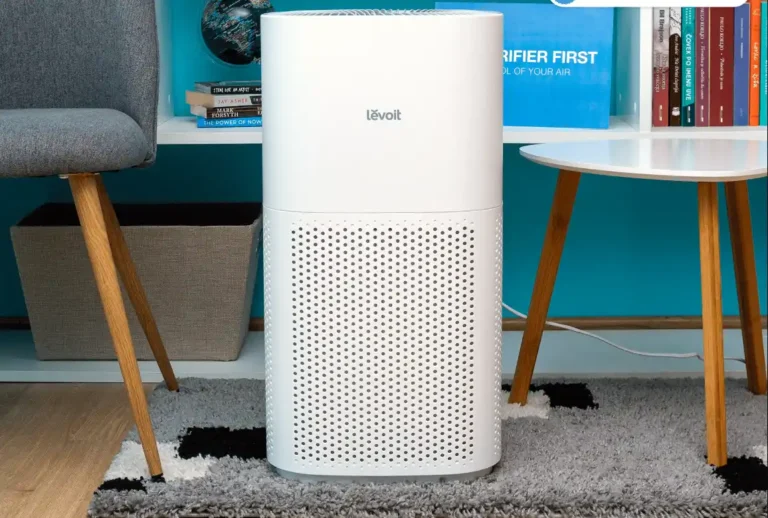
Levoit Core 400S Smart — Best All-Around Choice
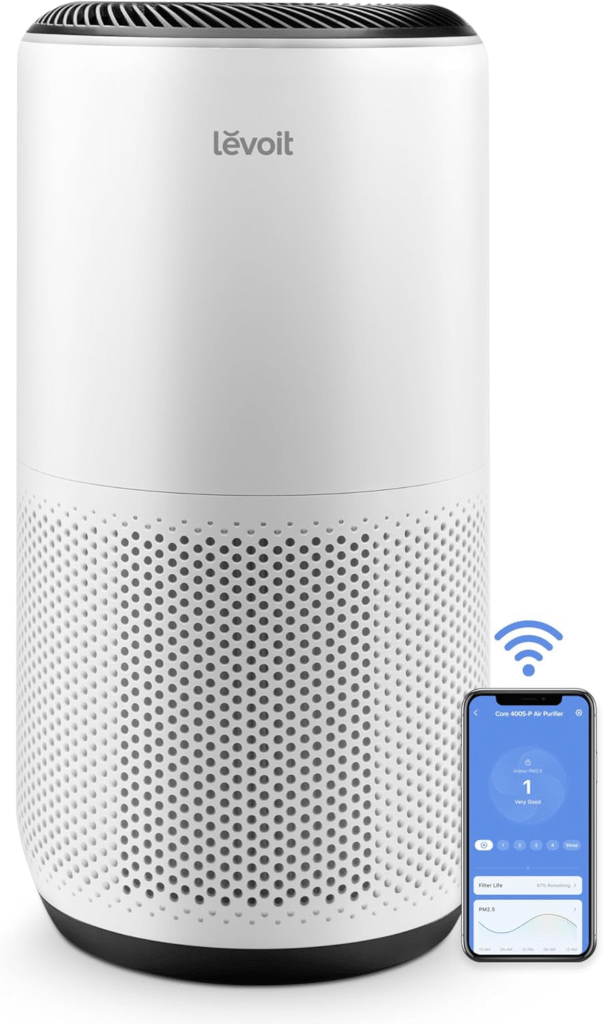
This is the one I’d point most people toward first. It doesn’t try to overcomplicate things. It uses a True HEPA filter to physically trap airborne mold spores, and its built-in sensor tracks air quality in real time so you’re not guessing whether it’s working. Between the fair price tag and the smart app control, it covers what most bedrooms, living rooms, or home offices actually need.
AirDoctor 3500 — Best for Mycotoxin Concerns
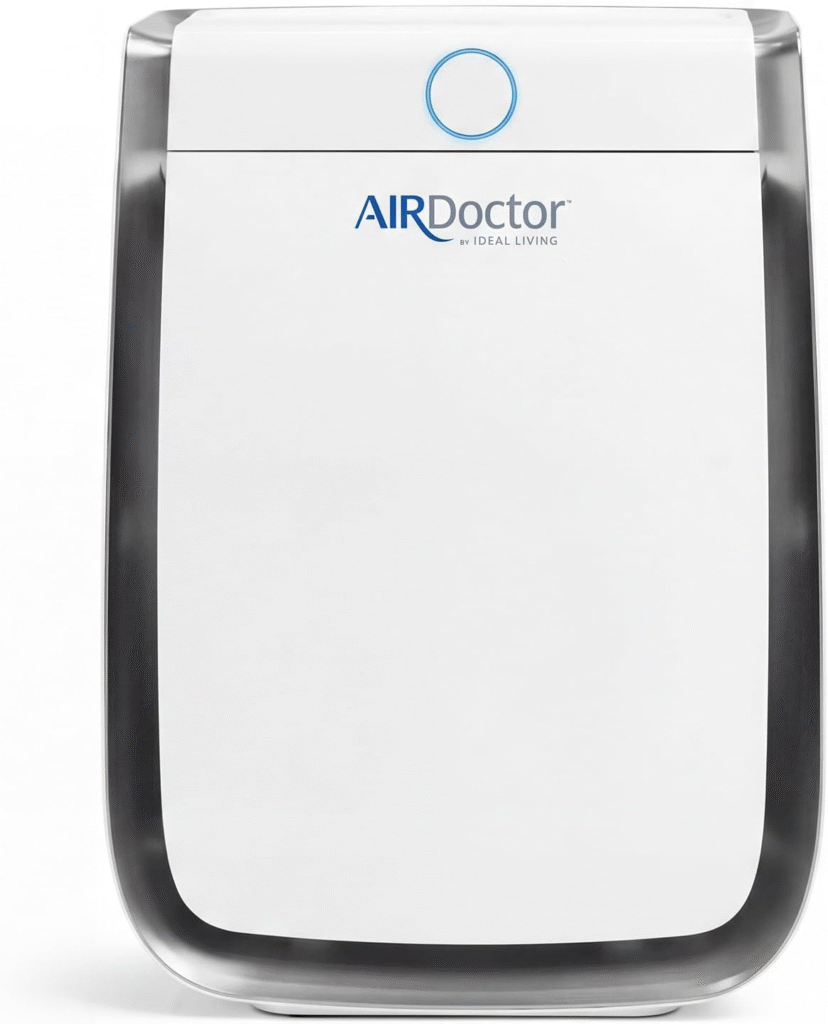
Mold doesn’t just release spores, it can also give off mycotoxins, the chemical byproducts that cause a lot of the health complaints people associate with mold exposure. The AirDoctor 3500’s UltraHEPA filter is built specifically to catch particles far smaller than what a standard HEPA filter can manage, which makes it a strong pick if you’re dealing with a persistent mold problem and want extra peace of mind.
IQAir HealthPro Plus — Best for Heavy-Duty, Medical-Grade Filtration
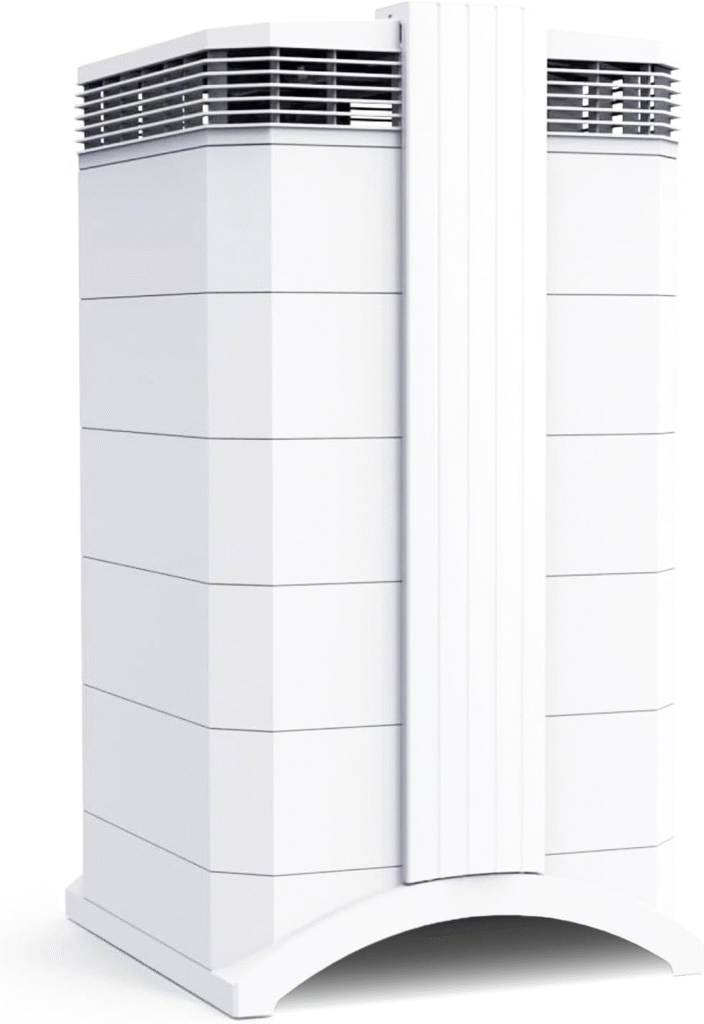
If your situation calls for something closer to hospital-grade air cleaning, this is where the IQAir HealthPro Plus comes in. Its HyperHEPA filtration captures ultrafine particles down to 0.003 microns, which is well beyond what most spores measure. Add in a substantial carbon filter for odor control, and this becomes the go-to option for anyone managing chronic mold exposure or sensitivities.
Blueair Blue Pure 311i Max — Best Quiet Option for Everyday Rooms
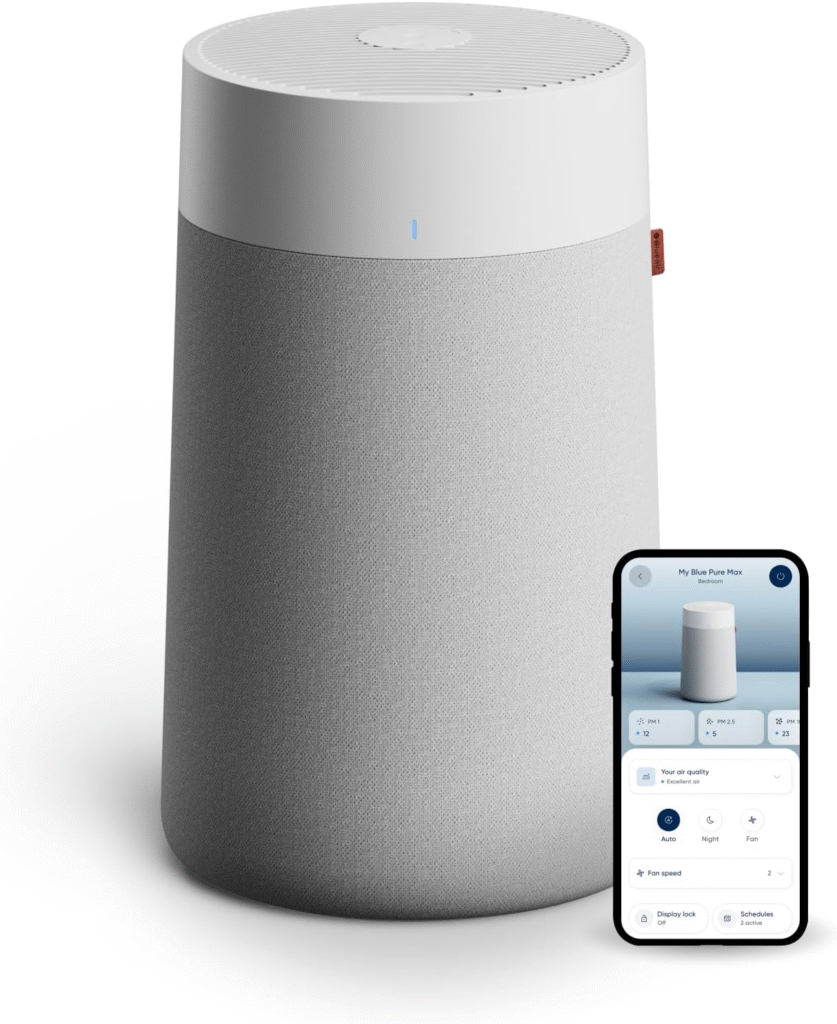
Not everyone wants a purifier humming away in the background of every conversation. The Blue Pure 311i Max combines mechanical filtration with an electrostatic charge to draw in spores efficiently, all while staying impressively quiet. It’s a solid fit for medium-sized rooms where noise matters, like bedrooms or shared living spaces.
What to Actually Look For Before You Buy
Not every air purifier is built the same, and mold spores have specific requirements. Here’s what I’d check before spending money on one:
- True HEPA or HyperHEPA filtration. This is non-negotiable. You want a filter certified to capture at least 99.97% of airborne particles down to 0.3 microns, since that’s the range most mold spores fall into.
- An activated carbon layer. HEPA filters trap particles, but they don’t do much for smell. Mold releases microbial volatile organic compounds, the source of that musty odor, and only a carbon filter can neutralize it.
- A high CADR rating. Clean Air Delivery Rate tells you how much filtered air the unit pushes out. A higher CADR means the air in your room gets cycled and cleaned more often per hour, which matters a lot if the room has an active mold source.
What an Air Purifier Can’t Do
I want to be upfront about this, because it’s the part a lot of buyers overlook: an air purifier only deals with mold spores floating in the air. It can’t clean mold that’s already growing on your walls, ceiling, carpet, or furniture. That part requires physical remediation, whether that’s scrubbing it yourself with the right products or bringing in a professional for a larger infestation.
You’ll also want to tackle the root cause. Keeping indoor humidity under 50%, fixing any leaks, and running a dehumidifier alongside your purifier will do far more to stop mold from coming back than the purifier alone ever could.
One more thing worth knowing: skip ionic or ozone-generating purifiers. They might sound appealing on paper, but ozone can irritate your lungs and make asthma worse, which defeats the purpose if you’re trying to breathe easier.
Frequently Asked Questions
Do air purifiers really help with mold? Yes, but with a caveat. They capture airborne mold spores before they settle and grow into new colonies, and they help reduce that musty smell. What they won’t do is remove mold that’s already established on a surface.
Does a HEPA filter actually catch mold spores? It does. Mold spores generally range from 1 to 40 microns, while True HEPA filters are rated to capture particles as small as 0.3 microns, so they’re well within range.
How do I know if mold is actually a problem in my home? Watch for physical symptoms like sneezing, coughing, itchy eyes, or a persistent musty smell, especially in bathrooms, basements, or any wall exposed to outside moisture. If those symptoms improve when you’re away from home, that’s often a strong clue.
Should I replace my purifier’s filter more often in a moldy space? Yes. In high-humidity environments, it’s smart to swap filters more frequently than the manufacturer’s standard schedule, since mold can otherwise start growing directly on a damp filter.
Final Thoughts
If there’s one thing I want you to walk away with, it’s this: an air purifier is a genuinely useful tool for managing airborne mold spores and cutting down odor, but it’s not a substitute for fixing the actual moisture problem in your home. Pair the right purifier with proper humidity control, and you’ll notice the difference a lot faster than you’d expect.