
I used to think any air purifier with “HEPA” printed on the box would handle smoke. I was wrong, and I learned it the hard way after buying a cheap model that made zero dent in the smell lingering in my living room. That mistake sent me down a rabbit hole of researching filtration science, comparing specs, and figuring out which machines actually earn their smoke-fighting reputation — and which ones just ride on clever marketing.
Disclosure: I’m an Amazon Associate, and some links in this article may earn me a small commission if you make a purchase — at no extra cost to you. I only recommend products I’d genuinely consider buying myself.
Quick Answer: What Smoke Removal Actually Requires
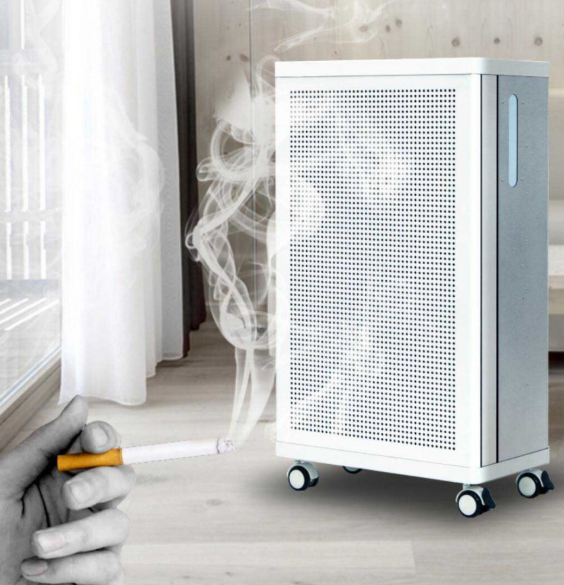
Here’s the short version before I get into specifics. To truly clear smoke from indoor air, a purifier needs two things working together: a certified True HEPA filter to trap fine ash and soot particles, plus a dense, high-grade activated carbon filter to break down the odors and gases HEPA can’t touch. With that baseline in mind, the standout picks tend to fall into a few categories depending on your space and how heavy the smoke exposure is — an all-around balanced performer, a couple of smart and wallet-friendly options sized for different rooms, a heavy-duty pick for serious daily smoke, and a large-room specialist built to keep up with bigger square footage.
Read More: Can an Air Purifier Help With Mold?
Why HEPA Alone Won’t Cut It
I’ll admit this confused me at first. HEPA filters are excellent at physically trapping particles — they’re built to capture at least 99.97% of particles as small as 0.3 microns, which covers most of the ash and soot floating around after someone lights up. But smoke isn’t just particles. It’s also loaded with gases and volatile organic compounds that slip straight through a HEPA mesh untouched.
That’s where activated carbon comes in. It works through adsorption, meaning odor molecules physically bond to the carbon’s surface instead of passing through. The catch? Not all carbon filters are created equal. A thin, carbon-coated sheet barely makes a dent, while a thick, pellet-based carbon bed can hold significantly more odor-causing compounds before it saturates. If I’m shopping for smoke specifically, filter thickness and carbon weight matter just as much as the HEPA rating.
My Pick for Best Overall: Coway Airmega AP-1512HH Mighty
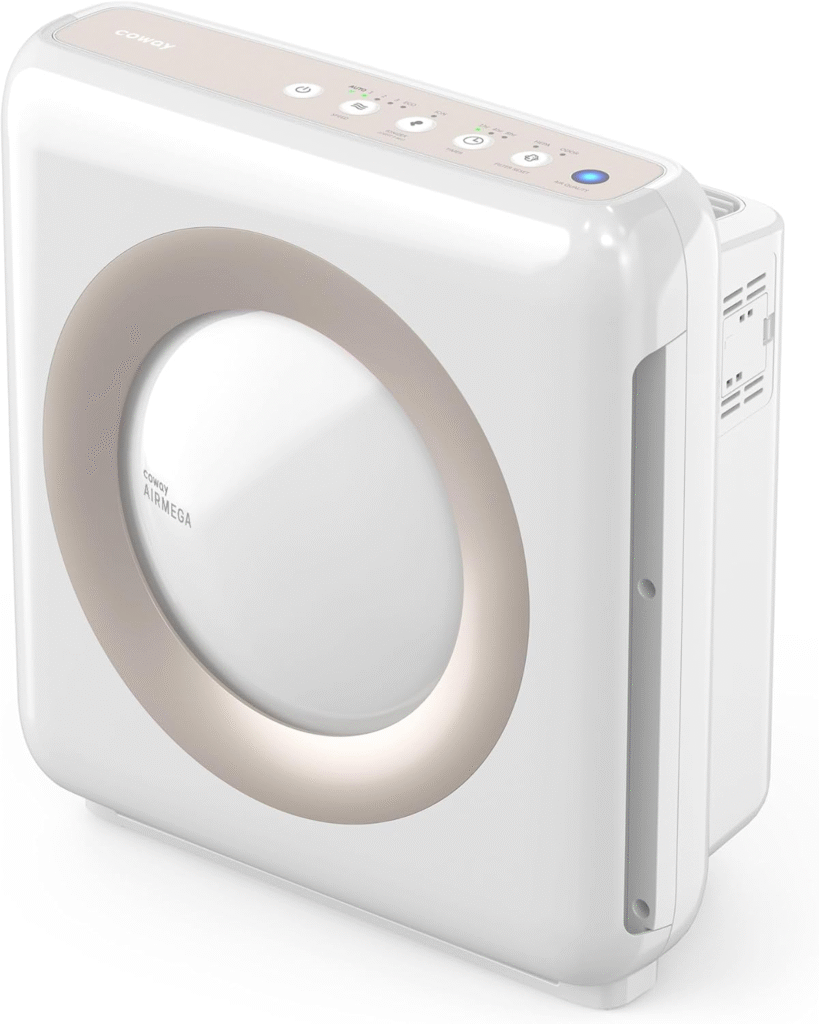
This is the machine I’d point a first-time buyer toward if they wanted one purifier that handles both particles and odor without overspending. It pairs a genuine HEPA filter with a solid activated carbon layer, and its clean air delivery rate for smoke sits around 233 — a strong number for a mid-size, mid-price unit. What I appreciate most is how balanced it feels: it’s not the biggest carbon reservoir on this list, but it doesn’t need to be for typical household smoke exposure. It’s compact enough for a bedroom or living room and doesn’t demand constant filter babysitting.
Best Smart and Budget-Friendly Options: Levoit Core 600S and Core 300
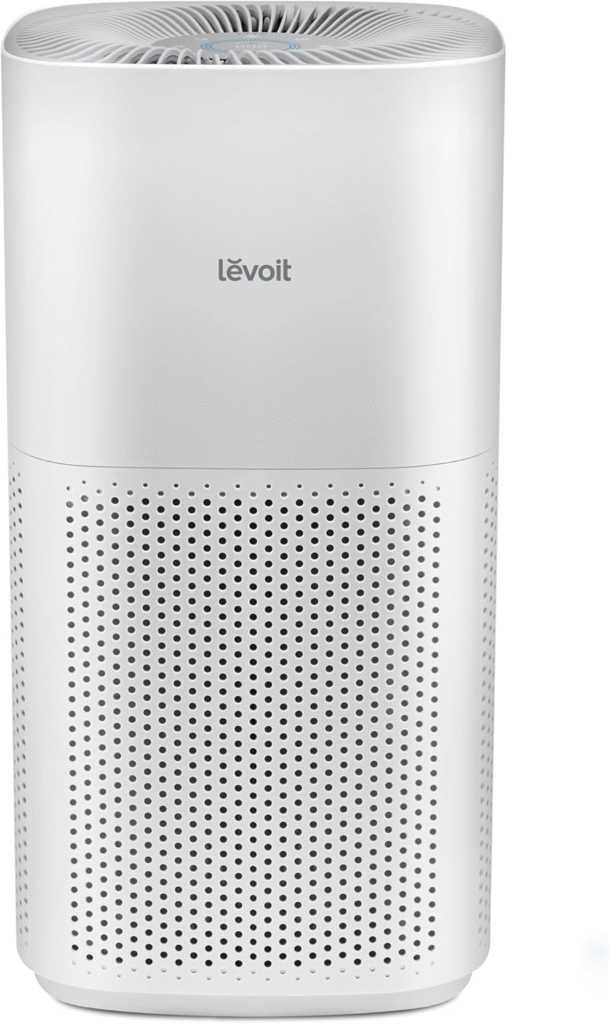
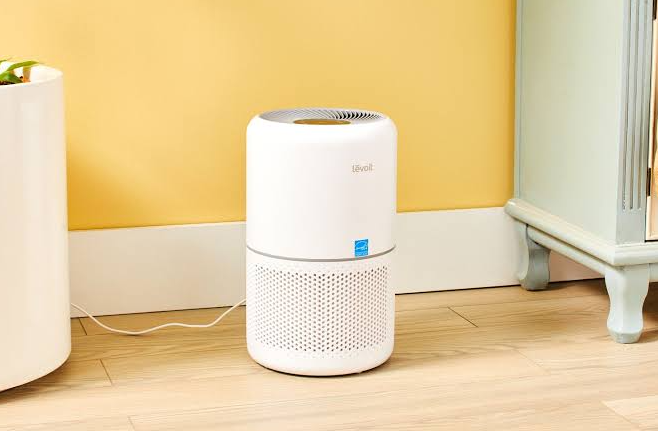
If smart features and affordability matter to you as much as performance, this is where I’d look next. The Levoit Core 600S is built for larger rooms and pairs well with its dedicated Smoke Remover filter, which swaps in extra carbon specifically formulated for tobacco smoke rather than general odors. For smaller spaces like a bedroom, the Core 300 scales that same idea down into a quieter, more compact footprint.
What sold me on this pairing is the flexibility. Instead of buying two entirely different purifier lines for two different rooms, you get a consistent app experience, auto mode that reacts to smoke events in real time, and swappable specialty filters that let you fine-tune performance without overspending on a single oversized unit.
Best for Heavy Smoke and VOCs: IQAir HealthPro Plus
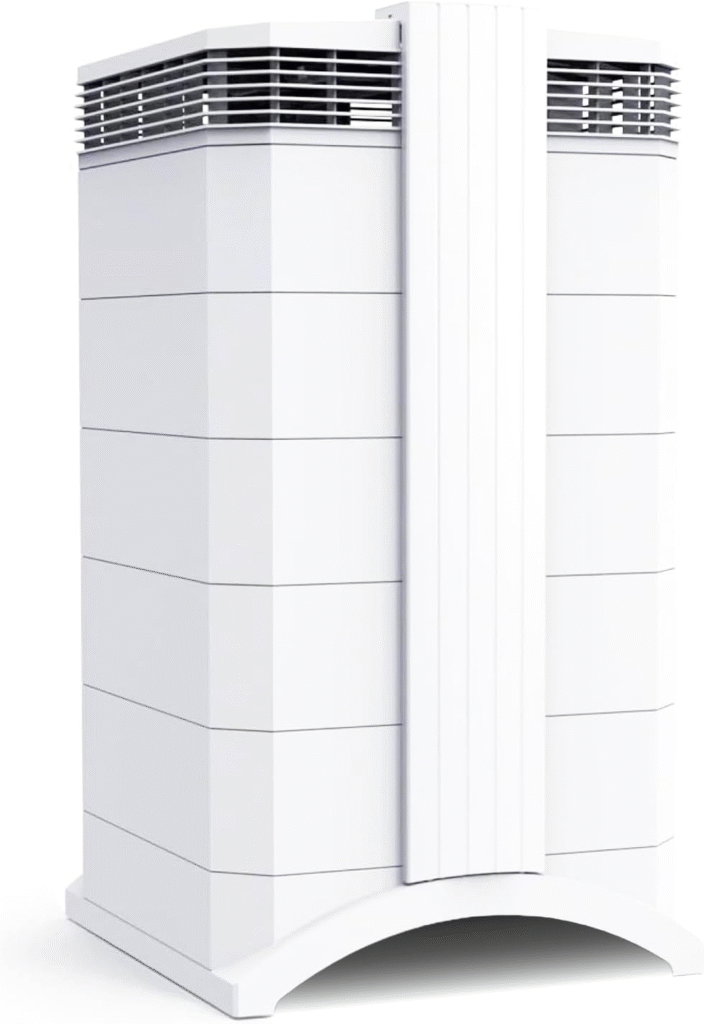
For households dealing with frequent or heavy indoor smoking, I’d stop looking anywhere else. The IQAir HealthPro Plus carries a genuinely massive 5.5-lb medical-grade gas and odor filter alongside its HyperHEPA filtration system, which is certified well beyond standard HEPA thresholds. This is the machine built for aggressive, continuous odor and VOC removal rather than occasional touch-ups.
It’s not cheap, and it skips the smart-home bells and whistles you’ll find on the Levoit models. But if your priority is raw filtration capacity — the kind that keeps performing even after months of daily smoke exposure — the extra investment pays off in filter longevity and consistent air quality.
Best for Large Rooms: Blueair Blue Pure 211i Max
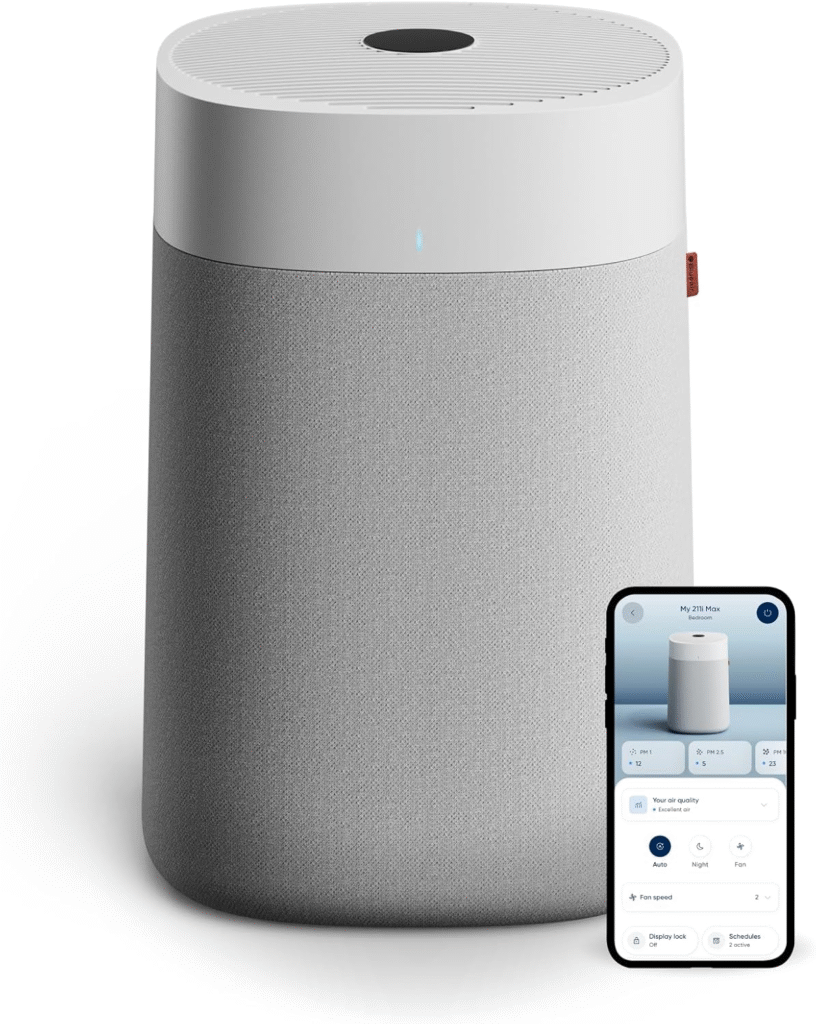
Smoke doesn’t politely stay in one corner of a room, which is exactly the problem the Blueair Blue Pure 211i Max is designed to solve. It’s built to cycle air efficiently across large, open layouts — think open-concept living areas or bigger great rooms — where a smaller unit would simply get overwhelmed trying to keep pace. If square footage is your biggest challenge, this is the one I’d prioritize over a purifier with a smaller CADR, even if that other unit has a slightly more impressive carbon filter on paper.
How I’d Choose Between These
If I only had to remember one rule, it’s this: match the purifier’s carbon filter size and CADR to how much smoke exposure you’re actually dealing with, not just the room dimensions. Light, occasional smoke calls for something like the Coway or a Levoit model. Heavy daily smoking calls for the IQAir’s oversized carbon bed. And if your space is large and open, airflow capacity should outrank filter size in your decision.
FAQs
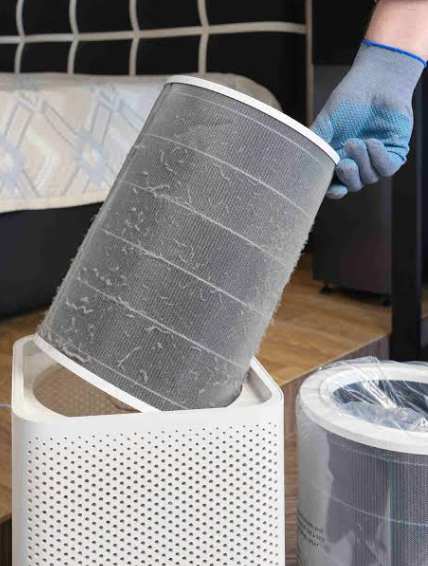
How long do carbon filters last with heavy smoke exposure? Carbon filters saturate faster than the manufacturer’s default timeline suggests when they’re exposed to daily smoke. I’d check filters monthly and replace them sooner than the recommended schedule if you notice odor creeping back or visible discoloration.
Can one purifier fully remove the smell of cigarette smoke? It can dramatically reduce it, but no single machine eliminates it completely on its own. Pairing your purifier with basic ventilation — cracked windows, exhaust fans, or smoking near an open door — gets you the best real-world results.
Do I need a bigger purifier than my room size suggests? For smoke specifically, yes. I’d generally size up rather than buy the exact match for your square footage, since a more powerful unit clears lingering particles and gases faster.
Is activated carbon or HEPA more important for smoke? Neither works well alone — you need both. HEPA handles the physical particles, while carbon handles the odor and gas compounds. Skipping either one leaves a real gap in performance.