
Engaging Introduction
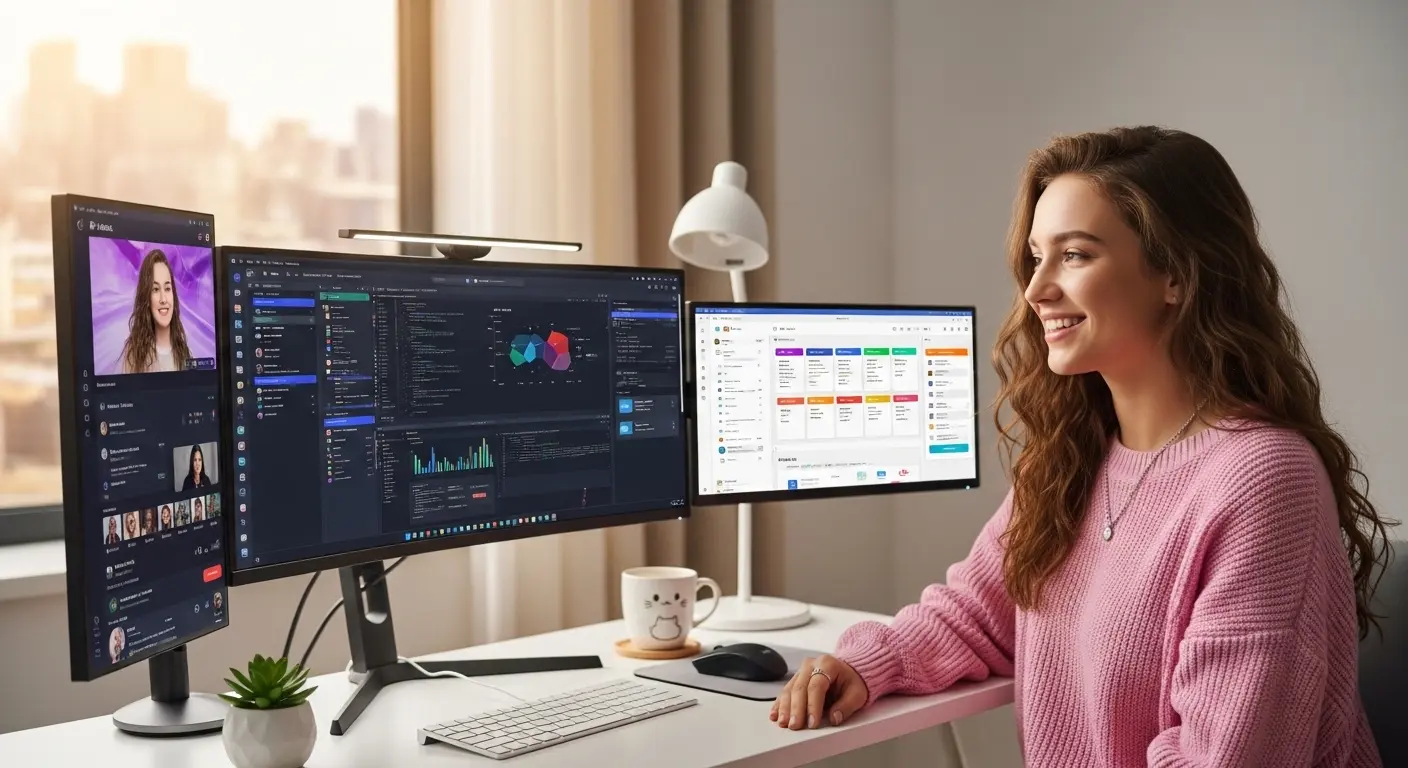
A few weeks ago, I was sitting at my desk trying to finish a long article while juggling emails, spreadsheets, and about ten browser tabs. My laptop screen felt cramped. Every time I switched between windows, my focus broke. Honestly, by the end of the day, my eyes were tired and my neck hurt from leaning forward.
That’s when I realized something important: a good monitor can completely change the way we work.
Whether you’re working from home, editing documents, designing graphics, coding, or managing spreadsheets, the monitor you use affects:
- Productivity
- Eye comfort
- Workspace efficiency
- Overall work experience
Surprisingly, not all monitors are designed for productivity. Some are made mainly for gaming, while others focus on color accuracy, ergonomics, or multitasking.
So I decided to test several monitors that are commonly recommended for work setups. I compared screen size, resolution, brightness, color accuracy, connectivity, and overall comfort during long hours of use.
And honestly? Some impressed me a lot more than I expected. In this guide, I’ll walk you through the best monitors for work, based on real usability, comfort, and performance.
Overview
A couple of months ago, my sister actually gifted me a desk accessory bundle for my birthday. It included a keyboard stand and monitor riser. Sounds simple, right?
But there was one problem: my old monitor didn’t deserve that setup.
The display was dim, colors looked washed out, and multitasking felt frustrating. I couldn’t place two windows side by side comfortably.
So I started testing monitors designed for productivity. I tried different sizes, panels, and resolutions — from budget office monitors to premium ultrawide displays.
After testing them for writing, editing, meetings, and everyday tasks, I noticed a few things:
- Larger screens reduce constant window switching
- IPS panels are much better for long hours
- Adjustable stands make a big difference for posture
- Higher resolution keeps text sharper and easier to read
Based on those experiences, these are the monitors that stood out the most for work environments.
Quick Tips for Shopping
Before jumping into the reviews, here are a few quick tips I learned while choosing a work monitor.
- Choose at least 27 inches if you multitask frequently.
- IPS panels are best for color accuracy and viewing angles.
- 1440p resolution is the sweet spot for productivity.
- Look for height-adjustable stands to avoid neck strain.
- USB-C connectivity is great for laptop users.
- Thin bezels help if you plan to use a dual-monitor setup.
These small details might not seem huge at first, but they definately make a difference when you work long hours.
Product Reviews
Dell UltraSharp U2723QE
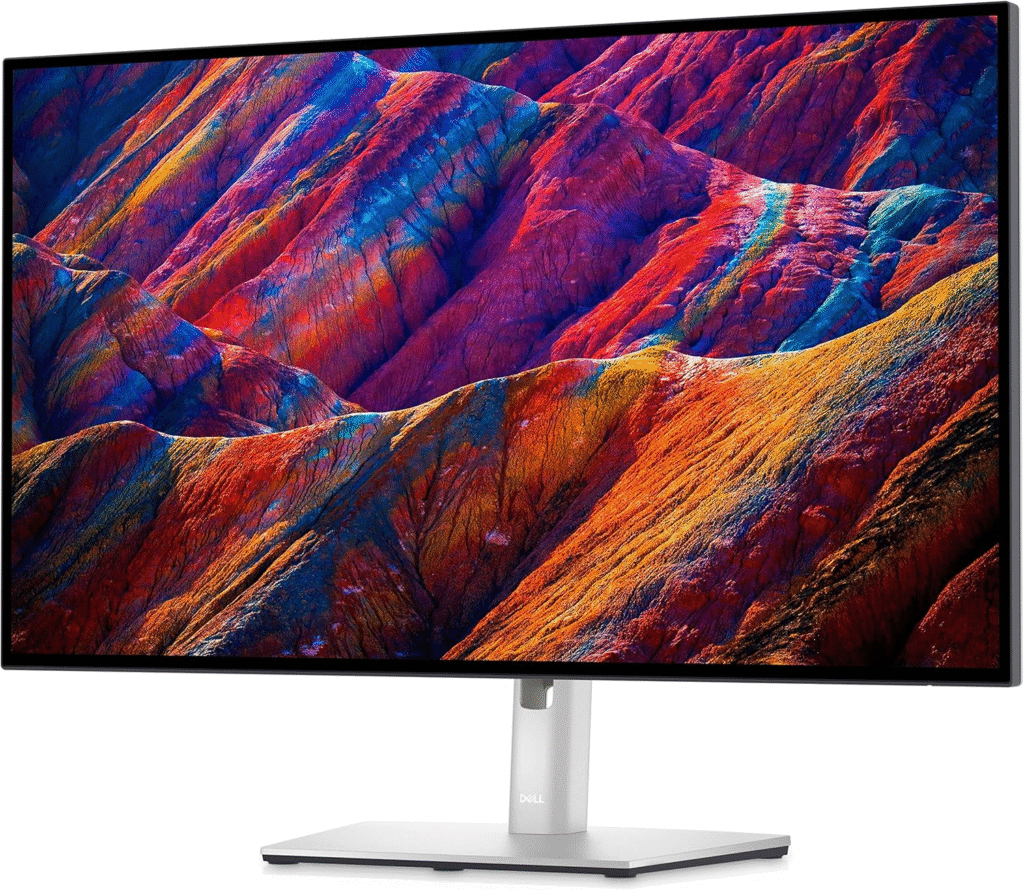
Dell has always been known for reliable office monitors, and the UltraSharp U2723QE is one of the best examples of that reputation.
When I first set it up, the clarity immediately stood out. The 4K resolution makes text incredibly sharp, which is perfect for writing, coding, or reading documents all day. The colors also look natural and balanced, making it a solid choice for professionals who occasionally work with images or videos.
One feature I honestly appreciated was the USB-C connectivity. With a single cable, I could charge my laptop, transfer data, and run the display. That alone simplified my desk setup.
Key Features & Performance
The U2723QE comes with a 27-inch IPS panel and 4K resolution, which gives plenty of screen space for multitasking. I could easily keep a document, browser, and notes open at the same time.
It also includes ComfortView Plus, a built-in blue light reduction feature that helps reduce eye strain during long sessions.
The adjustable stand is another highlight. It supports height adjustment, tilt, pivot, and swivel, making it easy to position the screen perfectly.
For office calls, writing, spreadsheets, and even light design work, the performance felt smooth and reliable.
Summary
The Dell UltraSharp U2723QE is a productivity powerhouse. It delivers excellent sharpness, strong connectivity, and great ergonomics for long work sessions.
Strengths
- Crisp 4K resolution
- Excellent color accuracy
- USB-C connectivity
- Fully adjustable stand
Weaknesses
- Slightly expensive for casual users
- Built-in speakers are basic
About More: Best Computer Monitors for Work
LG 27QN880-B Ergo Monitor
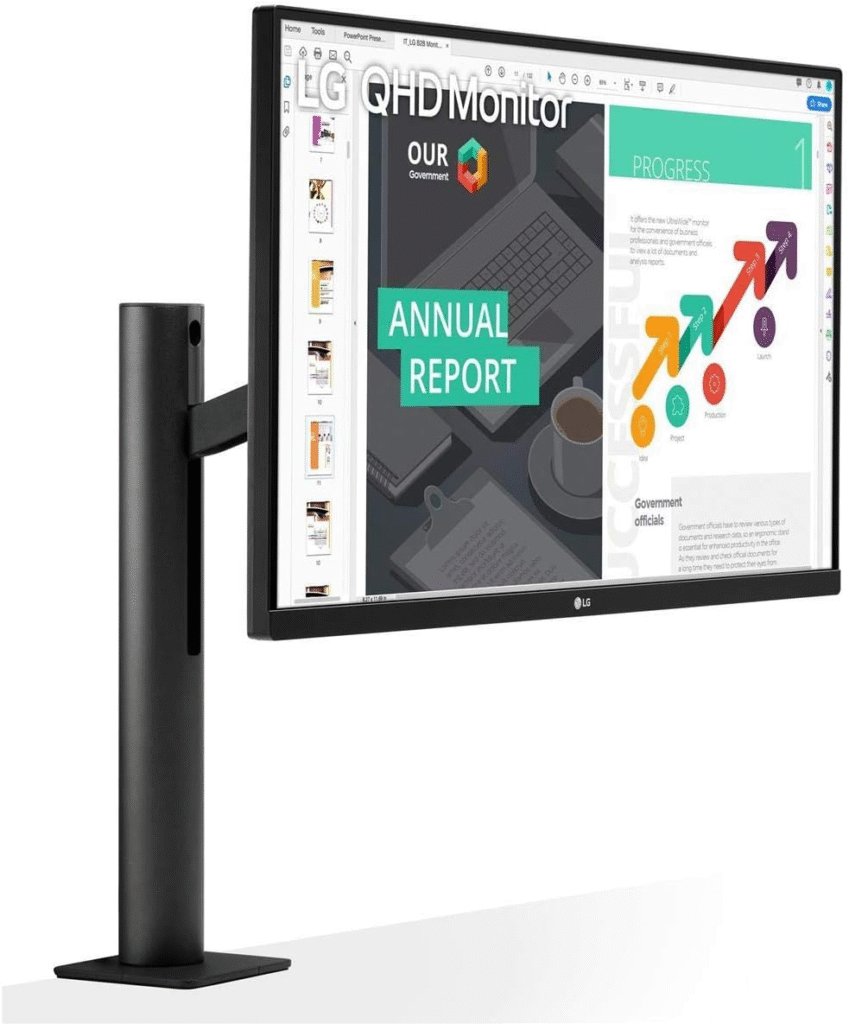
The LG 27QN880-B is a bit different from traditional monitors. Instead of a standard stand, it uses an ergonomic arm mount, which surprisingly changed how I organized my desk.
When I first installed it, I realized how much desk space the arm design saves. I could move the monitor closer when editing or push it back when reading documents.
The screen itself is a 27-inch QHD display, which hits a nice balance between sharpness and performance.
Key Features & Performance
The 2560×1440 resolution is ideal for office work. Text is sharp, but the monitor doesn’t require the extra GPU power that 4K displays sometimes need.
The IPS panel provides strong viewing angles, which is useful if you move around your desk a lot.
What really stands out is the Ergo stand. It allows extreme flexibility, you can adjust height, tilt, rotate, or extend the screen forward.
Honestly, after a week of using it, I started wondering why more monitors don’t include this type of design.
Summary
The LG 27QN880-B is perfect for people who want maximum ergonomic flexibility. The arm mount design keeps the desk clean and improves posture.
Strengths
- Excellent ergonomic arm stand
- Sharp QHD resolution
- Space-saving design
- Great color accuracy
Weaknesses
- Setup takes a little time
- Speakers are average
See More: Best Monitors for Mac Mini
ASUS ProArt Display PA278CV
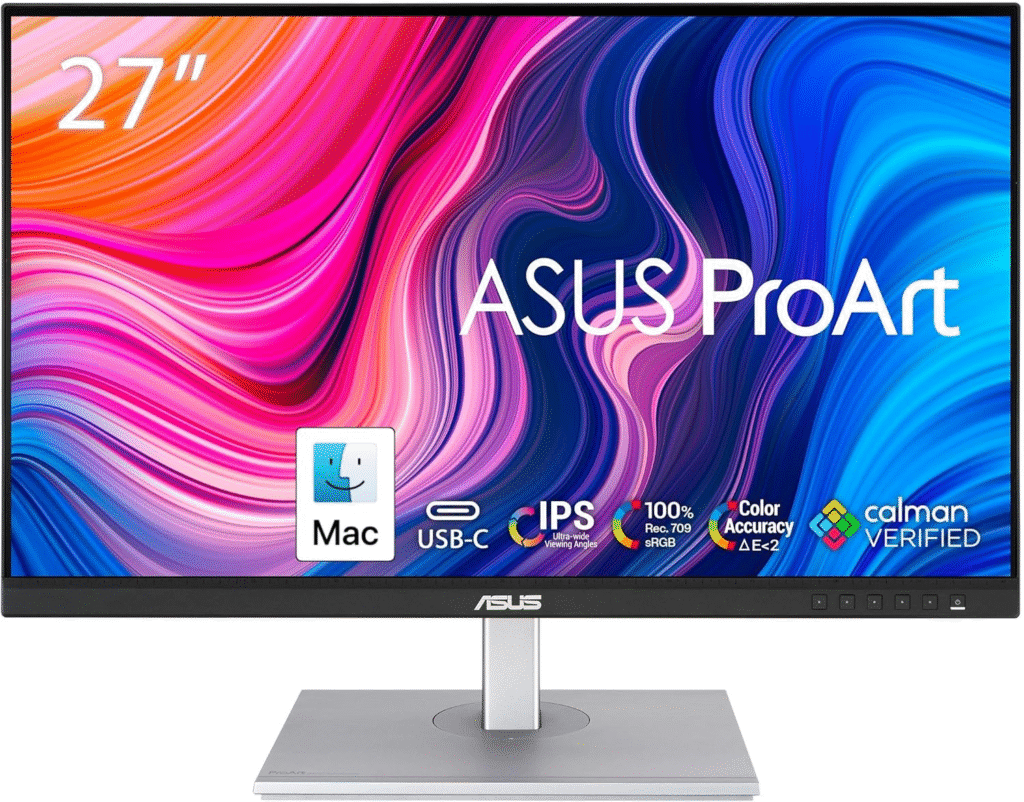
The ASUS ProArt series is designed for creative professionals, but it also works beautifully for everyday productivity.
When I tested the PA278CV, the color accuracy immediately impressed me. The display is factory calibrated, which means images look more realistic compared to standard office monitors.
But even if you’re not a designer, the clarity and balanced colors make reading and editing documents much more comfortable.
Key Features & Performance
This monitor features a 27-inch QHD IPS panel with 100% sRGB color accuracy.
The brightness levels are solid, and the anti-glare coating helps reduce reflections in bright rooms.
Another big advantage is the USB-C port with power delivery, which lets you connect modern laptops with a single cable.
I also appreciated the slim bezels. They make the monitor perfect for dual-monitor setups if you want to expand your workspace later.
Summary
The ASUS ProArt PA278CV combines professional color accuracy with strong productivity features.
Strengths
- Excellent color accuracy
- USB-C connectivity
- Slim bezel design
- Great value for professionals
Weaknesses
- Not designed for gaming
- Average contrast ratio
Quick Picks
If you want the fastest recommendation, here are my top picks.
Best Overall Monitor for Work
Dell UltraSharp U2723QE — incredible sharpness, excellent connectivity, and premium build quality.
Best Ergonomic Option
LG 27QN880-B — the adjustable arm design makes it ideal for flexible workspaces.
Best Value for Professionals
ASUS ProArt PA278CV — perfect balance of color accuracy and productivity features.
FAQs
What size monitor is best for work?
Most professionals find 27-inch monitors ideal for productivity. They offer enough screen space for multitasking without taking up too much desk space.
Is 4K necessary for office work?
Not necessarily. 1440p resolution is usually enough for most office tasks. However, 4K monitors provide sharper text and more screen space.
Are ultrawide monitors good for productivity?
Yes, ultrawide monitors are excellent for multitasking. They allow you to place multiple windows side by side without needing a dual-monitor setup.
Do I need a monitor with USB-C?
If you use a modern laptop, USB-C monitors are very convenient. They allow charging, video output, and data transfer with one cable.
Can a gaming monitor be used for work?
Yes, but work monitors often include better ergonomics, color accuracy, and eye-comfort features designed for long sessions.
Final Summary
After spending weeks testing different monitors, one thing became clear: the right monitor can dramatically improve your workflow.
A larger screen reduces constant switching between windows, sharper resolution keeps text easy to read, and ergonomic stands help maintain better posture during long workdays.
The Dell UltraSharp U2723QE stood out as the best overall choice thanks to its 4K clarity and excellent connectivity. Meanwhile, the LG 27QN880-B impressed me with its flexible ergonomic arm, and the ASUS ProArt PA278CV delivered fantastic color accuracy for professionals.
Of course, every workspace is different. Some people prefer larger screens, while others prioritize ergonomics or budget.
But if you’re tired of cramped laptop screens or struggling with multitasking, upgrading to a dedicated work monitor can make a surprisingly big difference.
Amazon Affiliate Disclaimer
As an Amazon Associate, I earn from qualifying purchases. This helps support our work at no extra cost to you. Products mentioned may occasionally be available with discounts, seasonal sales, or fast shipping through Amazon.