
I still remember the night that kicked this whole thing off. It was around 11:30 PM, my amp was finally dialed in, and I was in that rare mood where every riff just… works. You know the feeling. I plugged in my electric guitar, started running through some blues licks, and about five minutes later my phone buzzed.
It was a message from my neighbor: “Hey… could you maybe keep it down?”
That was the moment I realized something had to change.
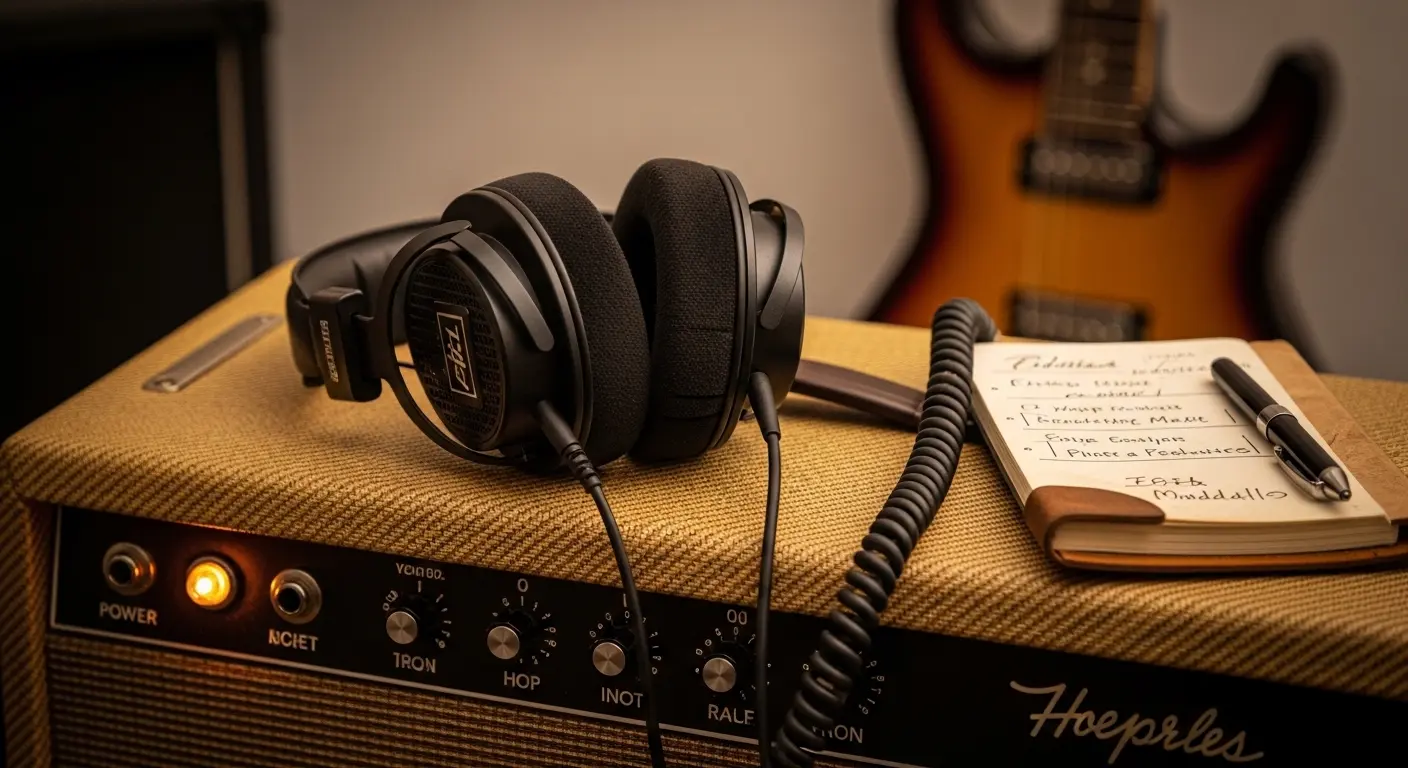
I love practicing late at night. It’s quiet, my brain is calmer, and honestly I play better. But running an amp at night wasn’t going to work anymore. So I started looking for the best headphones for electric guitar,something that would let me hear my tone properly without waking up half the neighborhood.
What I thought would be a quick purchase turned into a surprisingly deep rabbit hole.
The Problem: Regular Headphones Just Didn’t Work
At first, I assumed any decent headphones would do the job.
I grabbed the pair I normally used for music and YouTube, some basic consumer headphones. Plugged them into my audio interface, hit a chord… and immediately something felt off.
The tone sounded flat. The bass was muddy. High notes felt harsh in a weird way.
Electric guitar tone is sensitive. If the headphones exaggerate bass or scoop mids, everything sounds wrong. Distortion becomes messy, clean tones lose sparkle, and dialing in amp sims becomes a guessing game.
After about an hour of frustration, I realized: I needed studio-style headphones, not casual listening ones.
So I started researching.
Forums, Reddit threads, YouTube demos… the same three models kept popping up over and over:
These weren’t flashy “gaming” headphones or noise-canceling travel sets. They were the kind used in studios. People recording guitars, mixing tracks, producing music.
So I ordered two of them first from Amazon (thank you fast shipping)… and later borrowed the third from a friend to compare.
Audio-Technica ATH-M50x
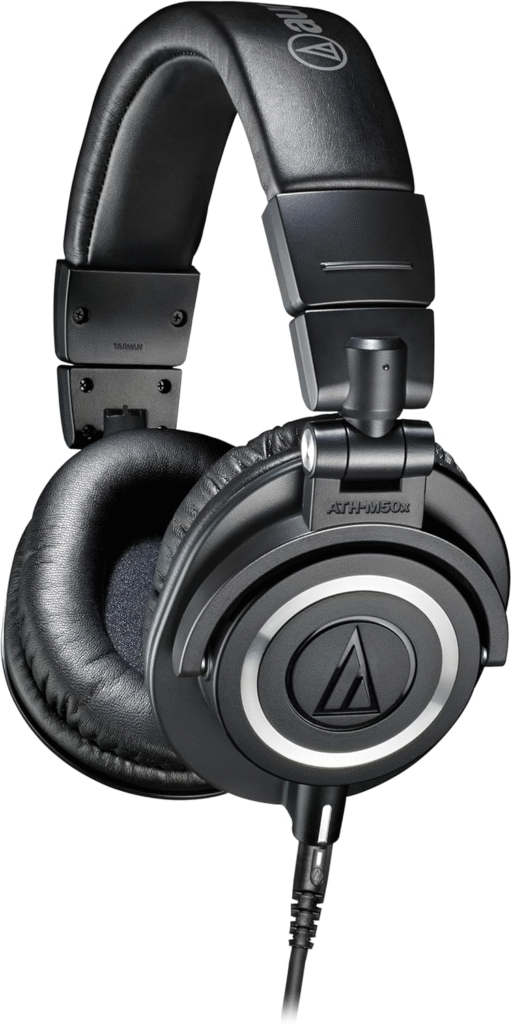
The ATH-M50x was the first pair I tried, mostly because people online seem almost obsessed with them.
First impression? The build felt solid. Not overly heavy, but definately sturdy. The earcups rotate, the cable is detachable (which I love), and the padding felt comfortable right away.
Sound Quality
The sound was punchy and clear.
When I plugged into my amp sim and played a clean Strat tone, the highs sparkled nicely. Distortion tones felt tight, and palm-muted riffs had good definition.
But after a couple days I noticed something: the bass is slightly boosted.
Now for music listening that’s great. Kick drums and bass guitars sound powerful. But for electric guitar tone, it sometimes made my patches feel heavier than they actually were.
It wasn’t bad… just a little colored.
Comfort
Comfort was pretty good overall. I practiced for about two hours straight one night and didn’t feel any serious fatigue.
The clamping force is slightly firm though. After long sessions I’d sometimes take a quick break.
Specs Snapshot
- Frequency response: 15 Hz – 28 kHz
- Impedance: 38 ohms
- Weight: about 285g
- Detachable cables included
- Foldable design
Real-World Use
Surprisingly, these became my travel headphones too. During a train ride last month, I used them for music and editing a guitar track on my laptop. They isolate sound well enough for noisy environments.
Still… for pure guitar tone monitoring, I wondered if something even more neutral existed.
Sony MDR-7506
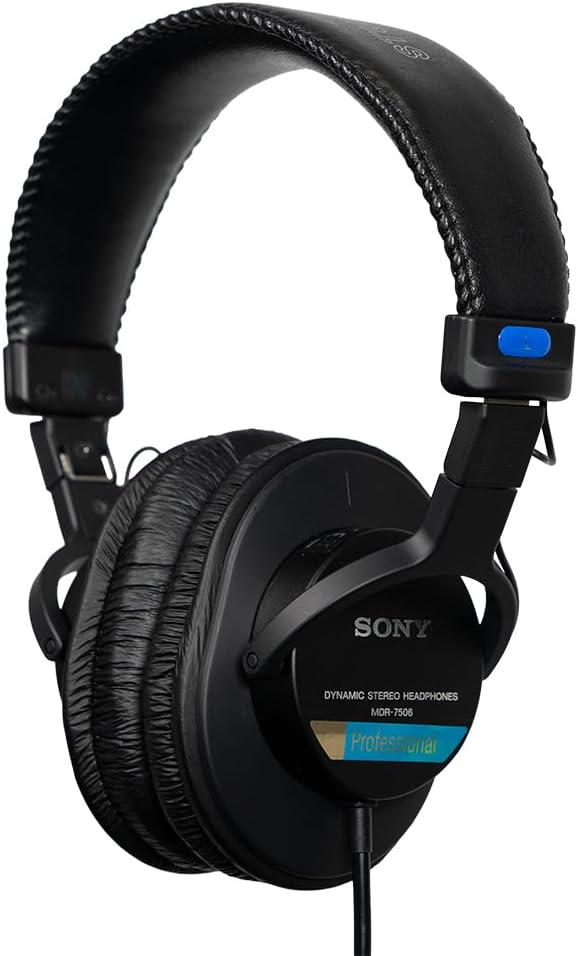
Next up was the Sony MDR-7506.
These headphones have been around forever. Seriously, studios have used them since the 90s.
When they arrived, the first thing I noticed was how lightweight they felt.
Almost too light, honestly.
Sound Quality
But once I plugged in my guitar… wow.
The clarity surprised me.
The mids, where guitar lives.were incredibly clear. When I played blues licks, every subtle finger movement was audible. Slight bends, pick attack, string noise… everything came through.
If the Audio-Technica felt slightly “enhanced,” the Sony headphones felt more honest.
Some people say the treble is a bit bright, and I kinda agree. But for guitar practice that brightness actually helps cut through distortion.
Comfort
Comfort was good, though the ear pads are thinner than the ATH-M50x.
After long sessions, my ears sometimes got warm. I eventually ordered replacement velour pads from Amazon (cheap upgrade and totally worth it).
Specs Snapshot
- Frequency response: 10 Hz – 20 kHz
- Impedance: 63 ohms
- Weight: about 230g
- Foldable design
- Non-detachable cable
That non-detachable cable was my biggest complaint. If it breaks… well, that’s annoying.
Still, tone-wise these were probably the most accurate so far.
Beyerdynamic DT 770 Pro
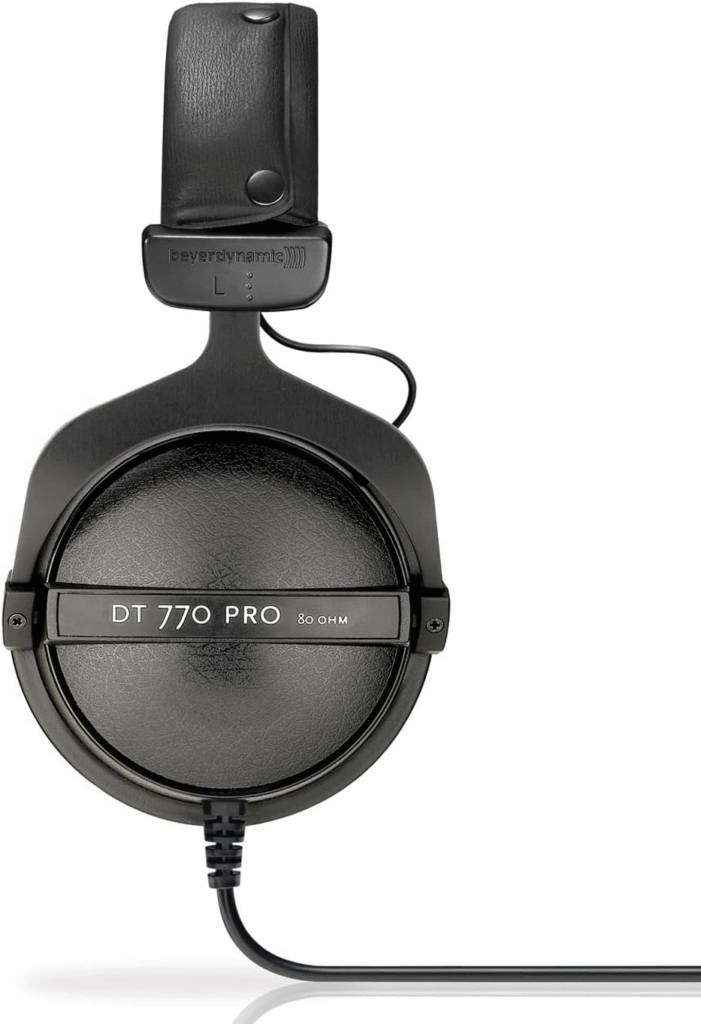
A friend let me borrow his DT 770 Pro (80-ohm version) for a week, and honestly… these almost changed my decision completely.
The first thing you notice is comfort.
Comfort Level: Amazing
The velour ear pads are ridiculously soft.
I’m not exaggerating when I say these might be the most comfortable headphones I’ve ever worn. During a three-hour practice session, I barely noticed them on my head.
For guitarists who practice a lot, that matters.
Sound Quality
The sound signature is interesting.
The bass is deeper than the Sony headphones, but still controlled. Highs are detailed without feeling harsh. And the stereo imaging, how sounds spread across left and right, felt wider.
When playing ambient guitar with delay and reverb, it sounded incredible.
But… there was one small catch.
The midrange is slightly recessed compared to the Sony MDR-7506. That means the guitar doesn’t jump out quite as aggressively in the mix.
Not a dealbreaker, just different.
Specs Snapshot
- Frequency response: 5 Hz – 35 kHz
- Impedance: 80 ohms
- Weight: about 270g
- Closed-back design
- Extremely durable metal frame
Build quality felt tank-like. These things are clearly made to last years.
The Search: Narrowing Down the Options
Before testing them, I had a short checklist.
For guitar practice, headphones need a few key things:
1. Accurate sound
You need to hear your tone honestly. Too much bass or fake treble ruins everything.
2. Comfort
I practice for long sessions—sometimes 2–3 hours. Uncomfortable headphones are a dealbreaker.
3. Closed-back design
Closed headphones isolate sound better and keep guitar noise contained.
4. Durability
Cables get yanked, guitars swing around… you want something built well.
All three headphones seemed to check those boxes on paper.
But specs don’t tell the whole story.
So I spent about three weeks rotating between them, practicing through my amp sims, playing along to backing tracks, and even using them casually for music and editing.
Here’s how it went.
Real-World Guitar Practice
After rotating between the three for a few weeks, I used them in different situations:
Late-night practice
All three worked great plugged into my audio interface. No neighbor complaints anymore… which is nice.
Recording guitar tracks
The Sony MDR-7506 gave me the most accurate monitoring while recording.
Casual music listening
The ATH-M50x was probably the most fun for music.
Long practice sessions
The Beyerdynamic DT 770 Pro won easily for comfort.
Funny enough, I even used them during a work call once when my regular headset died. Not ideal… but they worked.
Price and Buying Experience
Prices fluctuate a bit depending on discounts.
When I checked Amazon recently:
- ATH-M50x: around $150
- Sony MDR-7506: around $100
- Beyerdynamic DT 770 Pro: $150–$170
The Sony pair is usually the cheapest, which surprised me considering how good they sound.
Shipping was fast for me.about two days. Sometimes you can catch small sales too.
I almost bought the DT 770 immediately after trying my friend’s pair… but I held off just to compare longer.
So… Which One Did I Choose?
After three weeks of testing, late-night jams, and probably way too much overthinking…
I ended up choosing the Sony MDR-7506.
Why?
Mostly because of midrange accuracy.
When dialing guitar tones, the mids matter more than anything. These headphones made it easiest to hear exactly what my amp sims were doing.
Also, they’re lightweight and relatively affordable.
That said, it wasn’t a runaway victory.
Quick Comparison
Sony MDR-7506
Best for accurate guitar tone and recording.
Audio-Technica ATH-M50x
Best for all-around use—music, guitar, travel.
Beyerdynamic DT 770 Pro
Best for comfort and immersive sound.
Honestly… you can’t really go wrong with any of them.
Disclaimer:
This article contains personal opinions and affiliate links. Prices and availability may change. Always check product details before buying.
Small Drawbacks
To keep things fair, each one has quirks.
ATH-M50x
- Slightly boosted bass
- Clamp pressure a bit tight
Sony MDR-7506
- Non-detachable cable
- Ear pads wear out faster
DT 770 Pro
- Slightly recessed mids
- Higher impedance versions need stronger amps
Nothing major… just things worth knowing.
Final Thoughts
It’s been about a month since I bought the Sony headphones, and I’m still really happy with them.
Late-night guitar sessions are back. No angry messages from neighbors. My tone dialing is more accurate. And recording demos has become way easier.
Sometimes I still think about grabbing the DT 770 Pro too… mostly for those insanely comfy ear pads.
But if someone asked me today:
“What are the best headphones for electric guitar?”
I’d say start with the Sony MDR-7506, then consider the ATH-M50x or DT 770 Pro depending on your priorities.
Just avoid using random consumer headphones like I did at first.
Trust me… your guitar tone will thank you.