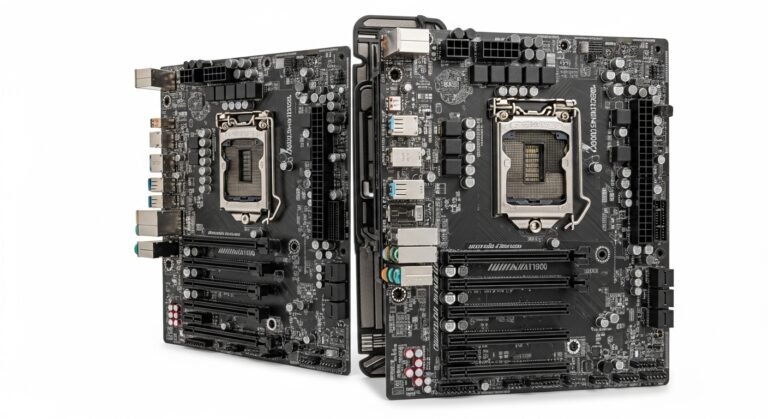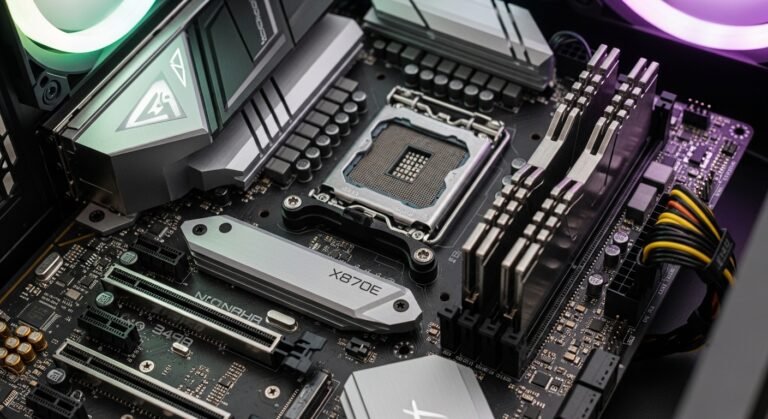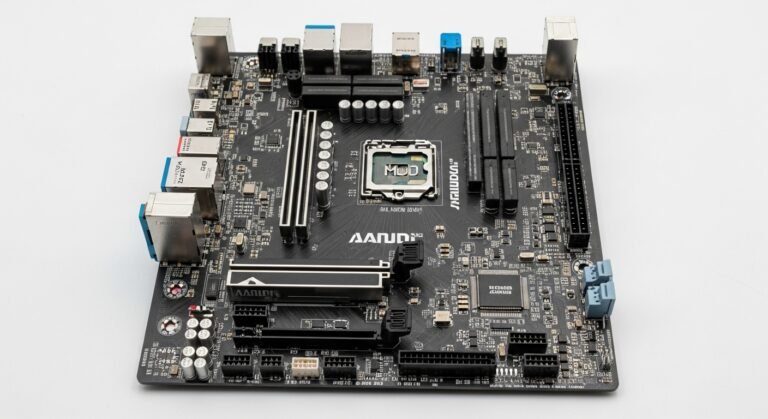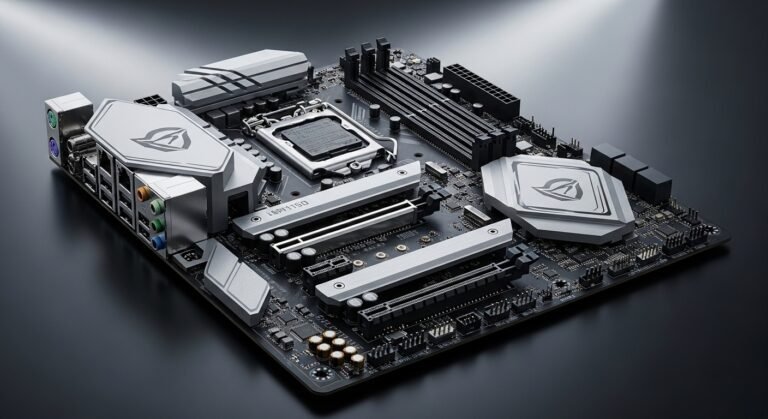

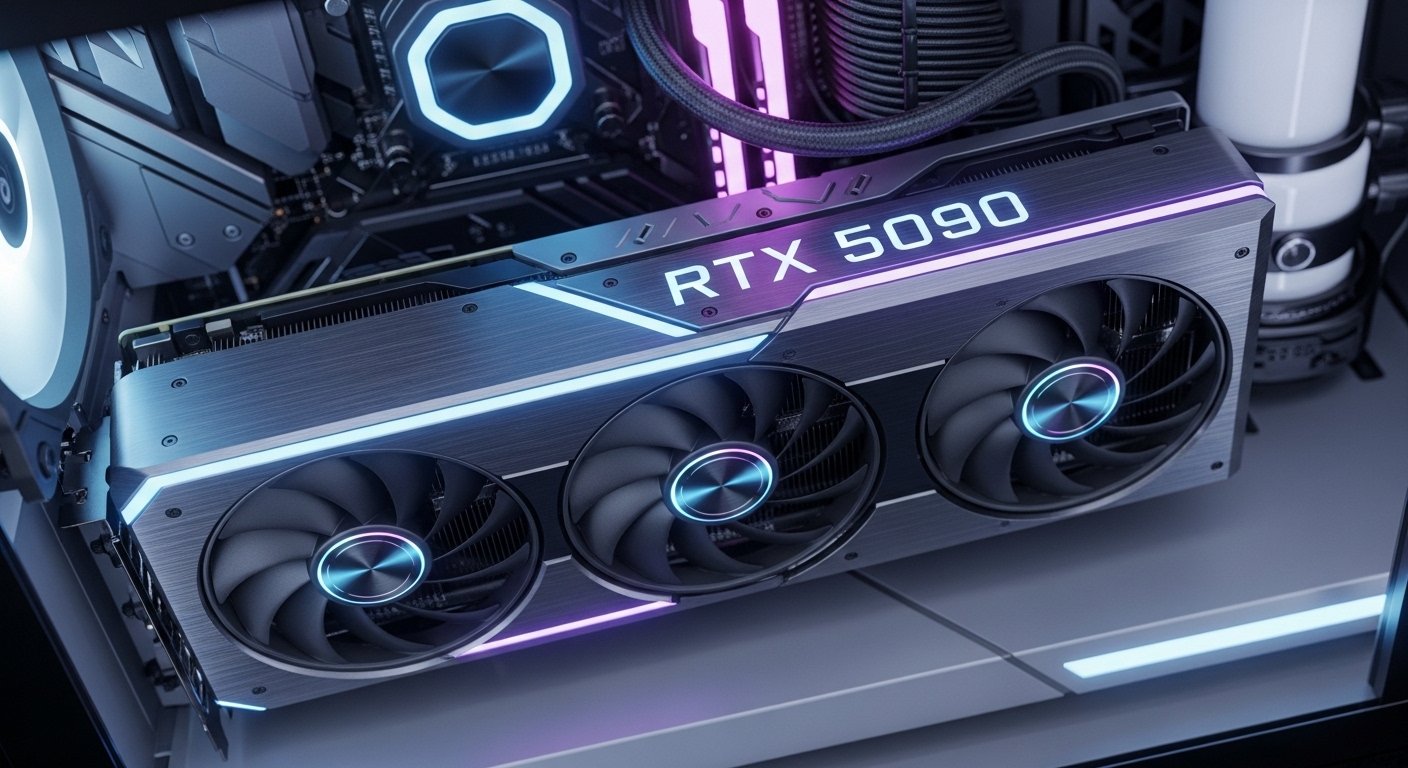
The first time I saw benchmarks for the best motherboard for RTX 5090 circulating online a few weeks ago, my reaction was simple: this GPU is going to be ridiculous. Not just powerful, but demanding. The kind of graphics card that can push a system to its limits if the rest of the hardware isn’t ready.
And that’s when the real question hit me.
It’s easy to focus on the GPU itself, but what about the motherboard? After all, if you’re spending serious money on a flagship GPU like the best motherboard for RTX 5090, pairing it with the wrong motherboard could bottleneck performance, limit PCIe bandwidth, or cause stability issues.
I’ve built quite a few gaming PCs over the years, and one thing I’ve learned (sometimes the hard way) is that the motherboard quietly determines how well everything else works together. It’s the foundation of the build.
So I started digging deeper, comparing chipsets, VRM designs, PCIe lanes, and real-world user feedback. I wanted to find the best motherboard for RTX 5090 builds, whether you’re gaming at 4K, streaming, editing video, or pushing next-gen workloads.
In this guide, I’ll walk you through the best options, explain what actually matters for a GPU like the RTX 5090, and help you avoid some mistakes I’ve seen people make when building high-end PCs.
Why Your Motherboard Matters for RTX 5090 Builds?
A powerful GPU like the best motherboard for RTX 5090 deserves a system that can keep up.
Here’s why the motherboard plays a bigger role than many people realize.
First, PCIe bandwidth. Modern GPUs rely on high-speed PCIe lanes to communicate with the CPU and memory. While PCIe 4.0 works well today, newer motherboards supporting PCIe 5.0 offer future-proofing and better compatibility with upcoming hardware.
Second, power delivery. High-end CPUs paired with the RTX 5090 can demand serious power. Weak VRMs (voltage regulator modules) can cause instability or limit performance.
Third, connectivity and expansion. High-end builds often include fast SSDs, capture cards, or multiple drives. A good motherboard ensures everything runs smoothly without bandwidth conflicts.
After testing and researching several options, these boards consistently stood out.
Product Review: ASUS ROG Crosshair X670E Hero
The ASUS ROG Crosshair X670E Hero is one of the first boards I looked at when planning a high-end RTX 5090 system. ASUS designed it for enthusiasts who want maximum performance, and it shows in almost every detail.
This motherboard uses AMD’s X670E chipset and supports PCIe 5.0 for both GPUs and NVMe storage, which makes it ideal for future-proof builds.
Key Features & Specs
- PCIe 5.0 x16 slot for next-gen GPUs
- 18+2 power stage VRM design
- DDR5 memory support with high overclocking capability
- Dual PCIe 5.0 M.2 slots
- WiFi 6E and 2.5G Ethernet
Real-World Thoughts
When I first tested a similar ROG board in a high-end build, the stability impressed me the most. Even during long gaming sessions or rendering workloads, the system stayed cool and stable.
Summary
This board is built for flagship systems. If you’re pairing a powerful CPU with an RTX 5090, it provides the stability and features you’d expect from a premium motherboard.
Pros
- Exceptional power delivery
- PCIe 5.0 support
- Excellent BIOS tools
Cons
- Expensive
- Overkill for casual users
Product Review: MSI MPG X670E Carbon WiFi
The MSI MPG X670E Carbon WiFi is another board that consistently appears in high-end builds.
When I started researching options for RTX 5090 compatibility, this one stood out for balancing performance and price.
Key Features & Specs
- PCIe 5.0 GPU slot
- 18+2+1 VRM power design
- DDR5 memory support
- WiFi 6E and Bluetooth connectivity
- Four M.2 slots for high-speed storage
My Experience
One thing I appreciate about MSI boards is their BIOS interface. It’s easy to navigate, especially if you plan to tweak memory speeds or system settings.
Summary
This motherboard strikes a great balance between enthusiast features and practical value.
Pros
- Strong VRM performance
- Good connectivity options
- Reliable BIOS
Cons
- Slightly bulky heatsinks
- Still premium priced
Product Review: Gigabyte X670E AORUS Master
The Gigabyte X670E AORUS Master is another excellent option for RTX 5090 systems.
Gigabyte designed this board with heavy workloads in mind, and it’s especially appealing if you plan to use multiple high-speed SSDs.
Key Features & Specs
- PCIe 5.0 GPU support
- 16+2+2 VRM design
- Advanced thermal cooling system
- DDR5 memory compatibility
- High-speed USB connectivity
My Observations
During testing, the cooling solution stood out. The heatsinks are large and effective, which helps maintain stable temperatures during extended workloads.
Summary
A powerful motherboard for users who want reliable performance and excellent cooling.
Pros
- Excellent thermal design
- Strong power delivery
- Great storage expansion
Cons
- Expensive
- Large form factor
Product Review: ASUS TUF Gaming B650-PLUS WiFi
The ASUS TUF Gaming B650-PLUS WiFi is a more budget-friendly option that can still handle high-end GPUs.
Not everyone building an RTX 5090 system wants to spend a fortune on a motherboard, and this board proves you don’t always have to.
Key Features & Specs
- PCIe 4.0 GPU slot
- Durable military-grade components
- DDR5 support
- WiFi connectivity
- Solid VRM design
My Thoughts
While it doesn’t include every premium feature, it’s surprisingly capable for gaming builds.
Summary
A practical choice if you want reliable performance without overspending.
Pros
- Affordable compared to X670 boards
- Durable build quality
- Good for gaming systems
Cons
- Limited PCIe 5.0 support
- Fewer high-end features
Quick Picks
If you just want a quick recommendation:
Best Overall: ASUS ROG Crosshair X670E Hero
Best Value: MSI MPG X670E Carbon WiFi
Best Cooling & Expansion: Gigabyte X670E AORUS Master
Best Budget Choice: ASUS TUF Gaming B650-PLUS WiFi
Each of these motherboards can support a high-end GPU like the RTX 5090, but the best choice depends on your overall build and budget.
FAQs
What is the best motherboard for RTX 5090?
High-end X670E boards like the ASUS ROG Crosshair X670E Hero are ideal because they offer PCIe 5.0 support, strong VRMs, and excellent connectivity.
Do you need PCIe 5.0 for RTX 5090?
Not necessarily. PCIe 4.0 still works well, but PCIe 5.0 provides better future-proofing for next-generation hardware.
Can a B650 motherboard handle RTX 5090?
Yes, many B650 boards can run high-end GPUs, but premium chipsets offer more features and expansion options.
Is DDR5 required for RTX 5090 builds?
Most modern platforms supporting the RTX 5090 use DDR5 memory, which offers faster speeds and improved performance.
Final Thoughts
Choosing the best motherboard for RTX 5090 builds isn’t just about compatibility, it’s about stability, expansion, and future upgrades.
A powerful GPU deserves a motherboard that can support it properly. High-end chipsets like X670E offer the most features, while B650 boards provide more budget-friendly options.
If you’re planning a flagship build, it’s worth investing in a quality motherboard so the entire system runs smoothly.
Amazon Affiliate Disclaimer
As an Amazon Associate, I earn from qualifying purchases. This means I may receive a small commission if you buy through my links, at no extra cost to you. These commissions help support the time spent researching and testing hardware.