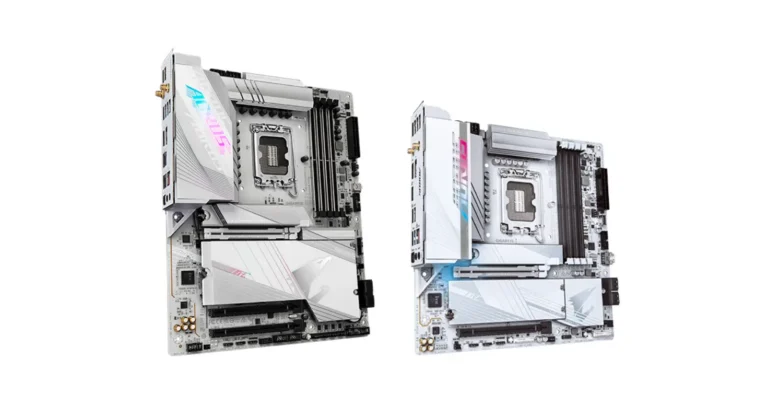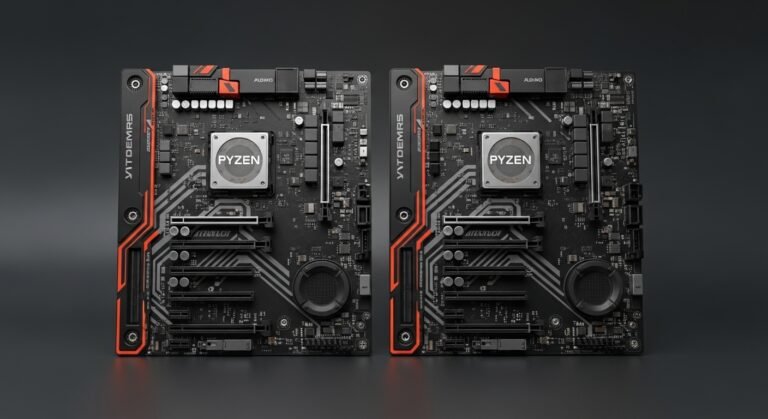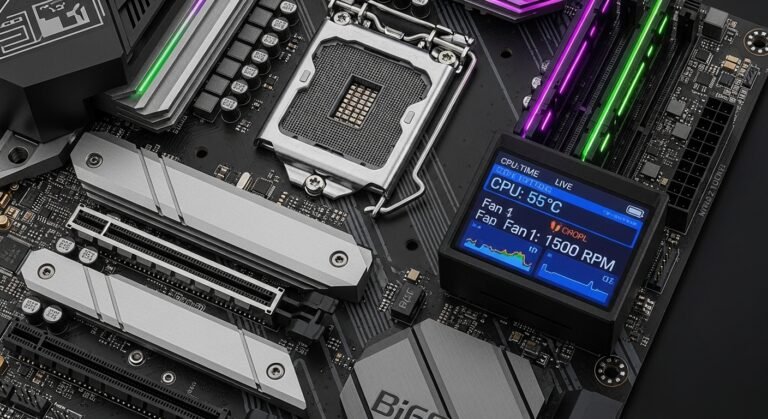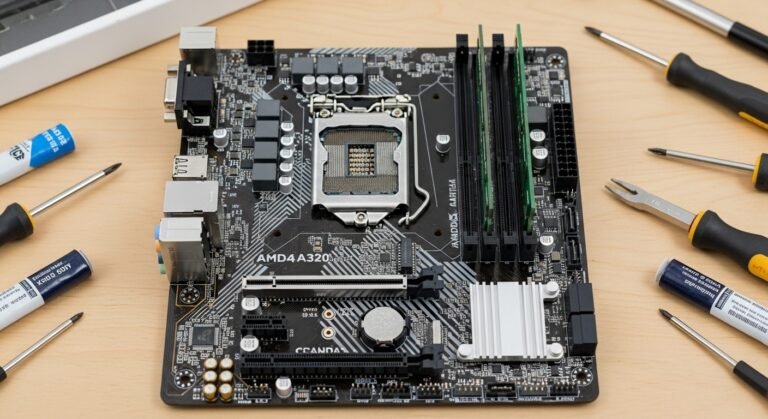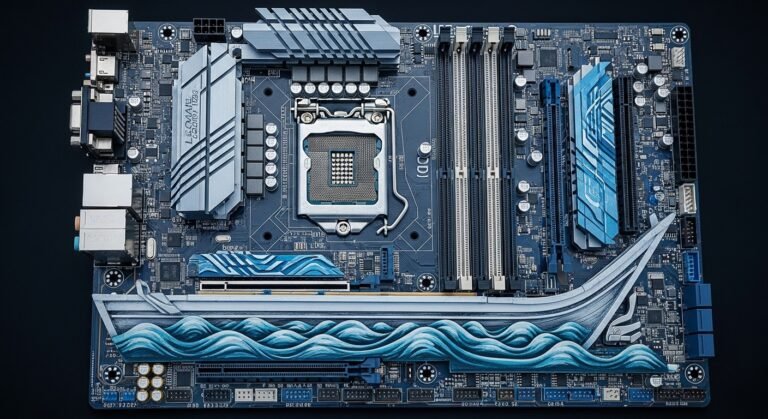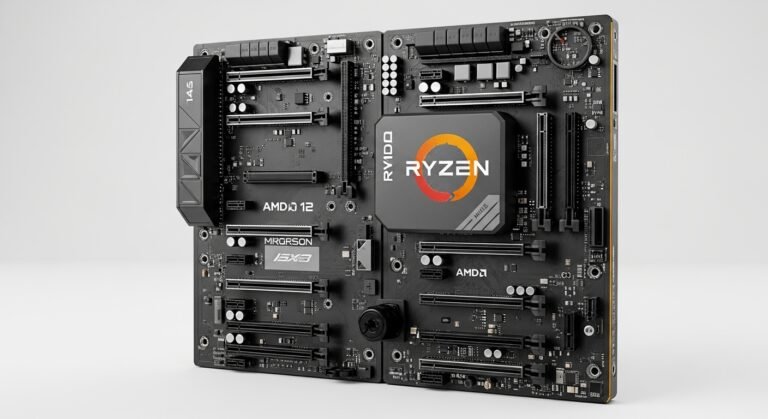

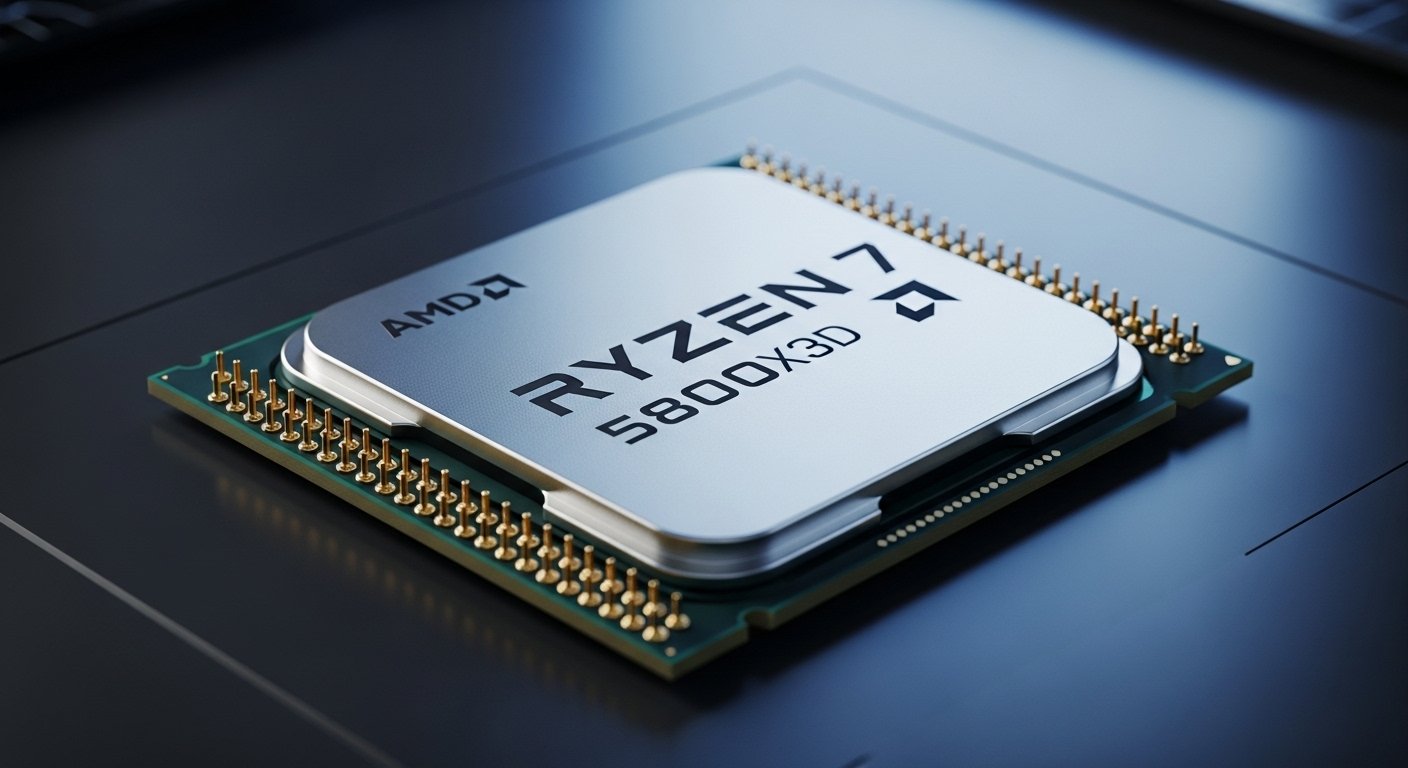
A few weeks ago, I upgraded to the best motherboards for Ryzen 7 5800X3D expecting instant gaming perfection… but something felt off. Frames were high, sure, but consistency Not so much. Stutters showed up in games that should’ve been buttery smooth.
At first, I blamed drivers. Then RAM. Even my SSD.
But the real issue?
The motherboard.
That moment pushed me down a rabbit hole I didn’t plan on entering. Because the best motherboards for Ryzen 7 5800X3D is still one of the best gaming CPUs available, thanks to its 3D V-Cache, but not every AM4 motherboard lets it shine.
So I did what any slightly obsessive builder would do: I tested multiple boards, updated BIOS versions, monitored VRM thermals, and compared real-world gaming performance.
And honestly? Some boards handled it beautifully. Others, not so much.
If you’re wondering which motherboard actually unlocks the full power of the 5800X3D, this guide will help you avoid the mistakes I almost made.
Overview: Why This Became Personal
This build wasn’t just another upgrade project.
On my birthday earlier this year, my sister gifted me a Ryzen 7 5800X3D, and yeah, I didn’t expect that. It felt special. I wanted to build something worthy of it.
But after testing several boards (definately more than I planned), I realized something:
Not all AM4 motherboards handle this CPU equally.
Even though it’s “compatible” with many, performance depends heavily on:
- BIOS support
- VRM stability
- Memory compatibility
- Thermal efficiency
And that’s exactly what I’ll help you understand here.
Engaging Introduction
The Ryzen 7 5800X3D is built differently.
Its massive L3 cache boosts gaming performance dramatically, sometimes outperforming newer CPUs. But unlike traditional chips, you can’t overclock it normally.
So what matters most?
Your motherboard.
Without a stable board:
- Boost clocks fluctuate
- Frame pacing becomes inconsistent
- System stability suffers
Choosing the right motherboard isn’t optional, it’s essential.
Quick Tips for Shopping
- Look for strong VRM design
- Ensure BIOS supports Ryzen 5000 series
- Prefer PCIe 4.0 for modern GPUs
- Check memory compatibility
- Choose good cooling design
Product Reviews
ASUS ROG Strix X570-E Gaming WiFi II
The ASUS ROG Strix X570-E Gaming WiFi II quickly became my benchmark when testing high-end boards.
Built for gamers and performance enthusiasts, this motherboard combines premium build quality with stable power delivery.
Features & Real Use
It handled long gaming sessions without VRM overheating. Frame consistency improved noticeably when paired with the 5800X3D.
You also get:
- PCIe 4.0 support
- WiFi 6E
- Excellent cooling
- BIOS Flashback
For gamers and streamers, this means smoother gameplay and reliable performance.
Summary
A premium board that ensures stable gaming performance.
Strengths
- Outstanding VRM
- Great connectivity
- Strong thermal design
Weaknesses
- Expensive
- Overkill for casual builds
MSI MAG B550 Tomahawk
The MSI MAG B550 Tomahawk surprised me the most.
I wasn’t expecting a mid-range board to perform this well.
Features & Real Use
Its VRM setup handled the 5800X3D comfortably, even in demanding gaming scenarios.
It offers:
- PCIe 4.0 support
- Large heatsinks
- 2.5G LAN
Perfect for gamers who want performance without overspending.
Summary
Best balance between performance and price.
Strengths
- Affordable
- Reliable VRM
- Clean design
Weaknesses
- No built-in WiFi
- Fewer premium extras
Gigabyte X570 AORUS Elite
The Gigabyte X570 AORUS Elite is built for stability.
During testing, it maintained consistent performance across gaming and multitasking workloads.
Features & Real Use
It includes:
- PCIe 4.0
- Solid VRM design
- Efficient cooling
Great for content creators and gamers alike.
Summary
Dependable performance for long-term use.
Strengths
- Reliable
- Good cooling
- Future-ready storage
Weaknesses
- No WiFi
- BIOS updates may be needed
ASUS TUF Gaming B550-PLUS WiFi II
The ASUS TUF Gaming B550-PLUS WiFi II stands out for value.
Built with durability in mind, it handled the 5800X3D better than expected.
Features & Real Use
You get:
- PCIe 4.0
- Built-in WiFi
- Durable components
Ideal for budget-conscious gamers.
Summary
Affordable and stable.
Strengths
- Budget-friendly
- Built-in WiFi
- Reliable
Weaknesses
- Limited premium features
- Not ideal for extreme setups
Quick Picks
- Best Overall: ASUS ROG Strix X570-E Gaming WiFi II
- Best Value: MSI MAG B550 Tomahawk
- Best Budget: ASUS TUF Gaming B550-PLUS WiFi II
FAQs
Do I need an X570 motherboard?
No, B550 works great if VRMs are strong.
Is BIOS update required?
Often yes, check compatibility before installing.
Can I overclock best motherboards for Ryzen 7 5800X3D?
Not traditionally.
Does PCIe 4.0 matter?
Yes for GPUs and SSDs.
Final Thoughts
Choosing the best motherboard for best motherboards for Ryzen 7 5800X3D is about stability, not just features. Premium boards ensure long-term performance, while B550 options offer excellent value.
Amazon Affiliate Disclaimer
As an Amazon Associate, I earn from qualifying purchases. This comes at no extra cost to you and helps support honest reviews like this one.