
Have you ever stood in your own living room, breathing in a smell you didn’t invite, wondering why the $150 machine humming in the corner isn’t doing a single thing about it? I have. And if you’re here, I’m guessing you have too.
For me, it was a strong incense and pepper smell drifting in from a neighbor’s place. I had two purifiers running — a Coway and a Levoit — and the smell still hung around my bedroom door for days. Days. Not minutes, not hours. I started digging into forums, product specs, and real owner reviews to figure out why, and what I found surprised me: most air purifiers aren’t actually built to fight odor. They’re built to catch dust and pollen, and odor control is an afterthought with a thin strip of carbon slapped onto the filter for marketing purposes.
Here’s the short version of what I learned: to truly kill odors, you need heavy, pelletized activated carbon — not the thin “carbon-coated” sheets you see in most budget purifiers. That thicker, granular carbon has far more surface area to trap the gases and VOCs that create smell in the first place. Once I understood that distinction, everything about shopping for an odor-fighting purifier finally made sense. In this article, I’m walking you through the models that actually deliver on that promise, based on real specs, real carbon content, and real owner experiences — so you don’t waste your money the way I almost did.
Read More: The Best Air Purifiers for Pet Odor, Hair, and Dander (2026)
My Journey Into the World of Carbon Filters
I’ll be honest, I used to think all air purifiers were basically the same box with a different logo. It wasn’t until I started comparing filter specs side by side that I realized how big the gap actually is. Some units carry a few ounces of carbon dust bonded to a HEPA sheet. Others pack half a pound, a full pound, or — in the case of the heaviest-duty machines — over fifteen pounds of actual carbon pellets and zeolite.
That difference is the entire story when it comes to odor. HEPA filters are excellent at trapping particles like dust, pet dander, and pollen, but odor molecules are gases, and gases slip right through a HEPA filter. Only carbon can chemically bind and hold onto them. So if odor is your main enemy — cooking smells, pet smells, smoke, or a neighbor’s incense drifting through the walls — the amount and type of carbon in your purifier matters more than almost anything else on the spec sheet.
With that in mind, here’s my honest breakdown of the four purifiers that consistently came out on top for odor control, across every price range I looked at.
Product Reviews
Winix 5500-2 — Best for Value & Odor Contro
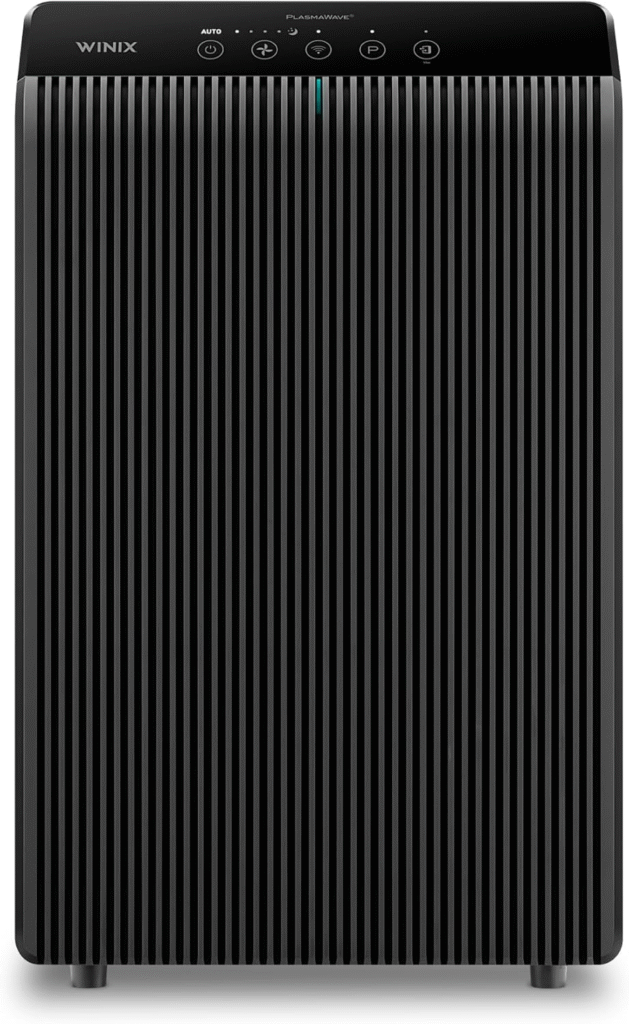
If you want serious odor performance without spending premium-purifier money, the Winix 5500-2 is where I’d start. It’s built for exactly the kind of everyday households dealing with cooking smells, pet odors, and general staleness — not industrial-level stink, but the real-world stuff most of us actually deal with. What makes it stand out in this price bracket is that it doesn’t cut corners on its carbon filter the way so many competitors do.
Key features:
- Over half a pound of true granular, pelletized carbon (not a thin carbon-coated sheet)
- True HEPA filtration for dust, pet dander, and pollen alongside the odor layer
- PlasmaWave technology for an added layer of air treatment
- Auto mode with air quality sensor and multiple fan speeds
Why I like it: For around $150–$160, you’re getting carbon density that units twice its price sometimes skip. It genuinely tackles cooking and pet smells rather than just masking them temporarily.
Why I dislike it: The plastic housing feels a bit basic for the price, and the carbon filter needs replacing every few months if odors are heavy in your home.
Buy it if you want strong, reliable odor performance on a realistic household budget. Don’t buy it if you’re dealing with extreme, industrial-level odors — you’ll want to size up.
Austin Air Healthmate — Best Heavy-Duty Option
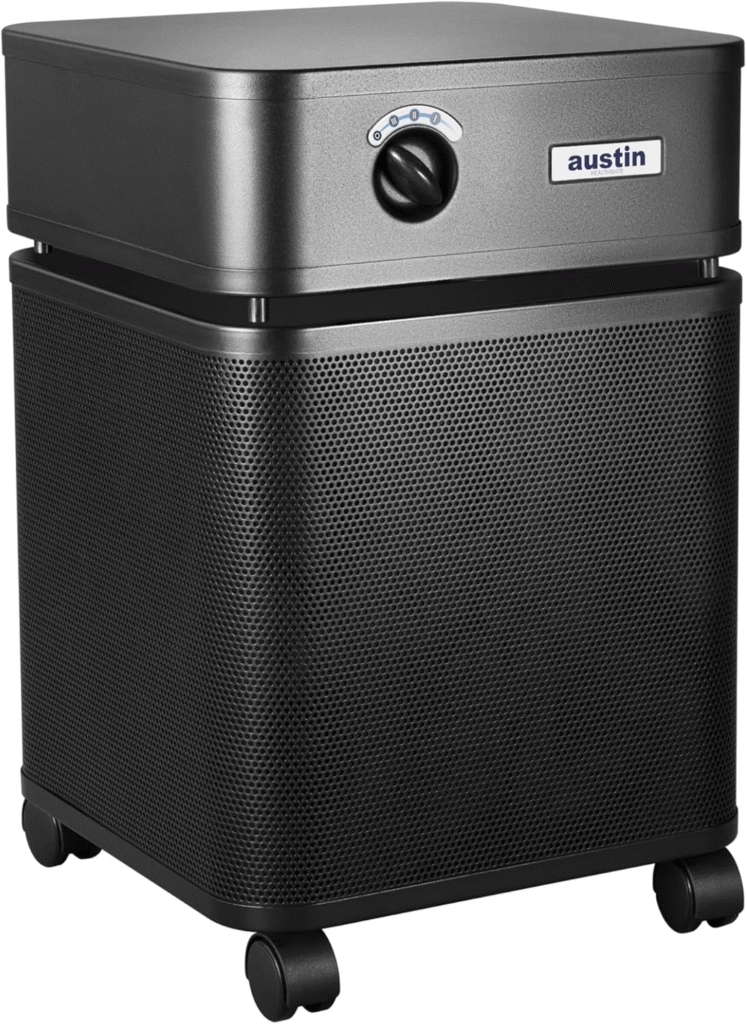
This is the purifier I’d point to if someone told me their odor problem was genuinely severe — think wildfire smoke, cigarette smoke that’s soaked into a room, or the kind of set-in smell that makes you want to leave the house. The Austin Air Healthmate isn’t subtle, and it isn’t cheap, but it’s the closest thing to an industrial-grade solution you can put in a home.
Key features:
- Over 15 lbs of activated carbon and zeolite blended for odor and VOC absorption
- Medical-grade HEPA filtration rated for particles down to 0.1 microns
- Steel housing built to last for years, not seasons
- Designed to run continuously in larger rooms or open-concept spaces
Strengths: Nothing else on this list comes close to its raw carbon capacity. If your odor problem has been resistant to everything else you’ve tried, this is the machine that actually has the mass to neutralize it long-term rather than just for a few minutes.
Weaknesses: At around $765, it’s a serious investment, and it’s a large, heavy unit — not something you’re tucking into a small apartment corner.
Reason to buy: you have a severe, stubborn odor problem and you’re done experimenting with smaller machines. Reason to not buy: your smells are mild to moderate — you’d be paying for capacity you don’t need.
Winix 5510 — Best for Pet Owners
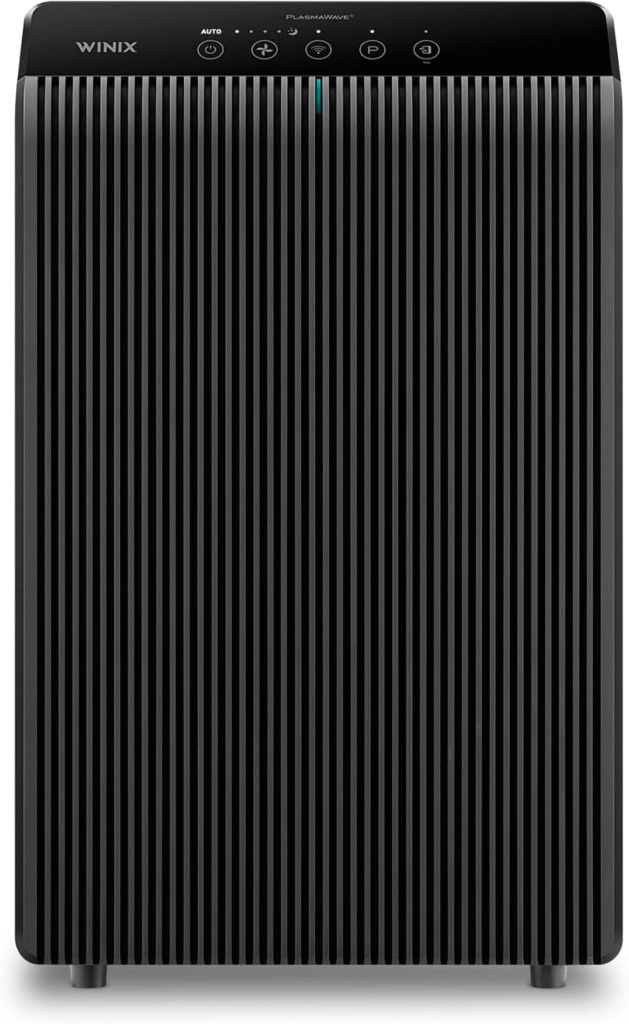
If your main battle is wet-dog smell, litter box odor, or general pet funk, the Winix 5510 is basically a sibling of the 5500-2 with the same pellet-based carbon technology, tuned for exactly that fight. I like recommending this one to pet owners specifically because it doesn’t just mask animal odors — it goes after them directly.
Key features:
- Pellet-based activated carbon filter identical in approach to the 5500-2
- True HEPA layer for dander and hair particles
- Multiple auto-sensing fan speeds for changing odor intensity
- Compact enough for bedrooms, living rooms, or a dedicated “pet zone”
Pros: Genuinely effective against pet-specific odors, affordable at around $150, and easy to live with day to day.
Cons: Like the 5500-2, filter replacement costs add up if you’re running it constantly in a heavy-odor environment.
Buy it if pets are your primary odor source. Don’t buy it if you’re facing smoke or chemical odors — you’ll want more carbon mass than this size offers.
Levoit PlasmaPro 400S-P — Best Smart Air Purifier
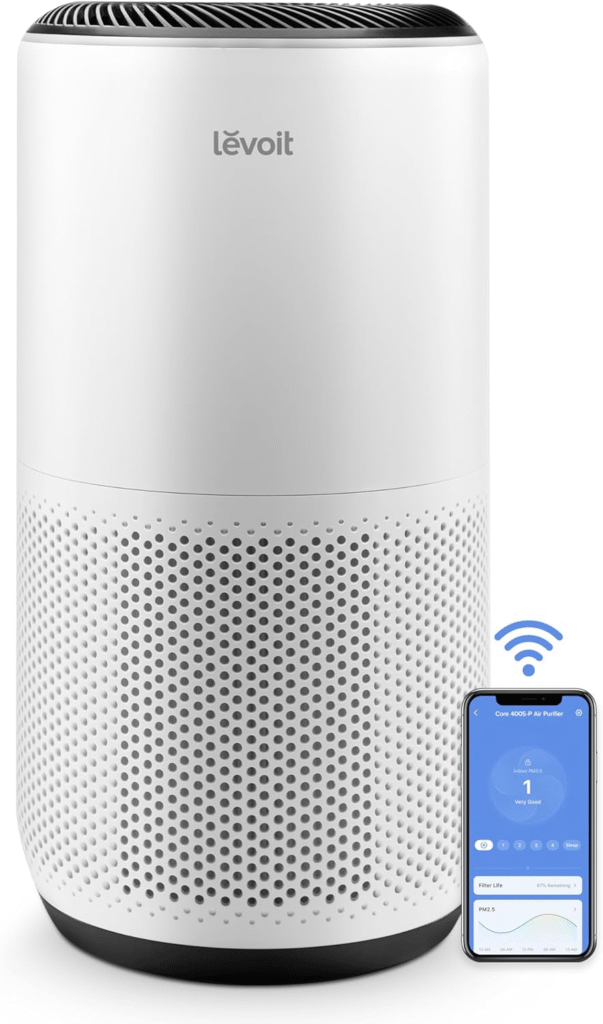
For anyone who wants odor control paired with modern convenience, the Levoit PlasmaPro 400S-P is the pick. It combines a solid activated carbon and HEPA system with full smart-app control, so you can monitor and adjust it from your phone instead of guessing whether it’s working.
Key features:
- High-efficiency activated carbon layer combined with true HEPA filtration
- Real-time air quality readouts via the companion app
- Smart scheduling and remote control from your phone
- Sleek, quiet design suited to living rooms and bedrooms
Why I like it: The real-time readout genuinely changes how you use the machine — you can actually see when odor and particle levels spike and adjust in real time.
Why I dislike it: At around $260, you’re paying a premium for the smart features on top of the filtration itself.
Buy it if you want data and control alongside decent odor performance. Don’t buy it if you just want maximum raw carbon for the lowest price — the 5500-2 will outperform it on odor absorption alone.
Quick Picks
- Best overall value: Winix 5500-2 — the best balance of real carbon mass and price
- Best for severe odors (premium pick): Austin Air Healthmate — unmatched capacity for smoke and heavy-duty smells
- Best for pet households: Winix 5510 — purpose-built for animal odors
- Best smart pick: Levoit PlasmaPro 400S-P — app control plus solid filtration
- Budget pick: Winix 5500-2 also doubles here — it’s hard to beat under $160
FAQs
Does HEPA alone remove odors? No. HEPA filters trap particles, not gas molecules, so odors pass right through unless the unit also has a substantial activated carbon filter.
How much carbon do I actually need for strong odors? Anything under half a pound tends to struggle. For moderate smells, half a pound to a pound is usually enough; for severe, set-in odors, you’ll want a unit like the Austin Air Healthmate with several pounds of carbon and zeolite.
How often do I need to replace the carbon filter? It depends on odor intensity, but every 3–6 months is typical for heavily used units. If smells start returning faster than usual, that’s your sign the carbon is saturated.
Are ozone generators a better option for odors? They can be more aggressive against smell, but they carry real health risks, especially for children, pets, and anyone with respiratory sensitivities. For most households, a heavy carbon filter is the safer, more sustainable choice.
Can I find these purifiers on sale? Yes — all four models regularly appear in Amazon deals, especially around seasonal sales events, so it’s worth checking current pricing and available discounts before you buy, since prices can shift from what’s listed here.
Final Thoughts
After going down this rabbit hole myself, here’s where I landed: if your odor problem is everyday-level — cooking, pets, general staleness — the Winix 5500-2 or Winix 5510 will handle it without draining your wallet. If you’re facing something more stubborn, like smoke damage or a persistent chemical smell, the Austin Air Healthmate is worth the bigger investment because it has the carbon mass to actually finish the job. And if you want the convenience of smart monitoring alongside decent filtration, the Levoit PlasmaPro 400S-P strikes a nice middle ground.
None of these are perfect, and no purifier is a total substitute for good ventilation and cleaning at the source. But if you’re tired of buying purifiers that just don’t cut it against real odors, one of these four should finally get the job done.
This post contains Amazon affiliate links. As an Amazon Associate, I may earn a commission from qualifying purchases at no extra cost to you. Prices and availability are accurate as of the time of writing but may change.