
Why does my throat feel tight every time I walk into my own living room?
That’s the question I kept asking myself a few months ago, right after I moved into a newly built place. Everything smelled “new” — that fresh-paint, fresh-carpet, fresh-cabinet smell people joke about — except it didn’t fade the way I expected it to. A few weeks in, I was still getting mild headaches in the evenings, and I finally sat down and actually researched what that smell was. Turns out, “new house smell” is largely a cocktail of volatile organic compounds, or VOCs, and one of the most common ones — formaldehyde — off-gasses from cabinetry, adhesives, and paint for months, sometimes years, after installation.
Here’s the short version of what I found: VOCs are gases released from everyday materials like paint, furniture, and building adhesives, and they’re genuinely harmful in enough concentration. The only thing that reliably pulls them out of the air is a purifier with a heavy activated-carbon filter — not the thin carbon liner most “odor control” purifiers ship with, but pounds of the stuff. After comparing the units that actually carry enough carbon to matter, three kept rising to the top: the Austin Air HealthMate Plus for serious whole-home outgassing, the IQAir GC MultiGas for renovation and electronics-heavy spaces, and the Smart Air Blast Mini Mk II if you want solid carbon-per-dollar without the premium price tag.
I’m going to walk you through exactly what I learned, including the mistakes I almost made, so you don’t have to burn the same hours I did.
Read More: Best HEPA Air Purifier for Pet Allergies
Why I Went Down This Rabbit Hole in the First Place
I’ll be honest — I didn’t know what a VOC was a couple of months ago. I just knew I felt off in my own home and assumed an air purifier would fix it, the same way it fixes dust or pet dander. So I bought a mid-range one with “advanced filtration” printed on the box. It did basically nothing for the smell.
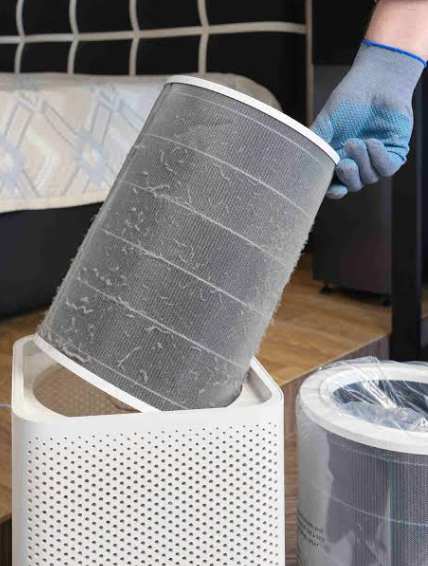
That’s when I started digging, and the more I read, the more annoyed I got. Half the marketing copy out there just says “activated carbon filter” without telling you how much carbon is actually in there. It turns out that detail is everything. A purifier with a token carbon liner might handle a candle or some cooking smoke, but it saturates almost instantly against something as persistent as formaldehyde off-gassing. You genuinely need a filter loaded with somewhere in the 10-to-15-pound range of carbon before it starts making a real dent in VOCs — and that single fact eliminated about 80% of the purifiers I’d been considering.
I also learned something that surprised me: opening a window is often more effective than any purifier for everyday VOC buildup, simply because ventilation dilutes gases faster than a filter can adsorb them. The catch is that this only works when your air is cleaner outside than in. If your VOC problem is coming from wildfire smoke, nearby industrial activity, or a chain-smoking neighbor, cracking a window just invites more of the problem in. That distinction changed how I thought about my whole approach — and it’s probably the single most useful thing I wish someone had told me on day one.
Product Reviews: The VOC Purifiers Worth Your Money
Austin Air HealthMate Plus
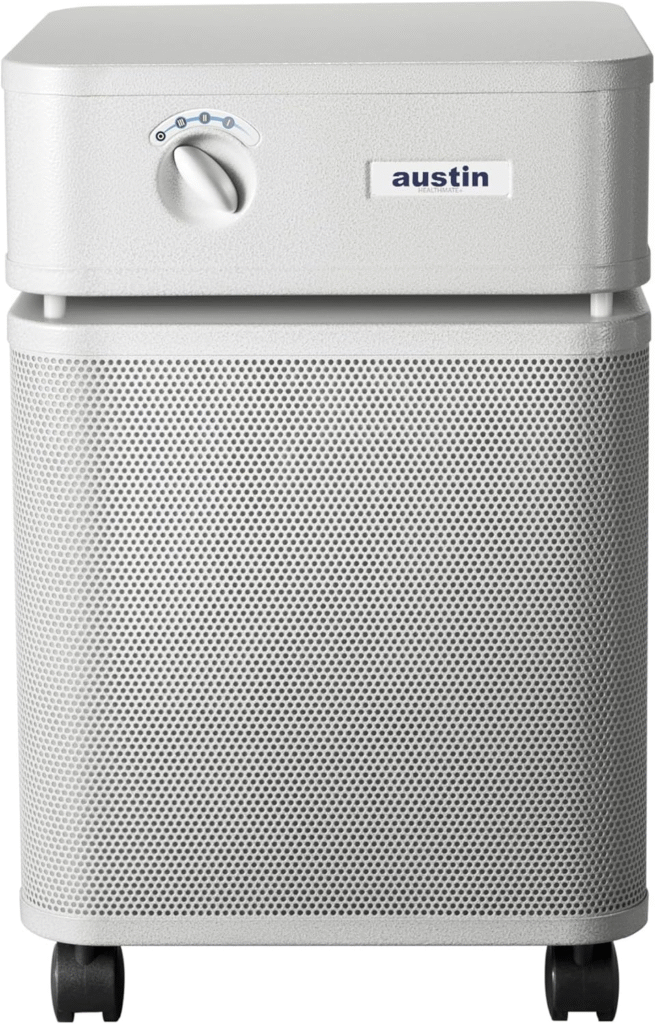
If you’re dealing with heavy, ongoing outgassing — a new build, fresh renovation, or a household with chemical sensitivities — this is the one I’d point you toward first. It’s built specifically for people whose main problem is gas and odor removal, not just dust, and it shows in how the filter is engineered.
Key features:
- Roughly 15 lbs of activated carbon and zeolite blended into the filter core — well above the threshold that actually matters for formaldehyde and chemical odors
- HEPA-grade particulate layer included, so you’re not sacrificing dust and allergen filtration entirely to get the carbon capacity
- Simple, no-frills control dial instead of a touchscreen — nothing for curious hands (or pets) to mess with
- Metal housing built to last years, with a filter replacement cycle rated around five years under normal conditions
Why I recommend it: It’s the most trusted name that kept coming up whenever people described genuinely solving a stubborn odor or off-gassing problem, not just masking it temporarily. It isn’t cheap, but given how long the filter lasts, the cost evens out over time better than it first appears.
IQAir GC MultiGas
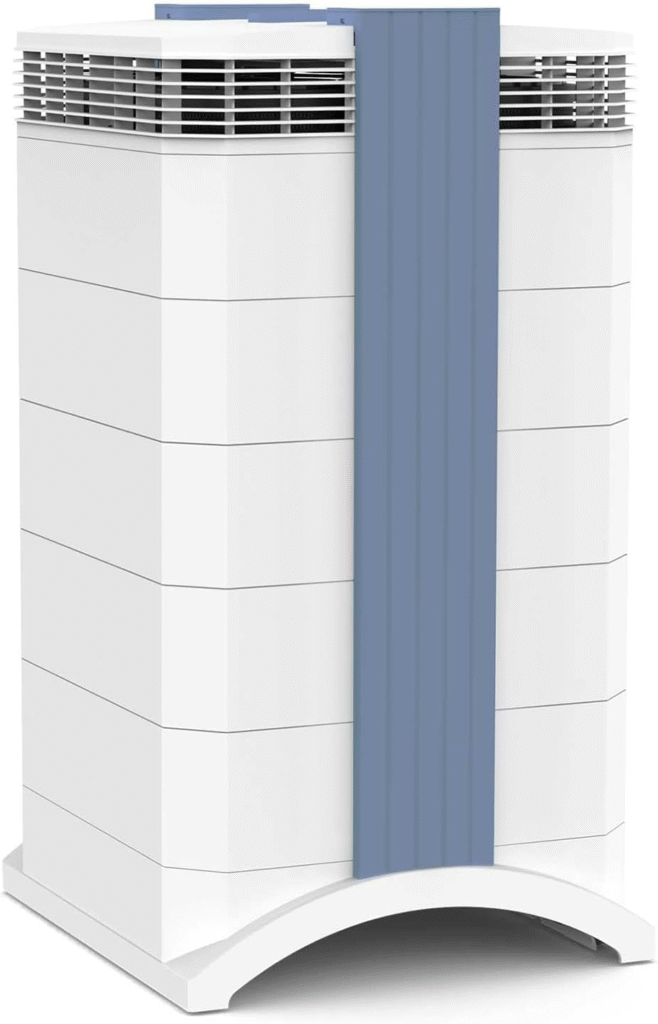
This is the one I’d recommend if you’re mid-renovation, living with new furniture or electronics that are still off-gassing, or dealing with a mix of different chemical sources rather than one dominant smell.
Key features:
- About 12 lbs of specialized, modular gas-adsorption media, split across cartridges tailored to different chemical classes
- Medical-grade build quality, with filtration performance validated well beyond typical consumer-grade testing
- Swappable cartridge system, so you can lean the setup toward formaldehyde, VOC mixtures, or general chemical sensitivity depending on what’s actually bothering you
- Runs quietly relative to its filtration capacity, which matters if it’s going in a bedroom or home office
Why I recommend it: The modular design is what sold me on including it. Instead of buying a fixed filter and hoping it matches your specific problem, you can adjust the setup as your situation changes — which is exactly the kind of flexibility that comes up again and again in real user discussions about chemical sensitivity and multi-source VOC exposure.
Smart Air Blast Mini Mk II
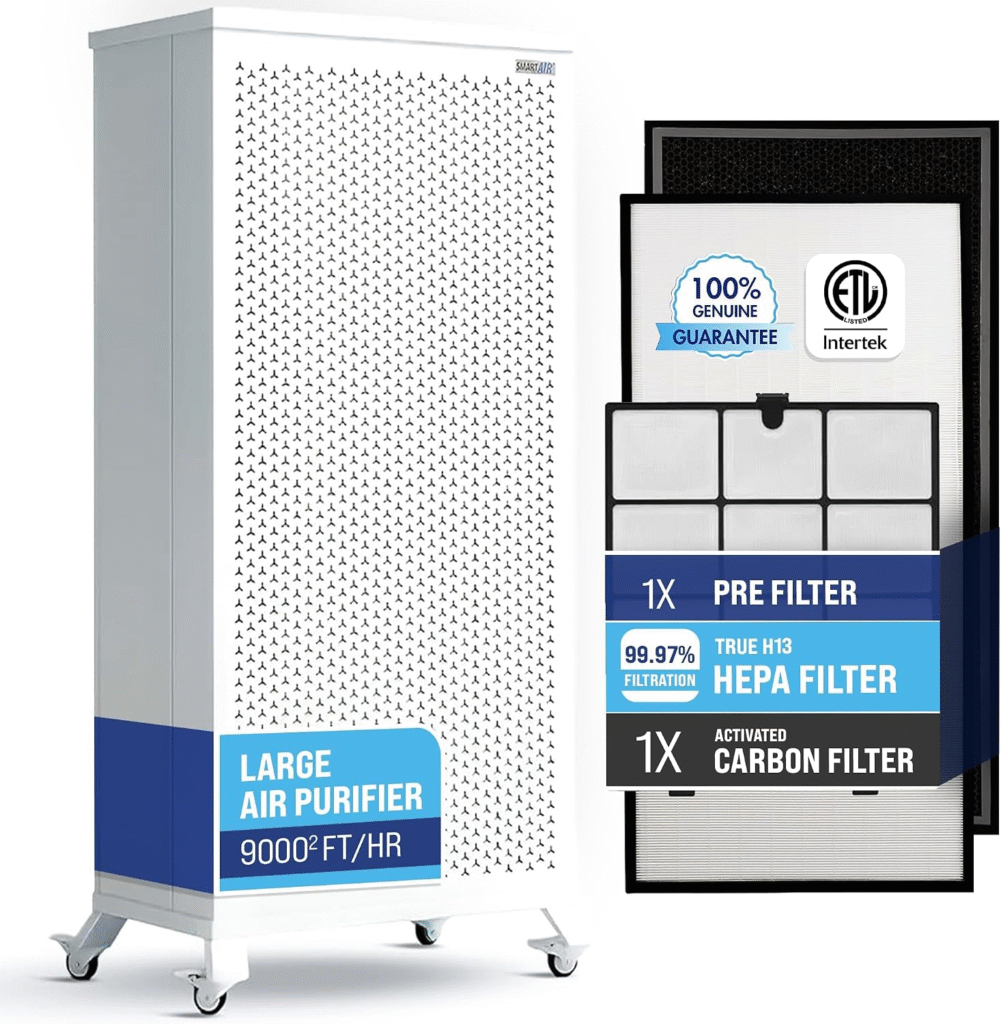
This is my pick if you want meaningful VOC reduction without spending premium money, especially for a single bedroom or home office rather than an entire house.
Key features:
- Around 3.3 lbs of activated carbon — modest compared to the two picks above, but genuinely useful in a smaller, contained space
- Best carbon-per-dollar ratio of the three, which matters if you’re testing whether a purifier even makes a difference before committing to a pricier unit
- Compact footprint suited to bedrooms and quiet, low-traffic rooms
- Straightforward operation without a lot of smart-home complexity to manage
Why I recommend it: Not everyone needs (or can afford) a 15-pound carbon monster. If your VOC exposure is mild-to-moderate and contained to one room, this gives you real carbon capacity without the premium price of the units built for whole-home, heavy-duty use.
Frequently Asked Questions
How much activated carbon do I actually need to remove VOCs? Based on what consistently shows up in real-world comparisons, you want somewhere around 10 to 15 pounds of carbon for serious VOC or formaldehyde problems. Anything with just a few ounces or a thin carbon-coated mesh will saturate quickly and stop helping within days or weeks.
Is opening a window better than using an air purifier? For everyday indoor VOC buildup, yes — ventilation dilutes gases faster than any filter can adsorb them. The exception is when the air outside is worse than the air inside, like during wildfire smoke events or if you’re near heavy industrial activity. In those cases, a heavy-carbon purifier is genuinely the better move.
Do I need one purifier for dust and a different one for VOCs? Often, yes. Purifiers built with enough carbon to handle VOCs tend to trade off some particulate-filtering airflow to make room for that carbon bed. If you’re dealing with both a dust/allergen problem and a serious VOC problem, running two purifiers — one HEPA-focused, one carbon-focused — usually outperforms hunting for a single unit that does both well.
Does humidity affect how well these purifiers work? It does. Keeping relative humidity under 60% helps prevent water molecules from competing for space in the carbon bed, which otherwise saturates your filter faster than expected.
Final Thoughts
After all this research, here’s where I landed: if your VOC problem is serious — a new build, a major renovation, or a chemical sensitivity that makes off-gassing genuinely hard to live with — the Austin Air HealthMate Plus or IQAir GC MultiGas are worth the investment, and I don’t say that lightly given the price tag. If your situation is milder or confined to one room, the Smart Air Blast Mini Mk II gives you real carbon capacity without asking you to spend hundreds more than you need to.
None of these are perfect. The heavier units are pricier, bulkier, and louder at full power than a typical dust-focused purifier, and even the best carbon filter isn’t a substitute for good ventilation when you can use it. But for the months when opening a window isn’t enough — new paint, new cabinetry, or air quality outside that’s worse than in — having the right amount of carbon in your corner makes a real, noticeable difference. I felt it in my own place, and I think you will too.
Affiliate Disclosure: This post contains affiliate links, including to Amazon. If you make a purchase through these links, I may earn a small commission at no additional cost to you. I only recommend products I’ve genuinely researched and believe can help with real VOC and formaldehyde concerns.