
My basement used to have that smell. You know the one — damp, a little musty, like the air itself had been sitting there since the house was built. No amount of candles or sprays fixed it, because the problem wasn’t a scent I needed to cover up. It was actual airborne mold spores, dust, and trapped moisture with nowhere to go. Once I understood that, the fix became obvious: I needed an air purifier built for exactly this kind of space, not just any purifier I already had lying around.
Quick answer: if your basement is large and open, a purifier like the Levoit Core 600S handles bigger square footage without slowing down. For a smaller or mid-sized basement room, something more compact like the Coway Airmega Mighty gets the job done without overpowering the space. Both rely on the same core combination — a true HEPA filter to physically trap dust and mold spores as small as 0.3 microns, paired with an activated carbon layer to pull the musty odor out of the air rather than just masking it.
Disclosure: This post contains Amazon affiliate links. If you purchase through them, I may earn a small commission at no extra cost to you — I only recommend products I’d actually put in my own basement.
Why Basements Are the Hardest Room to Keep Clean
Basements struggle with air quality for one simple reason: airflow. Most basements have little to no natural ventilation, so moisture that would normally escape through an open window instead lingers, feeding mold growth and locking in that stale smell. Add in stored boxes, old furniture, and dust that rarely gets disturbed, and you’ve got a room that actively works against clean air rather than helping it along.
An air purifier won’t fix a moisture problem on its own, but it will stop the symptoms of that moisture — the floating mold spores, the dust, the musty odor — from building up in the air you breathe.
Read More: Best Air Purifier for Cat Allergies
What to Look For in a Basement Air Purifier
Before I bought mine, I learned that not every purifier is built to handle basement-level conditions. Here’s what actually matters.
A True HEPA Filter
This is the part that does the heavy lifting. A genuine HEPA filter is tested to capture 99.97% of particles down to 0.3 microns, which covers the size range of both dust and mold spores. Without this level of filtration, you’re really just moving air around the room rather than cleaning it.
An Activated Carbon Layer
HEPA filters trap physical particles, but they can’t touch odor — smell is a gas, and gases pass straight through a particle filter. That’s where activated carbon comes in. It works through adsorption, essentially trapping odor molecules inside the carbon itself, which is exactly why musty basement smell needs this layer specifically, not just HEPA alone.
Room Size and Air Changes Per Hour
A purifier rated for a small bedroom will get overwhelmed in an open basement. Look at the recommended square footage and how many times per hour the unit claims to cycle the air — ideally four to five air changes hourly for a space that size. Bigger basements need a genuinely powerful CADR (Clean Air Delivery Rate), not just a bigger-looking box.
Pairing With a Dehumidifier
This one surprised me. An air purifier removes particles from the air, but it doesn’t remove the moisture causing mold to form in the first place. If your basement runs damp, running a dehumidifier alongside your purifier addresses the actual root cause, while the purifier handles what’s already floating in the air.
My Pick for Larger Basements: Levoit Core 600S
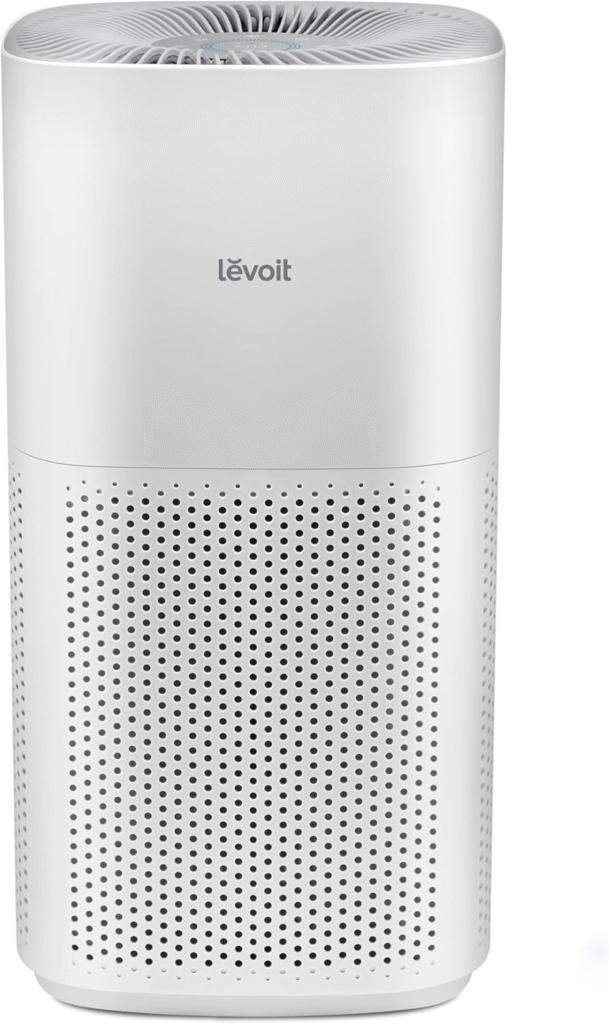
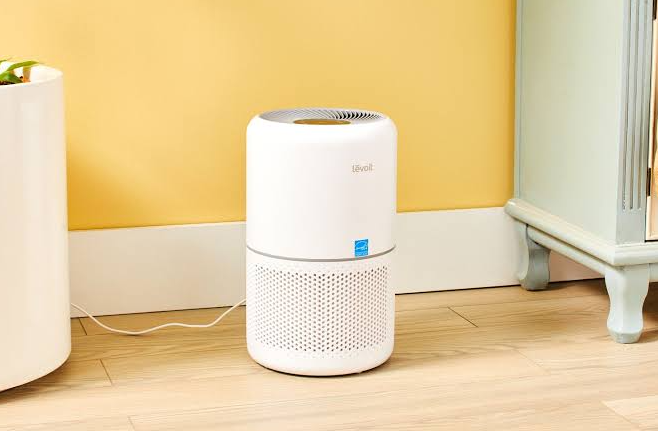
For anything approaching an open, larger basement, I’d point you toward the Levoit Core 600S. It’s built to handle spaces up in the 500-600 square foot range without losing speed, which matters if your basement doubles as a living or storage area rather than a single small room. It also includes an auto mode that adjusts its fan speed based on real-time air quality readings, plus smart app control if you’d rather monitor things from your phone than walk downstairs to check.
My Pick for Mid-Sized Basement Rooms: Coway Airmega Mighty
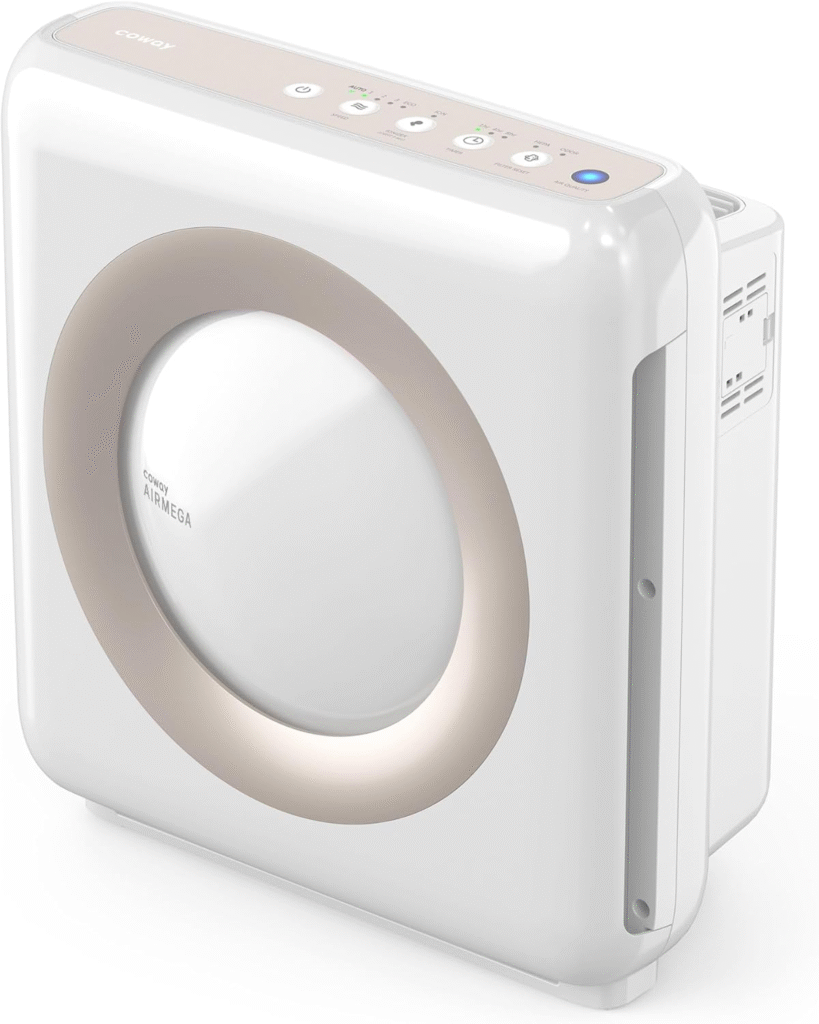
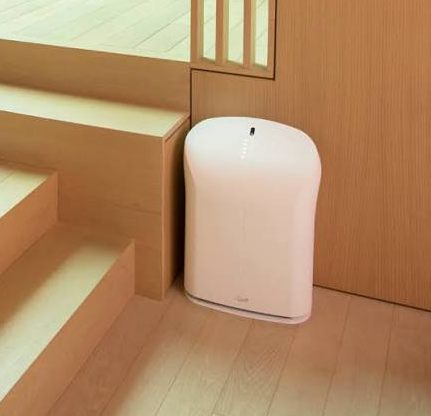
If your basement is more of a single finished room rather than a sprawling open space, the Coway Airmega Mighty is a smarter fit. It’s compact, easy to tuck into a corner, and rated for spaces closer to 350-380 square feet. I like that it includes a simple indicator light that shows current air quality at a glance, so you don’t need to guess whether it’s actually working or just running for the sake of it.
Getting the Most Out of Your Basement Air Purifier
Buying the right unit is only half the job. Placement and habits make a real difference too. I keep mine away from walls and stacked boxes so air can flow into it freely, and I run it continuously rather than switching it on occasionally — basements need constant cycling, not spot treatment. I also vacuum the pre-filter every few weeks, since basements tend to generate more dust and debris than the average room in the house.
Frequently Asked Questions
Where should I place an air purifier in my basement? Central to the room and away from walls or furniture is ideal, since blocked airflow reduces how effectively the unit can pull in and cycle air.
Do air purifiers remove radon from a basement? No. Radon is a gas that passes through HEPA and most carbon filters; if you suspect radon, you’ll need dedicated radon mitigation, not an air purifier.
Should I get an air purifier or a dehumidifier for my basement? Ideally both. A dehumidifier addresses the moisture causing mold growth, while an air purifier clears the particles and odor already in the air.
Final Thoughts
A damp, musty basement doesn’t have to stay that way. Matching a true HEPA and activated carbon purifier to your actual room size, running it consistently, and pairing it with a dehumidifier if moisture is an ongoing issue will make a noticeable difference in how that space smells and feels — mine included.