
I love my cat. My sinuses do not share the feeling. If you’ve ever woken up with itchy eyes, a stuffy nose, or a scratchy throat and realized the culprit was curled up asleep at the foot of your bed, you already know exactly why I started digging into this topic. Cat dander is sneaky — it’s microscopic, it floats for hours, and it clings to everything from your couch to your bedsheets. The good news is that a well-chosen air purifier can genuinely cut down on how much of it you’re breathing in every day.
In short: the air purifiers that actually make a difference for cat allergies rely on two things working together — a True HEPA filter fine enough to trap airborne dander, and an activated carbon layer to handle the litter box and “cat smell” side of things. Compact rooms tend to do well with something like the Levoit Core 300-P, allergy-heavy households often lean toward the Winix 5500-2 for its neutralizing power, and larger rooms or open living spaces usually need something with more reach, like the Rabbit Air MinusA2.
Quick disclosure: I may earn a small commission from qualifying purchases made through Amazon links in this post, at no extra cost to you. I only recommend products I’d genuinely consider for my own home.
Read More: Do Air Purifiers Help With Dust?
What Makes an Air Purifier Actually Work for Cat Allergies
Not every purifier is built with pets in mind, and honestly, a lot of them look impressive on a spec sheet without doing much for cat-specific problems. Here’s what I look for now before buying one.
A True HEPA Filter, Not Just “HEPA-Type”
This is the non-negotiable part. A genuine True HEPA filter is rated to capture 99.97% of particles down to 0.3 microns, which covers the tiny dander flakes that trigger most allergic reactions. Cheaper “HEPA-type” or “HEPA-like” filters sound similar but don’t meet that standard, and for allergy sufferers, that difference matters more than almost anything else on the box.
Activated Carbon for the Smell Side of Things
HEPA filters are great at catching particles, but they do nothing for odor — smell is a gas, not a particle, so it slips right past. That’s where an activated carbon filter earns its keep, especially if your cat’s litter box lives anywhere near your living space. The more carbon a unit packs in, the longer it holds up before that “cat smell” starts creeping back.
A Washable Pre-Filter for Loose Fur
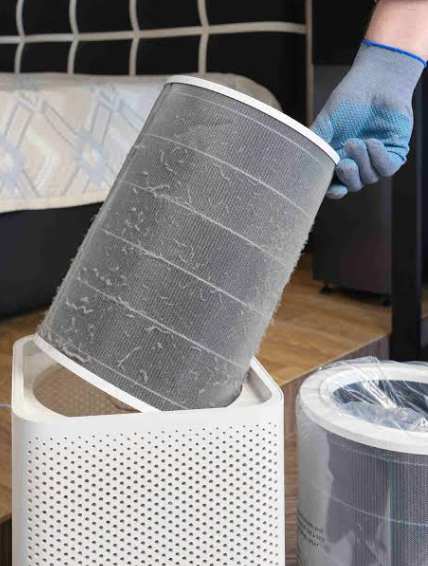
Cats shed constantly, and floating fur is the first thing that clogs up a purifier if there’s nothing catching it early. A washable mesh pre-filter intercepts hair and larger debris before it ever reaches the HEPA layer, which keeps your main filter cleaner for longer and saves you money on replacements down the line.
A CADR Rating That Matches Your Room
Clean Air Delivery Rate, or CADR, tells you how quickly a purifier can actually cycle the air in a given space. A powerful-looking unit in too large a room will underperform, so it’s worth matching the CADR number to your actual square footage rather than assuming bigger is always better.
My Recommendations by Space
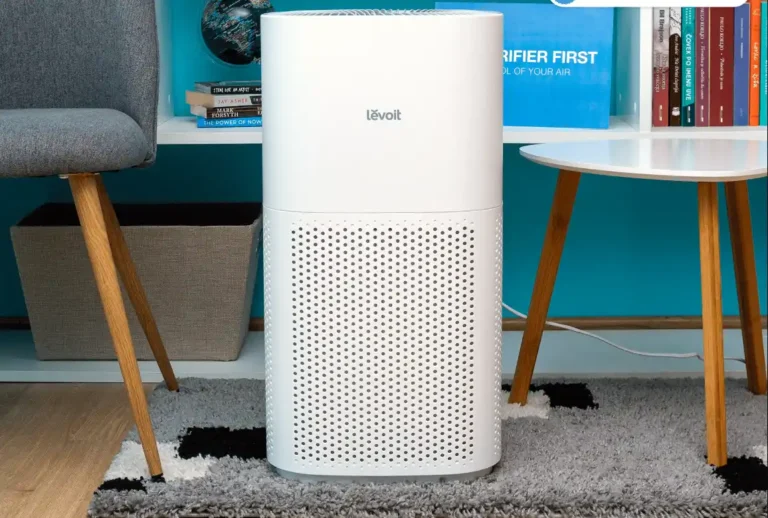
For a bedroom or a smaller room, the Levoit Core 300-P is compact enough to run overnight without being intrusive, while still hitting the HEPA and carbon combo that matters most. If your allergies are more severe or you want something built to neutralize odor more aggressively, the Winix 5500-2 is worth a look — it pairs True HEPA with a solid carbon layer and tends to be a favorite among people managing daily allergy symptoms. And if you’ve got an open living room or a larger home with more than one cat, the Rabbit Air MinusA2 is designed to cover more ground without losing performance.
How I Actually Use Mine
Buying the right purifier is only half the equation — how you use it matters just as much.
I match the unit to the room, not the house. A purifier rated for a small bedroom will struggle in an open-plan living room, so I check the coverage rating against the actual space before I buy.
I leave it running, not just switching it on when I remember. Air purifiers work by cycling air repeatedly, so keeping mine on medium or high speed throughout the day makes a much bigger difference than turning it on for twenty minutes here and there.
I place it close to the source. My cat has a favorite chair and a litter box location, and putting the purifier near those spots — rather than tucked in a corner across the room — noticeably improved things faster.
I clean the pre-filter regularly. Every couple of weeks, I vacuum the mesh pre-filter to clear out the fur it’s caught. Skipping this step is the fastest way to choke a purifier’s performance, no matter how good the unit is.
Frequently Asked Questions
Can an air purifier really stop cat allergies? It won’t eliminate allergies entirely, but a True HEPA purifier run consistently in the rooms you use most can meaningfully reduce airborne dander, which is often enough to ease symptoms like sneezing and itchy eyes.
Where should I place an air purifier for cat allergies? Ideally in the room where you spend the most time with your cat, such as a bedroom or living room, and positioned away from walls so air can flow into it freely.
Do I need a separate purifier for litter box odor? Not usually. A purifier with a strong activated carbon filter can handle both odor and dander at once, as long as it’s placed reasonably close to the litter box area.
How often should I replace the filters? True HEPA filters typically need replacing every 6–12 months depending on usage, while washable pre-filters just need regular rinsing or vacuuming to keep the whole system working efficiently.
The Bottom Line
Living with a cat you love and allergies you didn’t ask for is a balancing act, but it’s a manageable one. Focus on a purifier with genuine True HEPA filtration, real activated carbon, and a CADR that fits your space, then actually run it consistently and keep the pre-filter clean. Do that, and you’ll likely notice fewer symptoms without giving up any time with your cat.