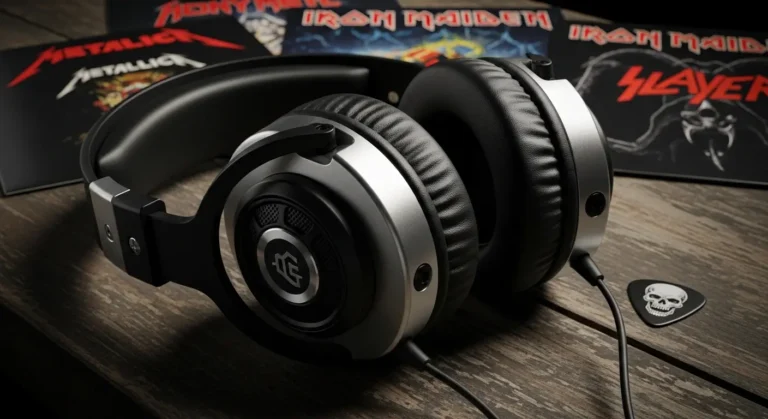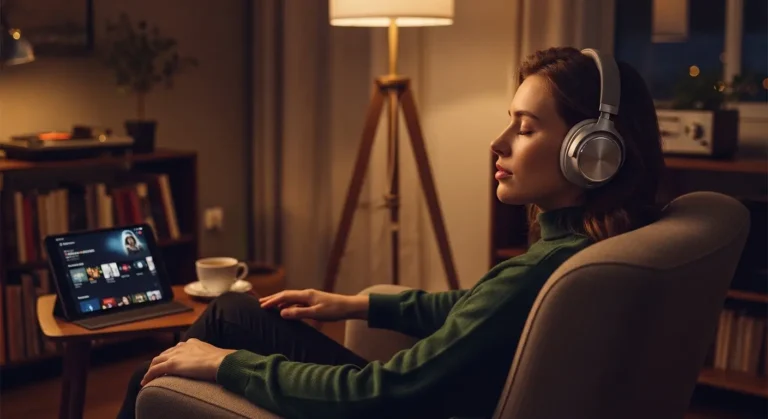

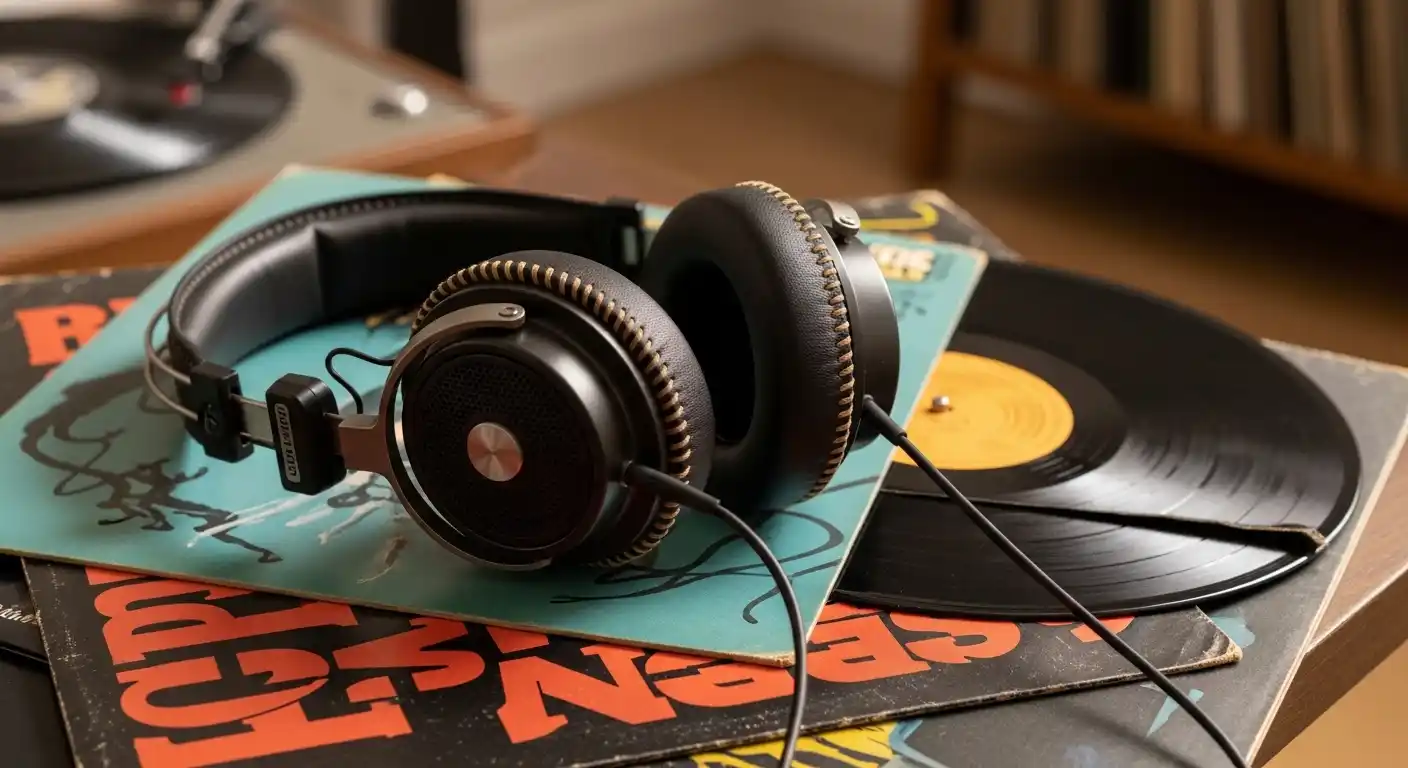
There’s something personal about spinning vinyl late at night, the warmth, the texture, the tiny details you miss on speakers. I’ve found that the right pair of headphones can completely transform that experience, letting me dive deeper into every groove without disturbing anyone around me.
Overview
From my experience and research, the best headphones for vinyl are those that deliver a warm, natural sound with strong detail and a wide soundstage. Open-back models, like the well-known Sennheiser HD 600 or HD 650, are often favored because they recreate that airy, speaker-like feel. If I want something more energetic and bright, I’d lean toward Grado models such as the SR80x or SR325x.
For tighter budgets, options like the AKG K72 still provide impressive clarity for the price. On the other hand, closed-back headphones like the Meze 99 Classics are great when I need isolation without sacrificing musical warmth. At the high end, premium headphones deliver expansive sound and exceptional detail, but often require proper amplification to shine.
One key thing I’ve learned: wired connections almost always sound better for vinyl. Bluetooth can be convenient, but it slightly compromises that rich analog character.
Affiliate Disclaimer
This article contains affiliate links. If you purchase through these links, I may earn a small commission at no extra cost to you. This helps support my work and keeps this content free.
Best Headphones for Vinyl
Choosing headphones for vinyl isn’t just about brand names, it’s about how well they reproduce the analog character of records. Below are carefully selected options that balance sound quality, comfort, and value.
Best Overall
AKG K271 MkII
View on Amazon
If I had to recommend one solid all-rounder, this would be it. The AKG K271 MkII delivers a balanced sound that works beautifully with vinyl, especially if you enjoy a natural presentation without exaggerated bass or treble.
The soundstage feels open for a closed-back design, which helps reveal subtle details in older recordings. It’s also lightweight, making it easy to wear for long listening sessions.
That said, the build leans a bit toward plastic, so it doesn’t feel as premium as higher-end models—but sonically, it punches above its price.
Best Noise Cancelling
Sony WH-1000XM5
View on Amazon
When I want convenience without sacrificing too much sound quality, these are my go-to. The Sony WH-1000XM5 combines wireless flexibility with excellent noise cancelling, which is useful in noisy environments.
The sound profile is balanced and smooth, making it suitable for vinyl playback, especially modern pressings. Battery life is impressive, and the comfort level is top-tier.
However, I only recommend these if your setup supports Bluetooth. For pure analog listening, wired still wins.
Best for Comfort
Shure SRH1540
View on Amazon
If long listening sessions are your thing, comfort matters more than you think. The Shure SRH1540 excels here with soft ear pads and a lightweight design.
What I like most is how it handles detail, it brings out texture in vocals and instruments without sounding harsh. It’s a great match for genres like jazz, rock, and progressive music where nuance matters.
The only drawback is the lack of noise cancelling, but for home listening, that’s rarely an issue.
Best Mid-Range
Meze 99 Classics
View on Amazon
These headphones strike a great balance between aesthetics and performance. The Meze 99 Classics not only look premium but also deliver a warm, engaging sound that suits vinyl perfectly.
The bass is present but controlled, and the mids feel rich and musical. I find them especially enjoyable for classic rock and acoustic recordings.
They’re not ideal for travel due to fit stability, but for home listening, they’re a fantastic choice.
Best for Detail
Beyerdynamic Amiron
View on Amazon
If you’re chasing clarity and precision, the Beyerdynamic Amiron stands out. These open-back headphones offer a spacious soundstage that makes records feel alive and immersive.
I notice a clear separation between instruments, which helps when listening to complex mixes. Comfort is also excellent, making them suitable for extended sessions.
Keep in mind that sound leakage is a factor, so they’re best used in quiet environments.
Best High-End
Dan Clark Audio Ether 2
View on Amazon
For those willing to invest, this is where things get serious. The Ether 2 delivers exceptional detail, speed, and openness, everything I’d expect from a top-tier audiophile headphone.
The design is lightweight despite premium materials, and the sound adapts beautifully across genres. From subtle acoustic tracks to dense rock recordings, it handles everything effortlessly.
It’s expensive, no doubt, but if you’re chasing the ultimate vinyl experience, it’s worth considering.
How to Choose the Best Headphones for Vinyl
Open-Back vs Closed-Back
This is one of the biggest decisions. Open-back headphones feel more natural and spacious, almost like listening through speakers. Closed-back models, on the other hand, isolate sound better and prevent leakage.
I usually prefer open-back for critical listening, but closed-back works better when I need privacy.
Wired vs Wireless
Vinyl is an analog format, so I always lean toward wired headphones. Bluetooth introduces compression, which can slightly reduce sound quality.
Wireless is convenient, but if sound is your priority, wired is the better option.
Do You Need an Amplifier?
Some headphones, especially high-end models, require more power to perform at their best. If you’re using a dedicated amplifier or hi-fi system, you’ll get much better results.
Plugging directly into a turntable usually isn’t enough unless it has a built-in amp.
Sound Signature
Vinyl lovers often prefer a warm sound profile. This means smoother highs, rich mids, and controlled bass. It complements the natural character of records.
How to Use Headphones with a Turntable
In most setups, I connect headphones through an amplifier rather than directly into the turntable. Many systems include a headphone output, which makes things simple.
If your setup is modern, you might also use Bluetooth transmitters or wireless turntables. Just remember that this can slightly affect audio quality.
How to Choose the Right Vinyl Listening Setup
A good vinyl setup isn’t just about headphones. I always consider the full signal chain:
- Turntable quality
- Phono preamp
- Amplifier
- Headphones
Balancing these elements ensures the best listening experience.
How We Evaluate Headphones
When I assess headphones for vinyl, I focus on:
- Soundstage and imaging
- Tonal balance (warm vs bright)
- Comfort over long sessions
- Build quality
- Compatibility with analog systems
Vinyl demands nuance, so headphones must handle detail without sounding harsh.
FAQs
Are open-back headphones better for vinyl?
In most cases, yes. They create a more natural and spacious sound, which closely resembles speaker listening. However, they leak sound and don’t block external noise.
Can I plug headphones directly into a turntable?
Usually no. Most turntables require an amplifier or receiver with a headphone output unless they have a built-in amp.
Do wireless headphones reduce vinyl sound quality?
Yes, slightly. Bluetooth compresses audio, which can reduce the richness and detail that vinyl is known for.
What type of sound is best for vinyl listening?
A warm, balanced sound works best. It enhances the natural tone of records without making them sound harsh or overly bright.
Final Thoughts
For me, listening to vinyl has always been about connection, the subtle crackle, the warmth, the depth that digital often misses. The right headphones don’t just play your records; they reveal them.
If you want the most natural, immersive experience, I’d lean toward open-back, wired headphones with a warm sound signature. But if convenience or isolation matters more in your setup, there are excellent closed-back and wireless options that still deliver impressive results.
At the end of the day, there’s no single “perfect” choice. The best headphones for vinyl are the ones that match your setup, your music taste, and how you like to listen. Once you find that match, your record collection won’t just sound better, it’ll feel more alive.